Still Life with Peacocks by Rembrandt
Rembrandt, the master of portraits, also created profoundly dramatic still life paintings like his "Still Life with Peacocks" from 1636, now at the Rijksmuseum. This oil on canvas from the Dutch Golden Age challenges viewers with its unsettling subject.
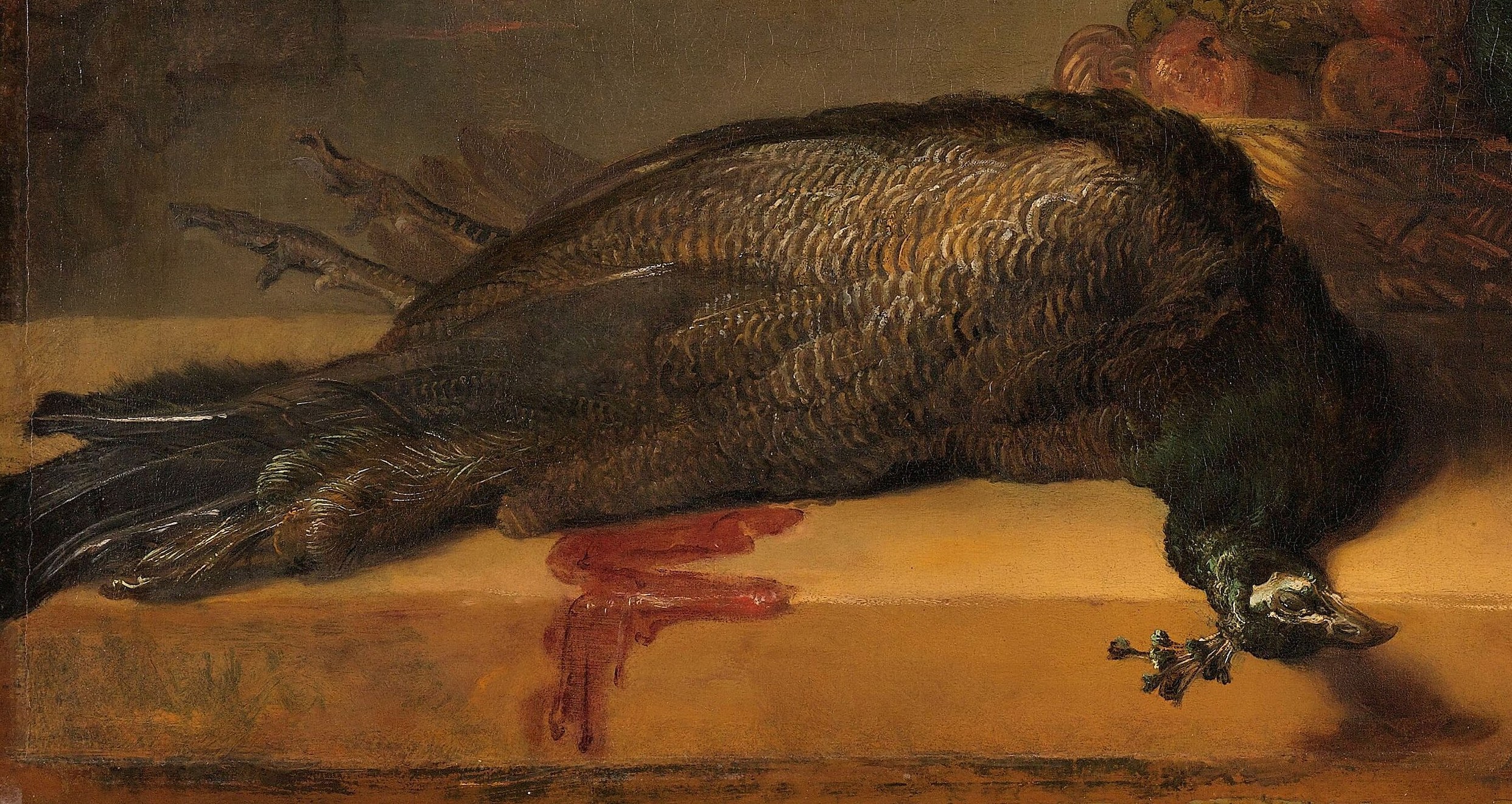
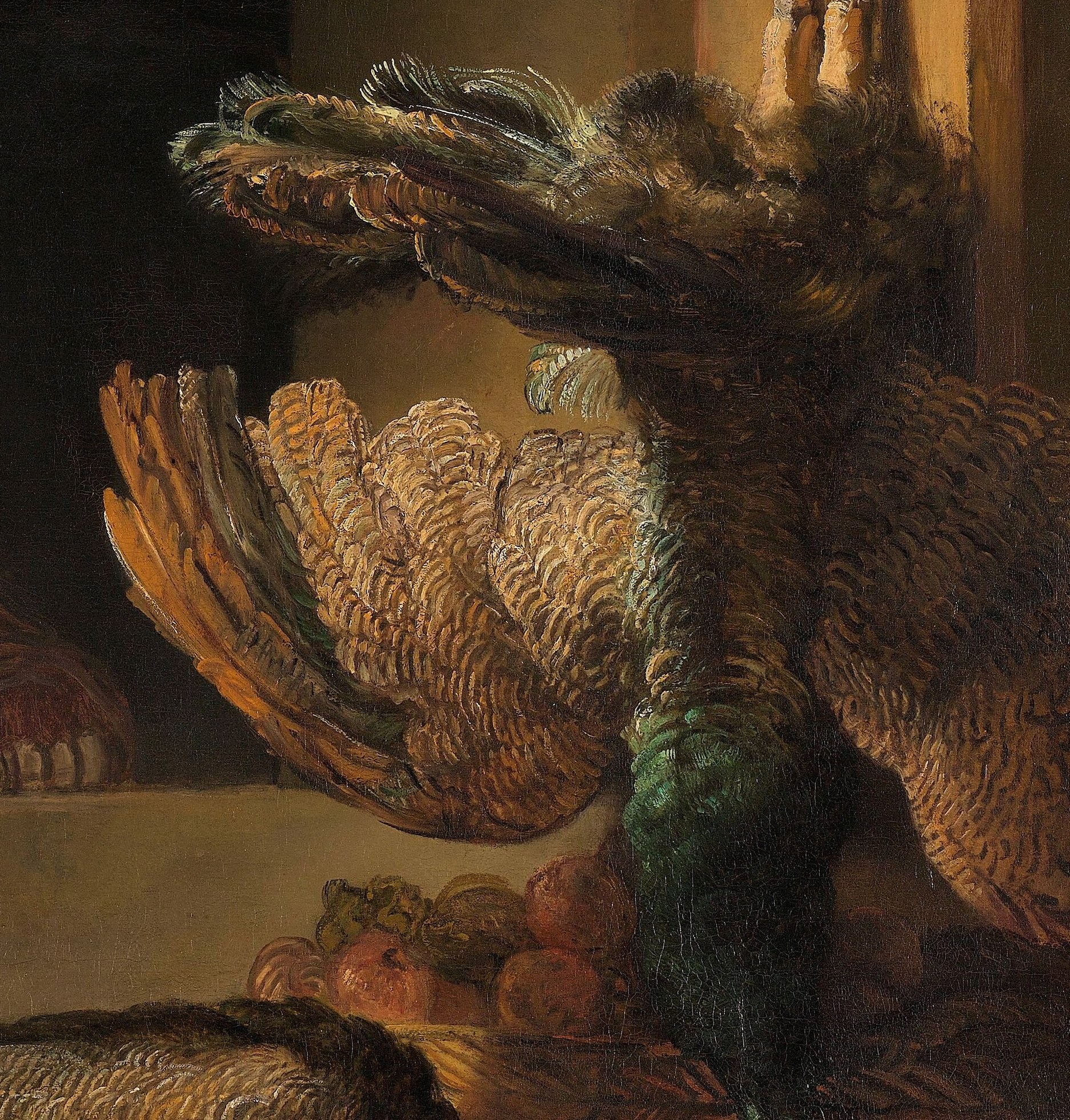
Look closely at the young child, whose direct and almost unnerving gaze connects directly with you. The vibrant, iridescent feathers of the two dead peacocks, one lying, one hanging, are rendered with incredible detail, almost tactile, thanks to Rembrandt's masterful use of chiaroscuro, the stark contrast between light and shadow.
The painting's tension between life and death is heightened by the pool of blood and scattered feathers, reflecting on the fleeting nature of beauty and existence. Painted during a diverse period in Rembrandt's career, it showcases his early experimentation with dramatic lighting and complex compositions.
What do you think the child is contemplating in this scene of vibrant stillness and stark mortality?
Details
Transcript
Rembrandt, known for portraits, also painted dramatic still lifes. In this 1636 work, a child silently observes two dead peacocks. The child's gaze, direct and unsettling, draws you in. A stark pool of blood emphasizes the violence of the scene. The vibrant feathers of the dead birds contrast with their stillness. The painter used chiaroscuro to make the feathers almost tactile.