Piping Shepherds by Aelbert Cuyp
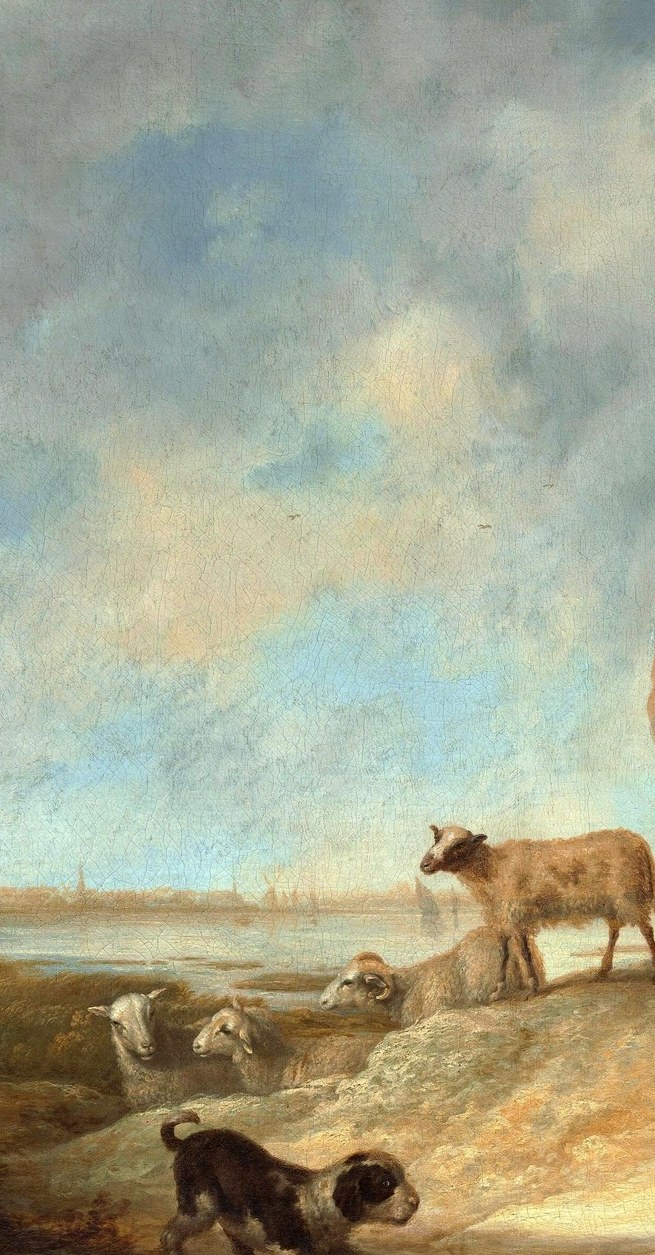
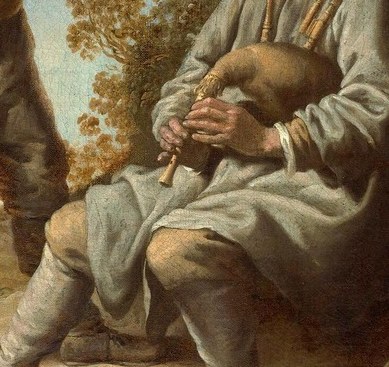
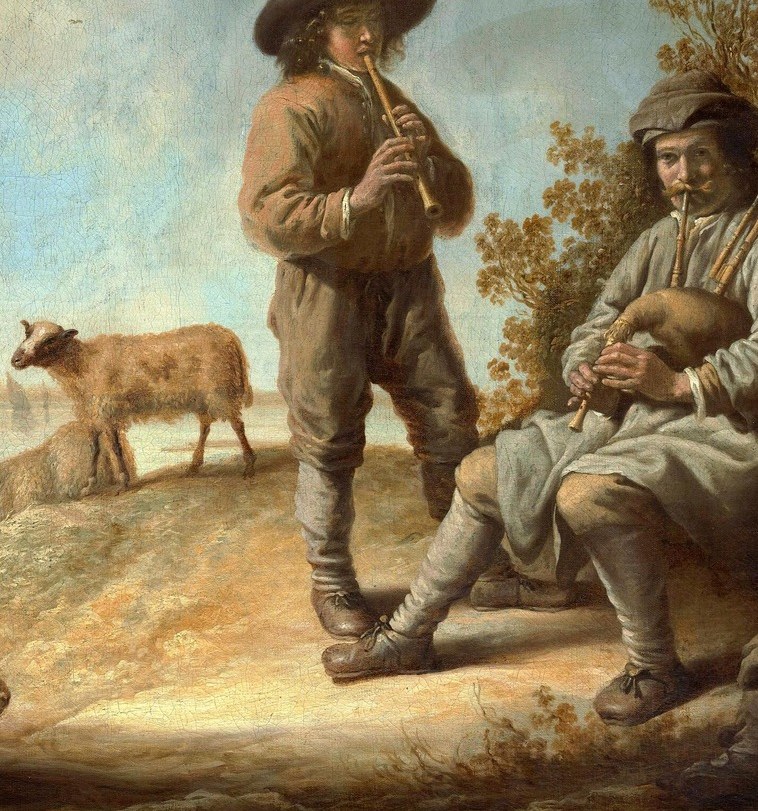
Aelbert Cuyp's Piping Shepherds (1643-44) holds a secret bestiary. Most viewers see the two shepherds and the luminous evening sky, then scroll on. But Cuyp tucked at least three animals into the foreground shadows, and they quietly steer how we understand the scene.
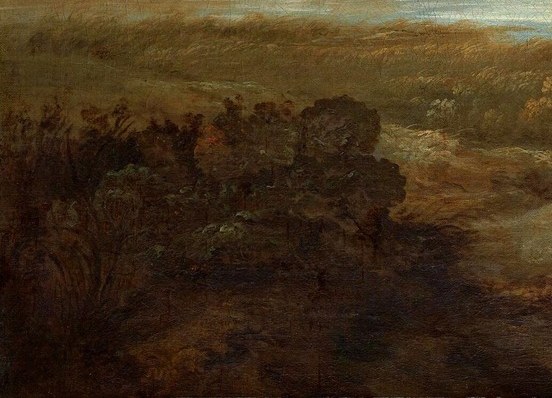
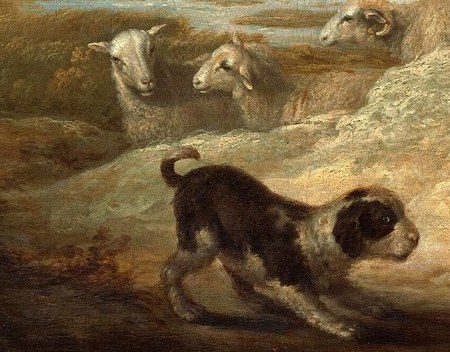
Look first at the bottom left corner, where a dark dog sleeps against the earth. It is easy to miss, Cuyp painted it in deep browns that merge with the soil. Above it, near the standing piper's feet, a second small animal rests: a lamb, or perhaps another dog, pale and barely noticed. And at the base of the large autumn tree on the right, a compact dark shape sits low among the roots. Scholars believe it is an owl, Minerva's bird, the classical attribute of wisdom and watchfulness.
The owl changes the painting. Without it, this is a pleasant pastoral: shepherds making music while their flock grazes. With it, the scene becomes an allegory of otium, the earned leisure of the wise. The owl watches. The dog rests. The shepherds play. Everyone in this golden Dutch evening knows exactly where they belong.
Cuyp painted this at 23, having never left the Netherlands. The golden light he became famous for, that warm haze hanging over the distant polder, he learned from studying Italian paintings in Dutch collections. Piping Shepherds is in the Metropolitan Museum of Art in New York. Next time you stand before it, find the owl first.
Details
Transcript
Two shepherds, alone with their flock at the end of the day. One stands and plays. The other listens. Aelbert Cuyp was 23. He'd never been to Italy. But he'd seen Italian paintings, and he wanted to make Dutch light glow like that. Now look down. A dog sleeps in the shadow. And near the piper's feet, a second small animal, a lamb or a dog, rests quietly. One last hidden watcher. At the base of the tree. A small dark shape. Probably an owl, Minerva's bird, the symbol of wisdom.