Interior by Allen Tucker
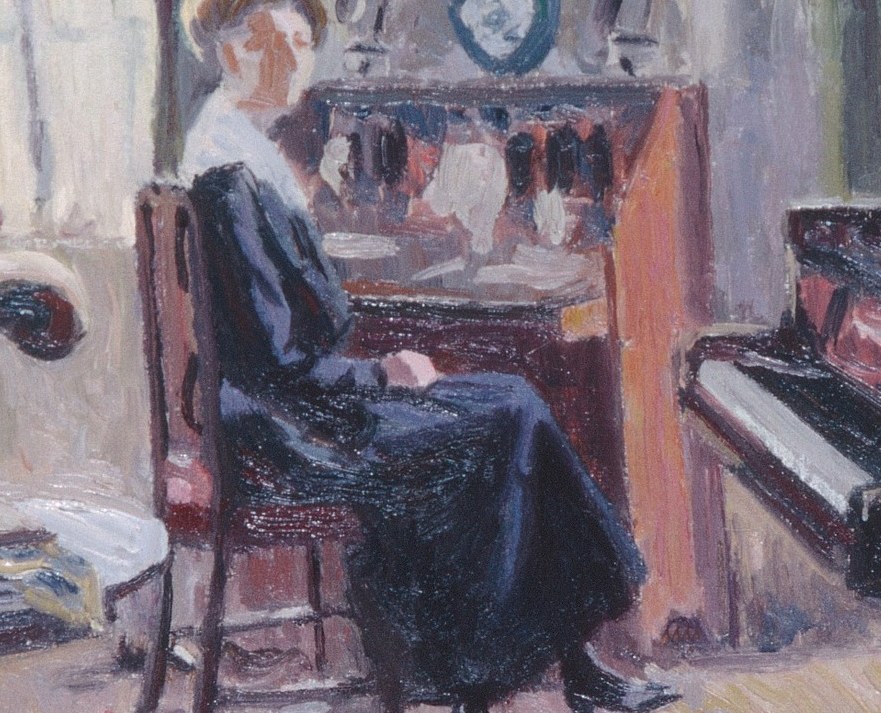
This is "Interior," painted in 1921 by the American artist Allen Tucker. At first glance it is simply a woman in a parlor. But the room itself is a precise document of its moment, a comfortable, aspiring American home on the far side of one war and the near side of another.
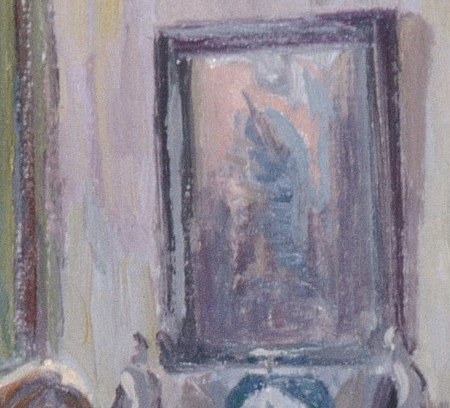
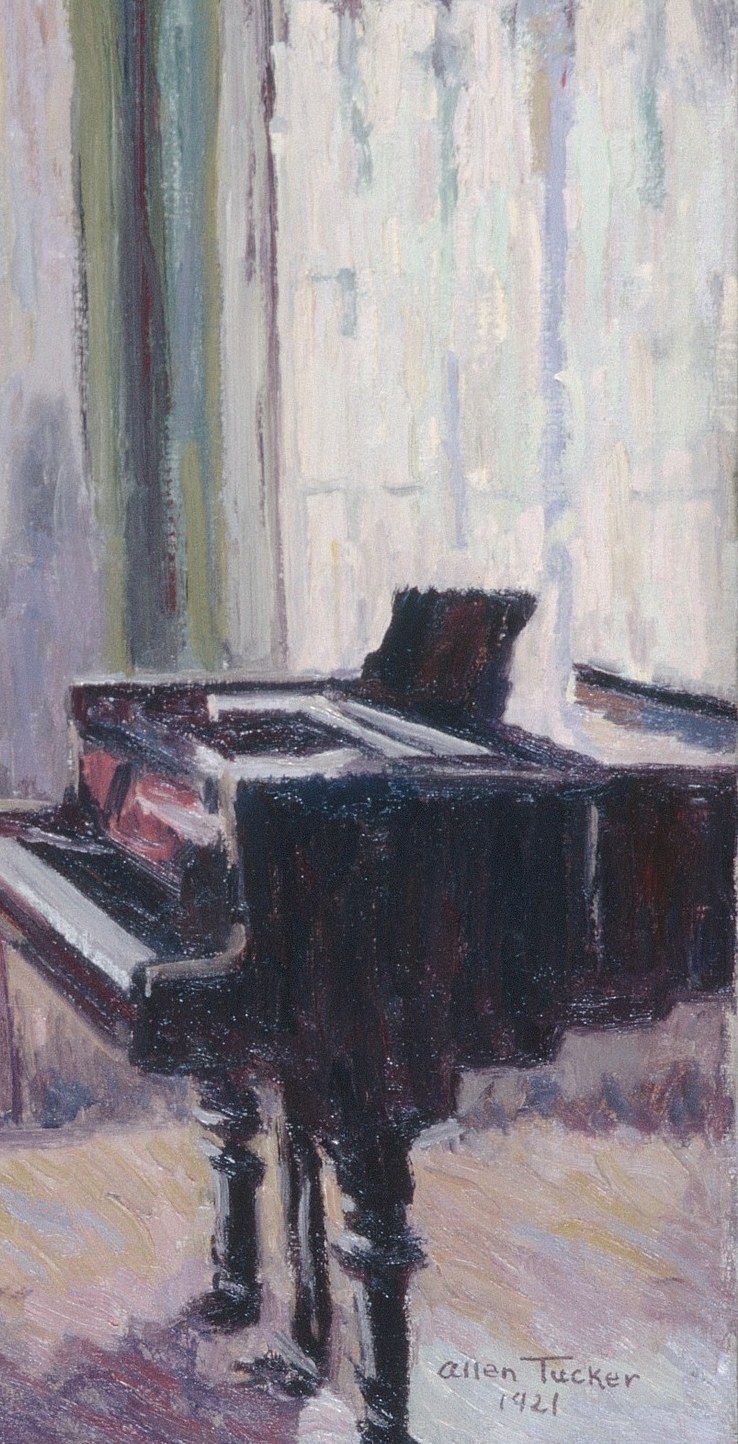
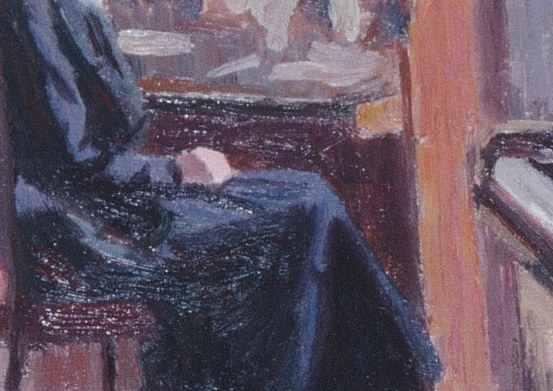
The woman does not sit at the piano. She sits at a writing desk, her hands folded in her lap. She is a reader or a letter-writer, not a musician. The grand piano, massive and dark on the right, signals cultural ambition, a household that values music enough to give it this much space, even when it stands silent. Behind her, a framed picture on the wall adds a second silent presence to the room.
Allen Tucker was born in Brooklyn in 1866 and trained as an architect before turning to painting. His brushwork here is loose and warm, almost sketchy, dissolving the window into near-white light, a Post-Impressionist trick that makes the whole room seem to breathe. Tucker painted this in 1921, the year after American women gained the right to vote, in a country trying to define what normal life looked like again.
A woman, a desk, a piano, a window full of light. Every object in this room was chosen to say something about the people who lived here. What does the room you are sitting in right now say about you?
Details
Transcript
A woman sits alone in a parlor, hands folded in her lap. She is not at the piano. She sits at a writing desk. This is not a musician interrupted, but a reader or a letter-writer in a quiet moment. The grand piano fills the right half of the room, massive and silent. In 1921, a piano in the home signaled cultural ambition. Music lives here, even when no one plays. Behind her, a framed picture presides on the wall, a second silent presence in the room. Allen Tucker painted this the year after American women won the vote, in a nation catching its breath between wars. The room holds its peace. But look at her hands.