Destitute Dead Mother holding her sleeping Child in Winter by Octave Tassaert
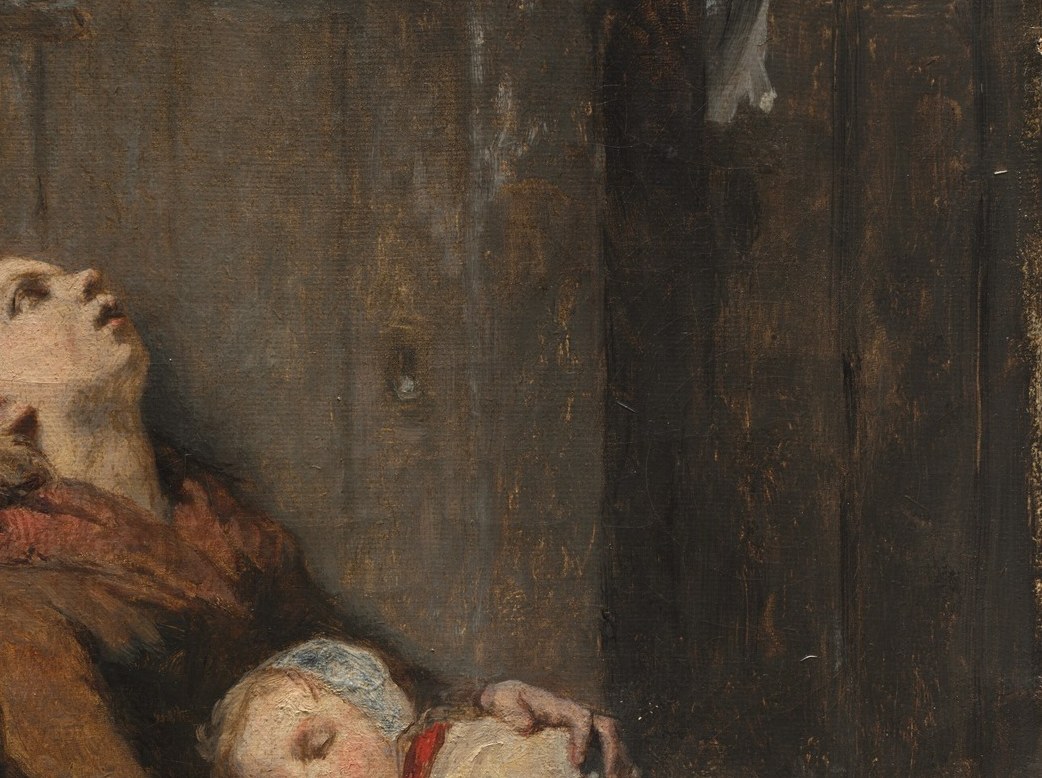
Octave Tassaert's "Destitute Dead Mother holding her sleeping Child in Winter," from around 1850, is a poignant portrayal of urban poverty and maternal devotion, held at The Cleveland Museum of Art.
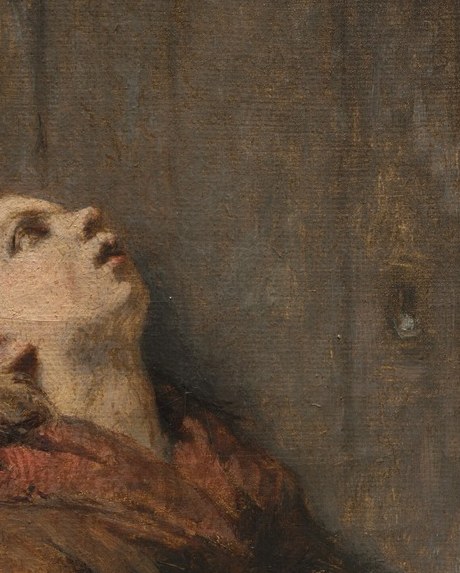
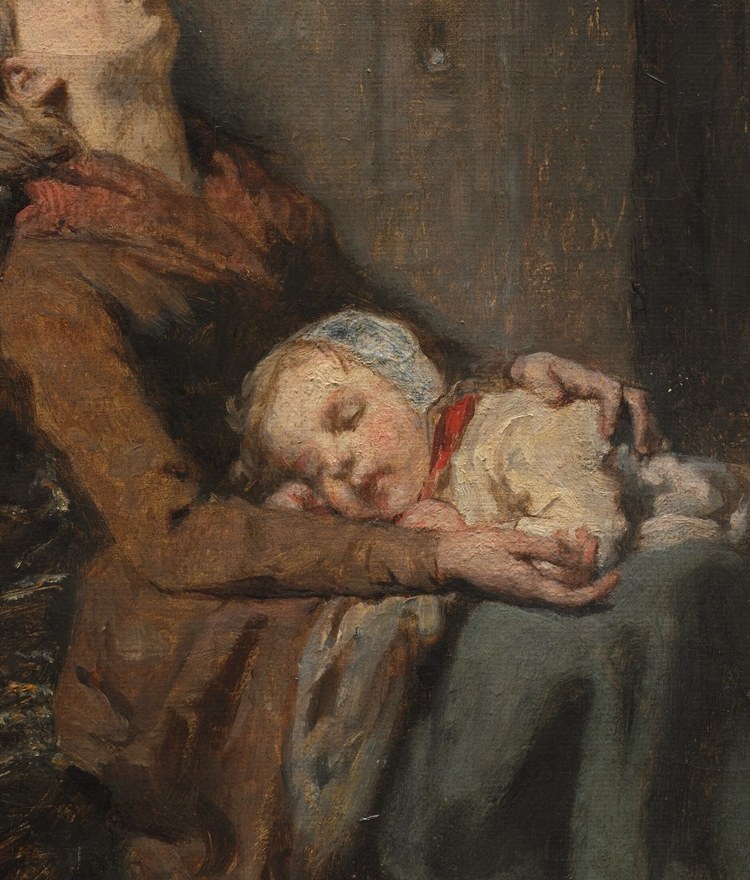
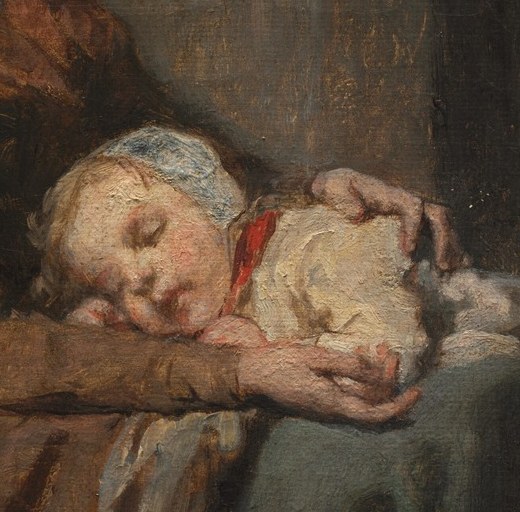
The painting's muted palette and stark composition create a somber atmosphere, but a closer look reveals a small, perhaps hopeful, detail. The mother's vacant gaze and worn hands speak of profound hardship, yet the child sleeps peacefully, wrapped in simple cloth.
Tassaert, a French artist, was known for depicting the miserable lives of the downtrodden in Paris. This work aligns with the realist movement's focus on everyday hardship, reflecting contemporary concerns about the working class's plight.
Notice the small touch of red fabric around the child's neck. In a scene dominated by cold and despair, this small splash of color might symbolize a spark of life or warmth, an enduring flicker amidst the bleakness.
Details
Transcript
This painting depicts a mother and child in bleak winter. Her face is vacant, her hands cradling her sleeping child. The artist, Octave Tassaert, often painted Paris's downtrodden. This work, from 1850, shows stark urban poverty. Amidst the cold, look at this small hint of red fabric. It's a subtle symbol of warmth or life in deep despair.