Self-Portrait by Fantin-Latour, Henri
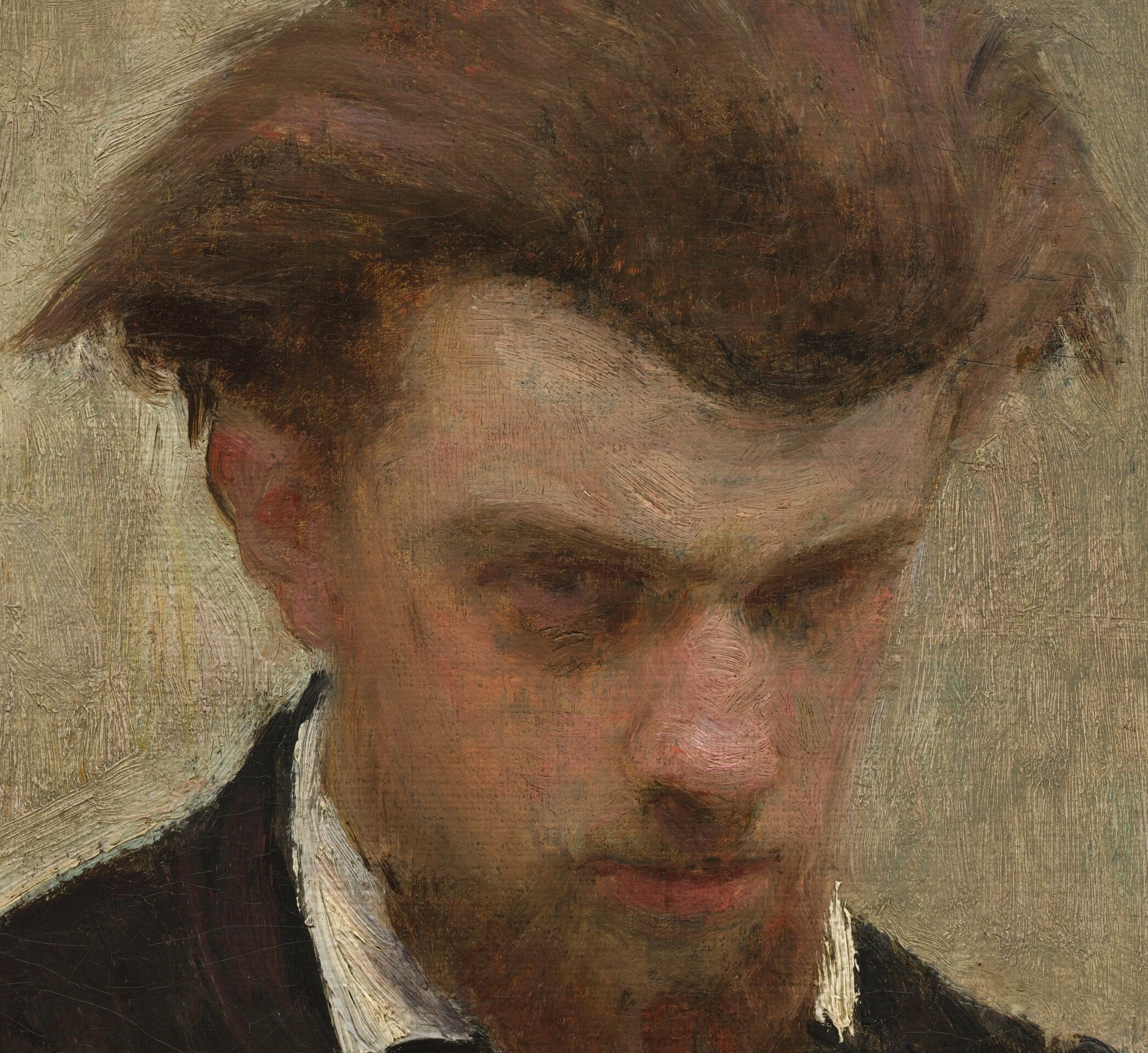
Henri Fantin-Latour painted this self-portrait in 1861, at twenty-five, and gave it to his sister.
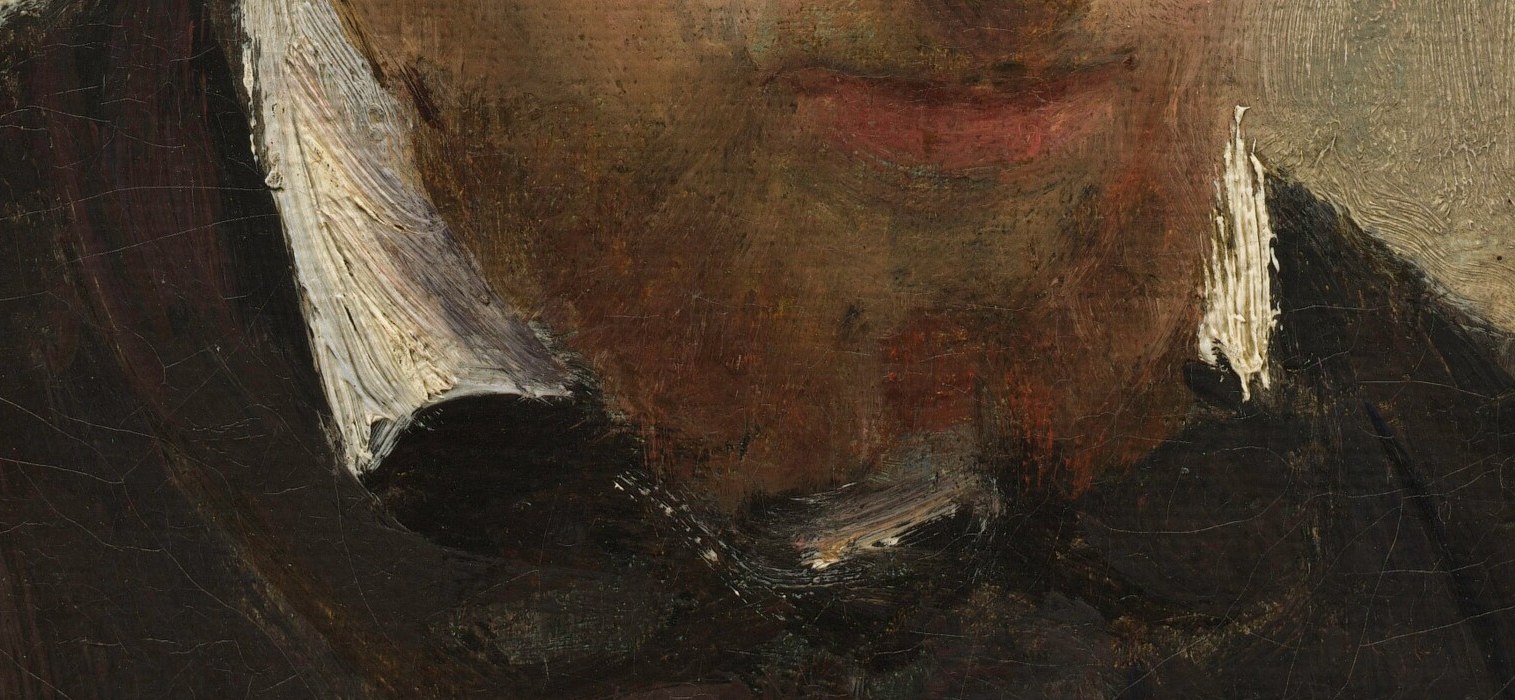
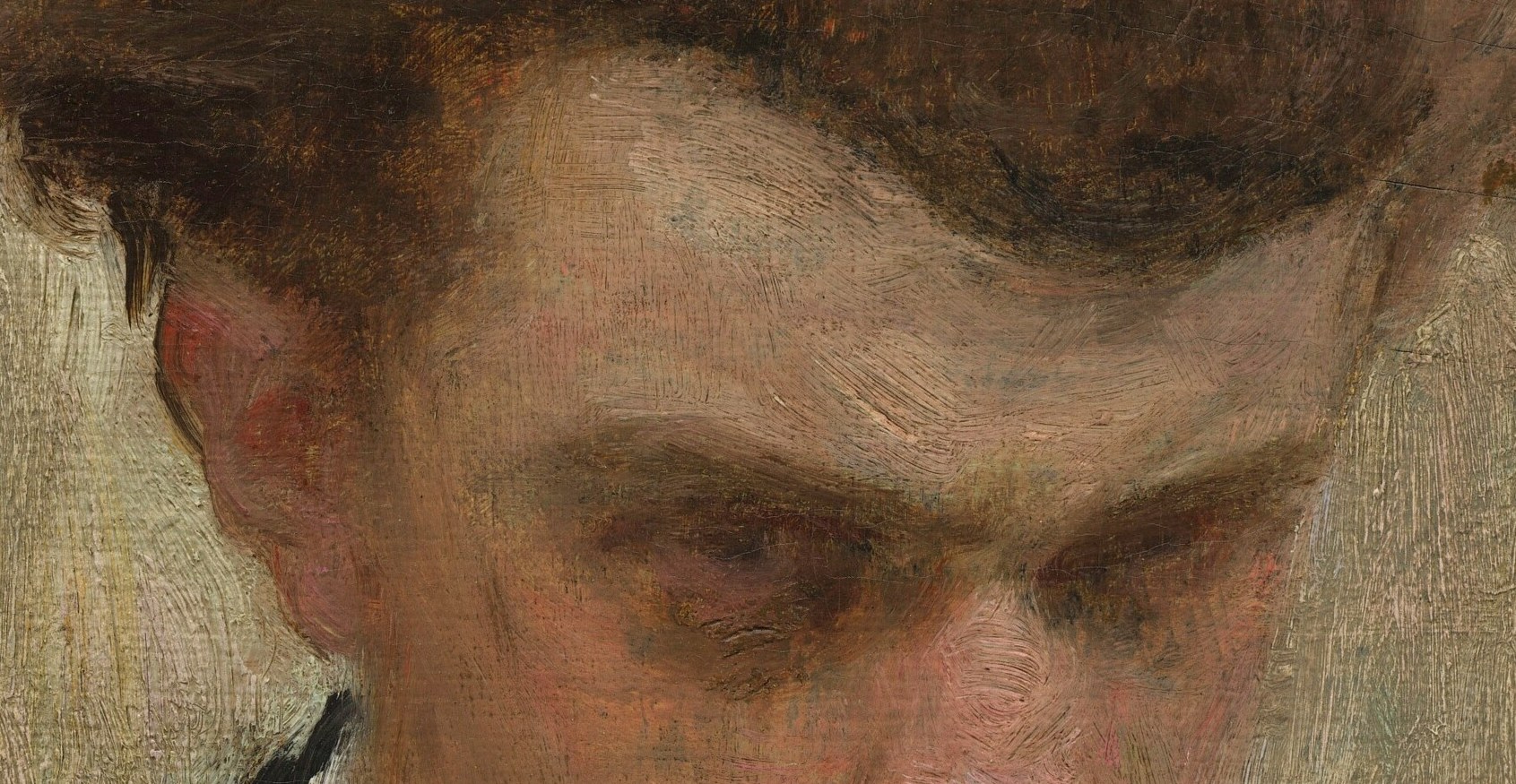
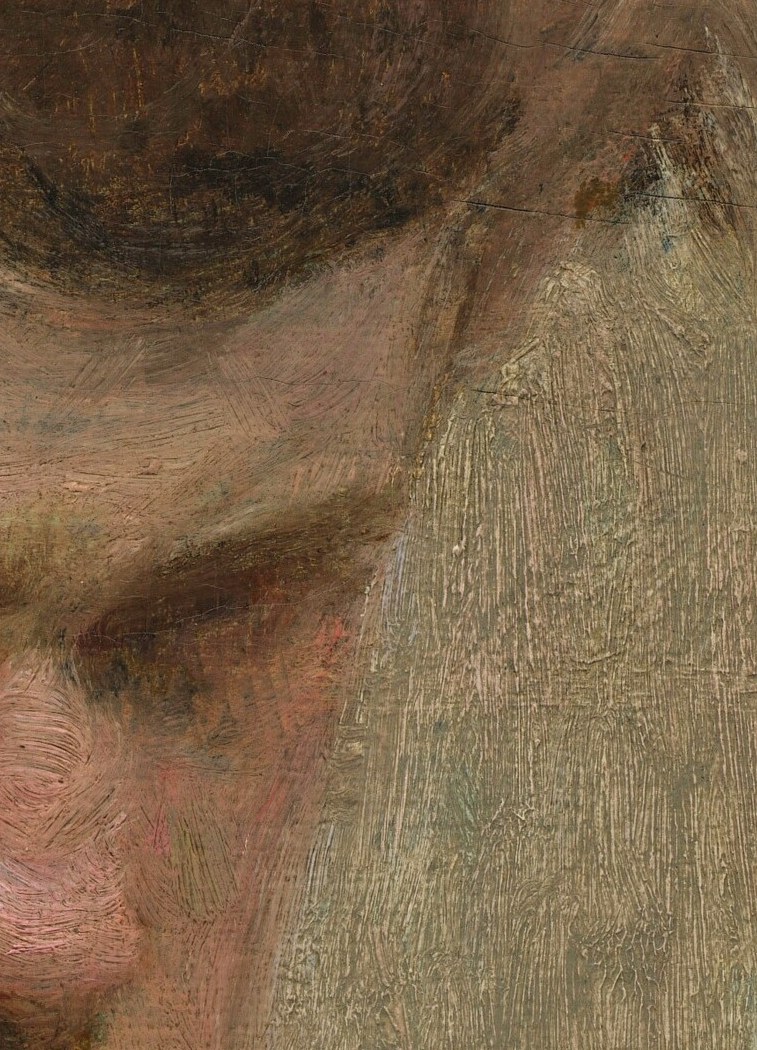
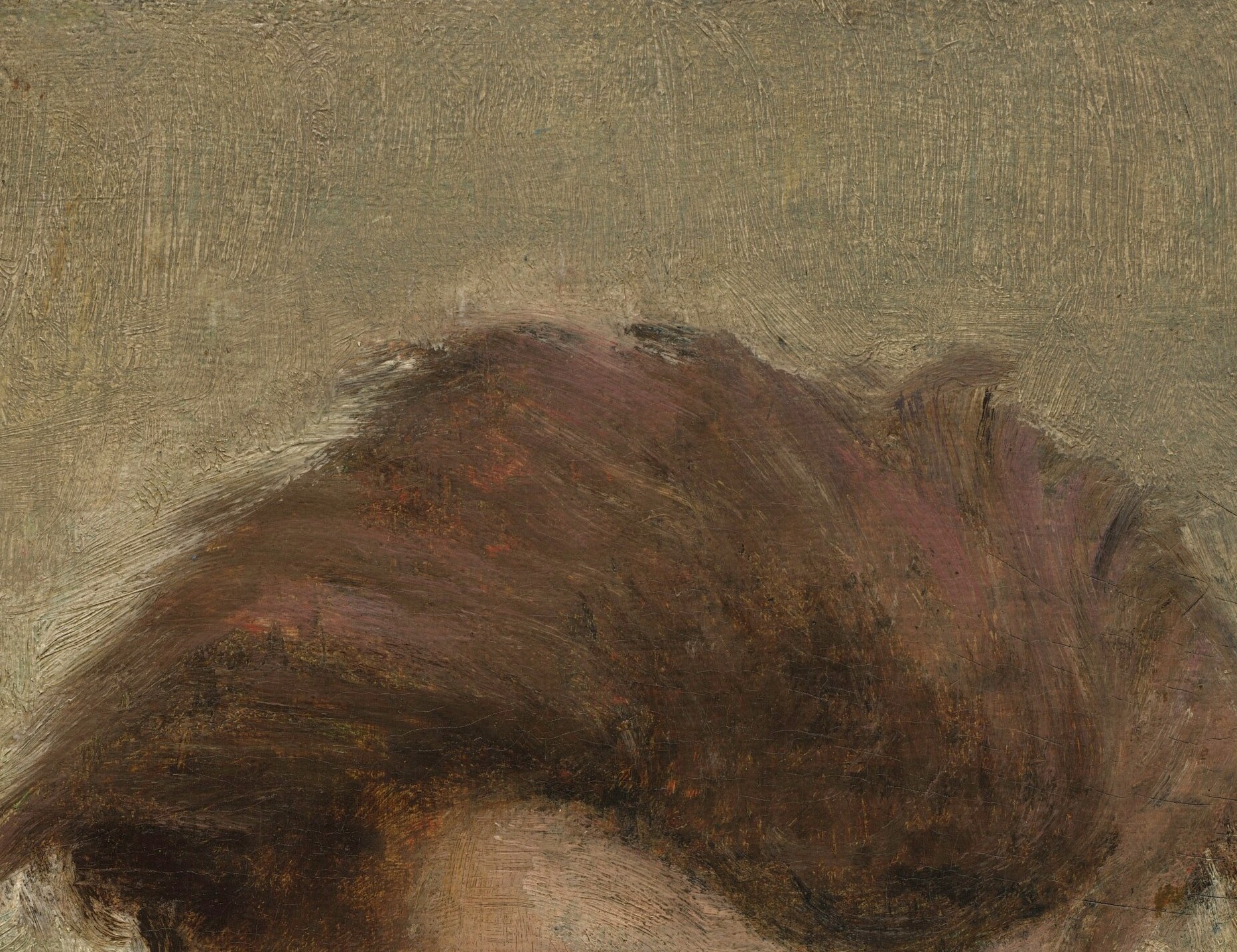
Look at what he left unfinished. The dark coat is a near-featureless void, his hair a loose tangle of broom-like strokes. All the attention lands on the face, and even there, the eyes slide away downward. It is a deliberate withholding: the young Realist refuses to perform for his own canvas.
Fantin-Latour is now remembered for his group portraits and luminous flower paintings. This early work is quieter, private; it stayed within his family and never entered a museum collection. For a young artist building a reputation in Paris, giving away your own image without fanfare is a curious financial move.
It reads less like a portrait and more like a note left on a kitchen table.
Details
Transcript
He painted this in 1861. He was twenty-five. He wears no tie. His hair is a mess. The eyes look down. He won't meet his own gaze. This was his gift to his sister. He gave no self-portrait to any museum.