Catania and Mount Etna by Edward Lear
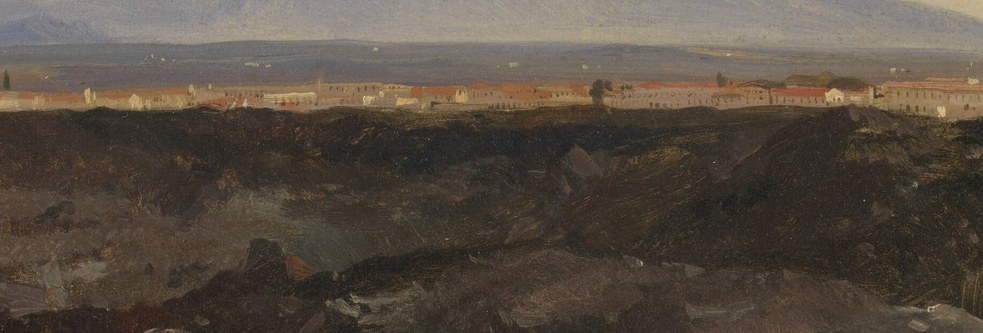
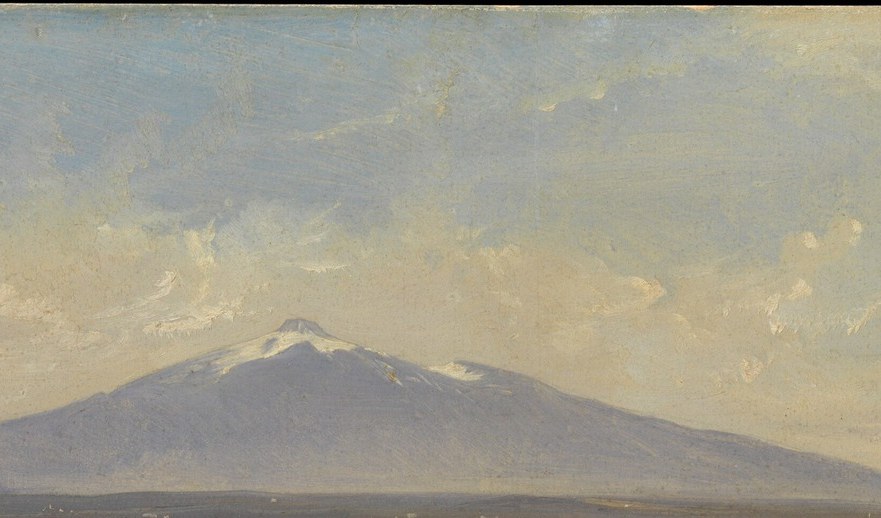
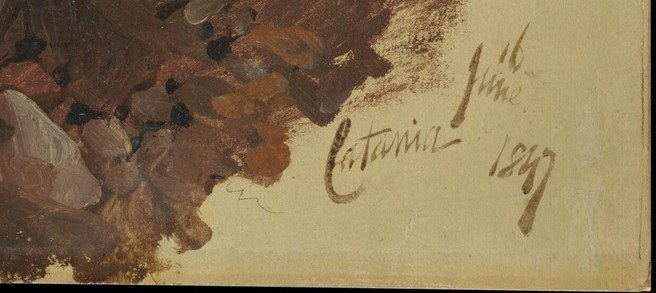
Edward Lear's "Catania and Mount Etna" is a small oil sketch from 1847, now known as much for its beauty as for its disappearance. The painting depicts the Sicilian coast, with the snow-capped volcano rising above the modest white buildings of Catania. It belongs to the collection of the Metropolitan Museum of Art in New York, but nobody has seen it in decades.
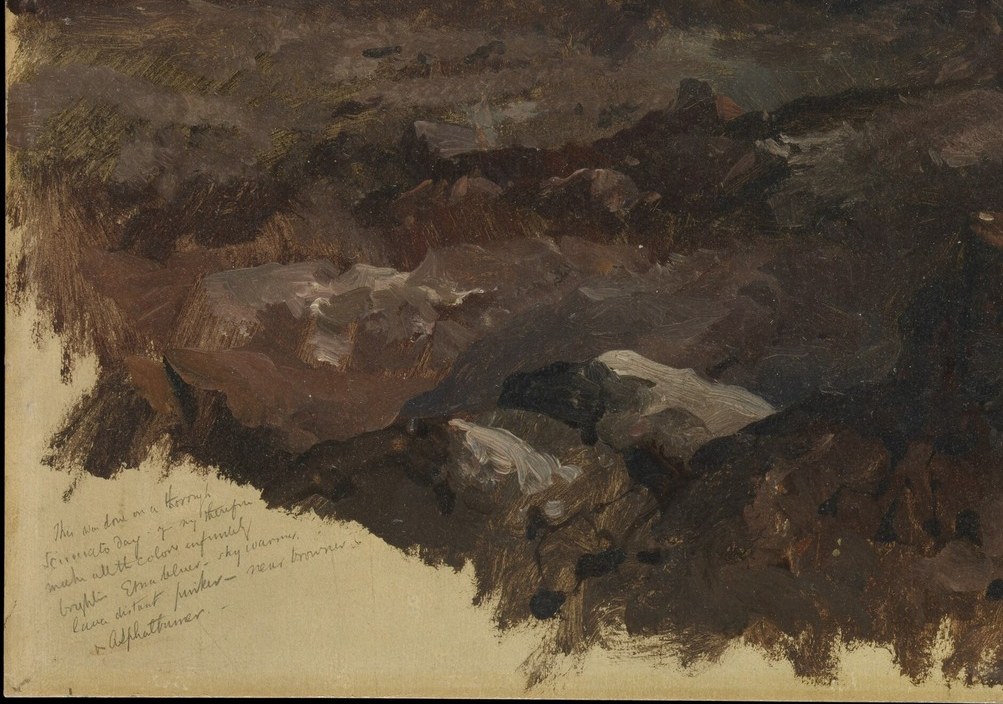
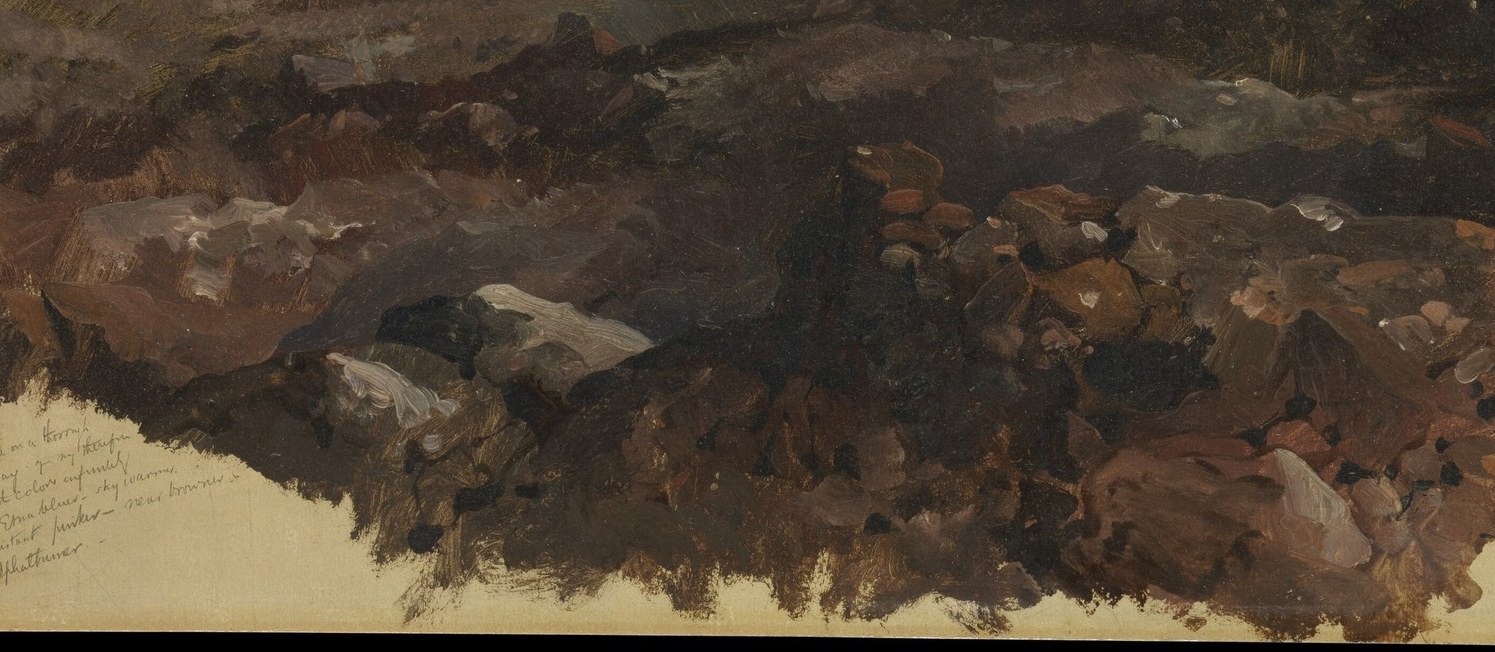
Look at the dark, angular rocks in the foreground. Lear used confident, loose brushstrokes to capture the volcanic terrain, the paint applied quickly to record the light and atmosphere. The mountain itself dissolves into the pale sky with a delicate haze, a mark of direct observation under the Mediterranean sun.
Lear is far better known today for his literary nonsense, especially his limericks and "The Owl and the Pussycat." But he was a dedicated landscape artist who traveled widely. In 1992, this painting and one other were stolen from the Met's storage. The theft was never solved, making this quiet study of a volcano a work of art that exists only in photographs.
What do you think happened to it?
Details
Transcript
Edward Lear is famous for his nonsense verse. But he was a serious landscape painter. This oil sketch of Catania and Mount Etna was painted in 1847. A direct, rapid work made on his Mediterranean travels. Over a century later, it vanished. In 1992, it was stolen from the Met's storage. The thieves took only this and one other small painting. It remains missing to this day.