Saint Martin Dividing His Cloak by Boeckhorst, Jan
Jan Boeckhorst's Saint Martin Dividing His Cloak (c. 1642) hangs in quiet authority, but most people scroll past the detail that locks its meaning in place.
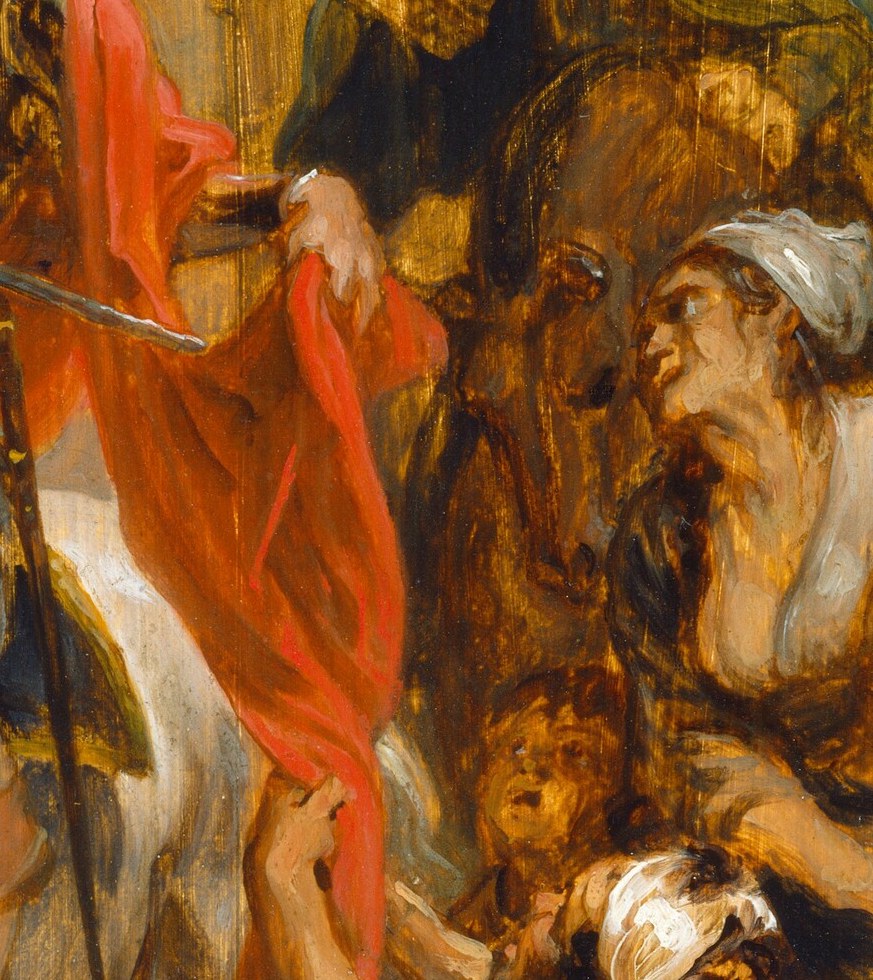
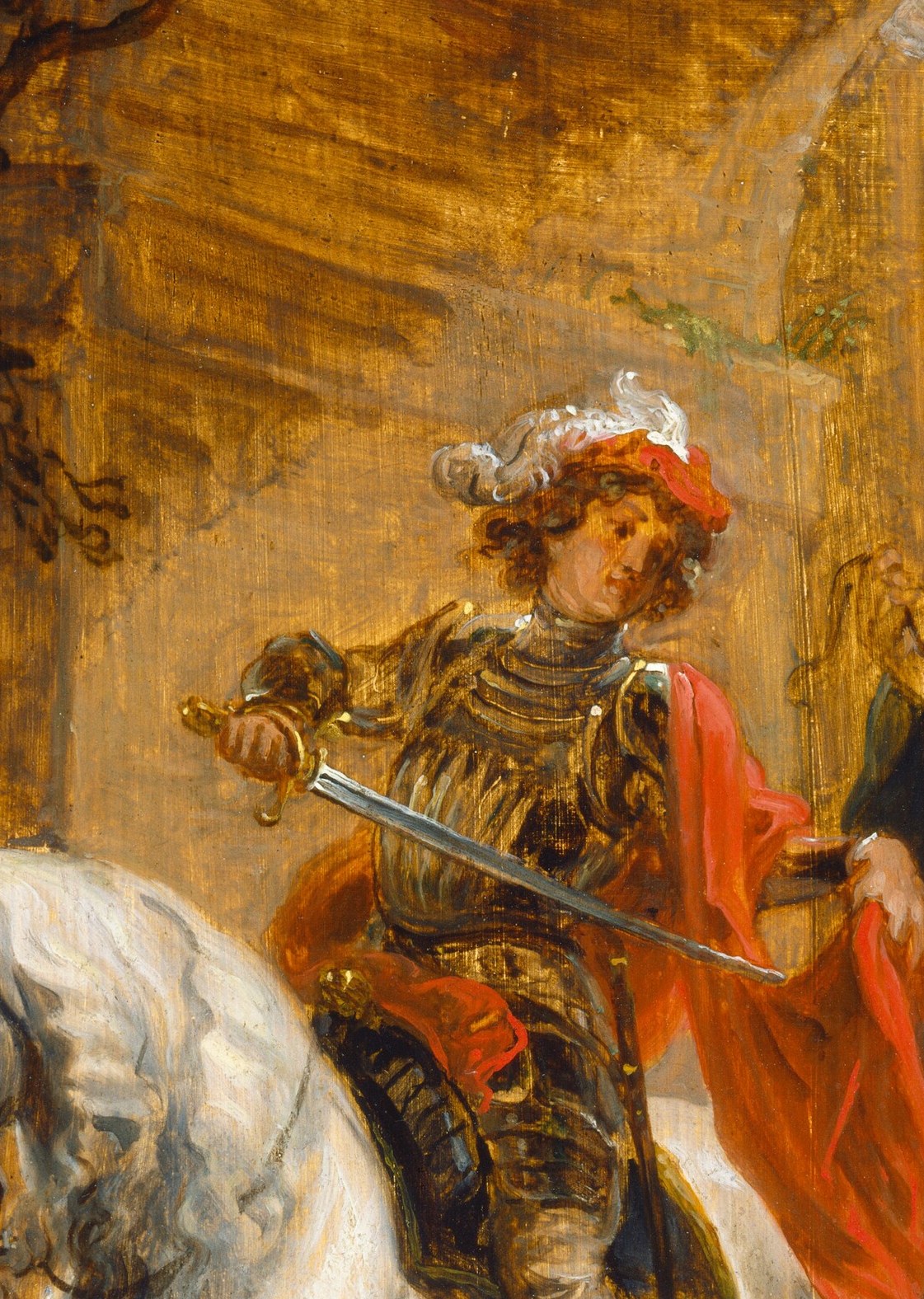
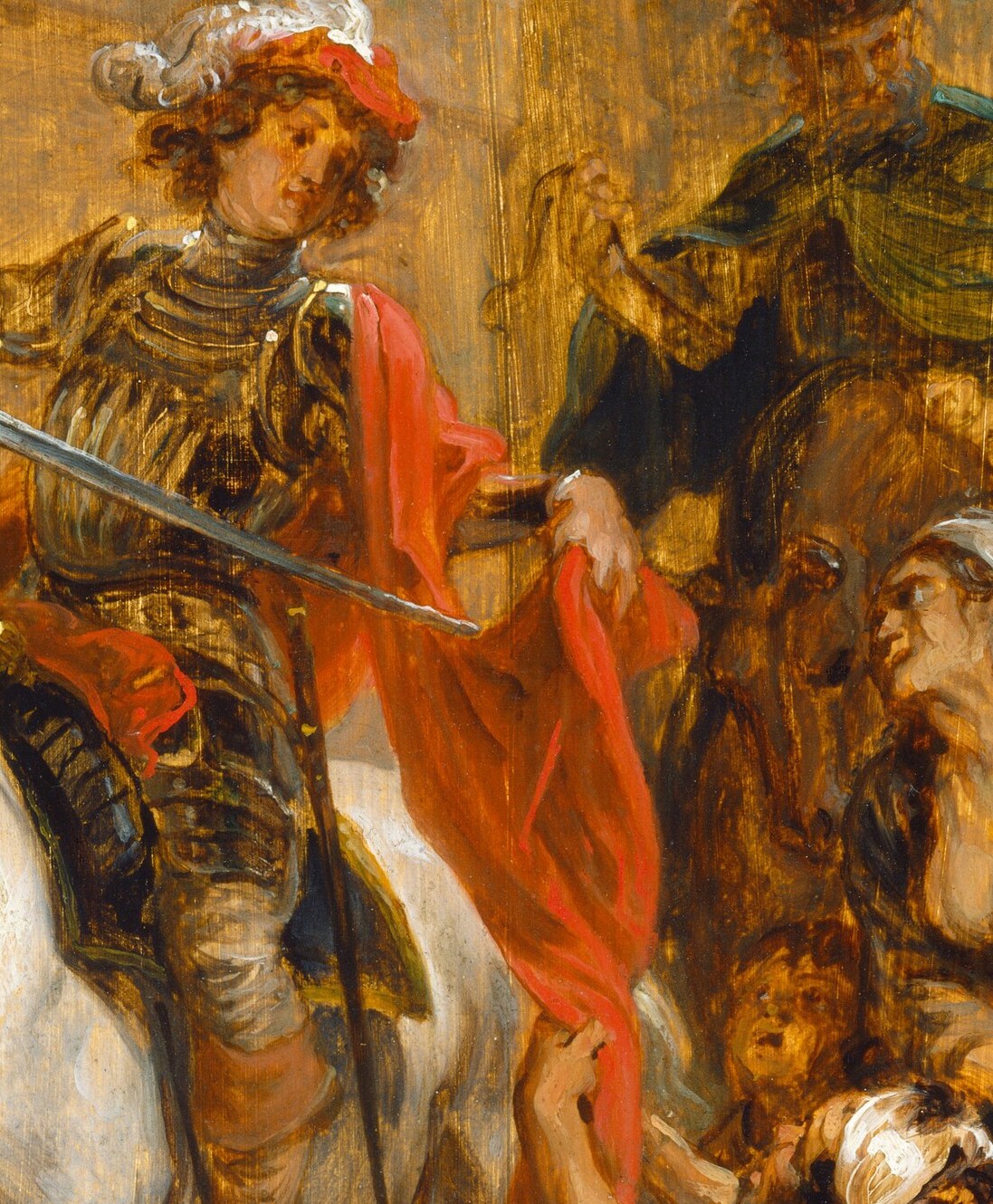
The painting shows Martin of Tours, a Roman soldier, cutting his cloak in two to share with a beggar. Boeckhorst gives the scene Flemish Baroque warmth: the horse gleams white, the golden light floods in from the upper left, and the beggar's bare torso pulls your eye downward across the diagonal of the cloak.
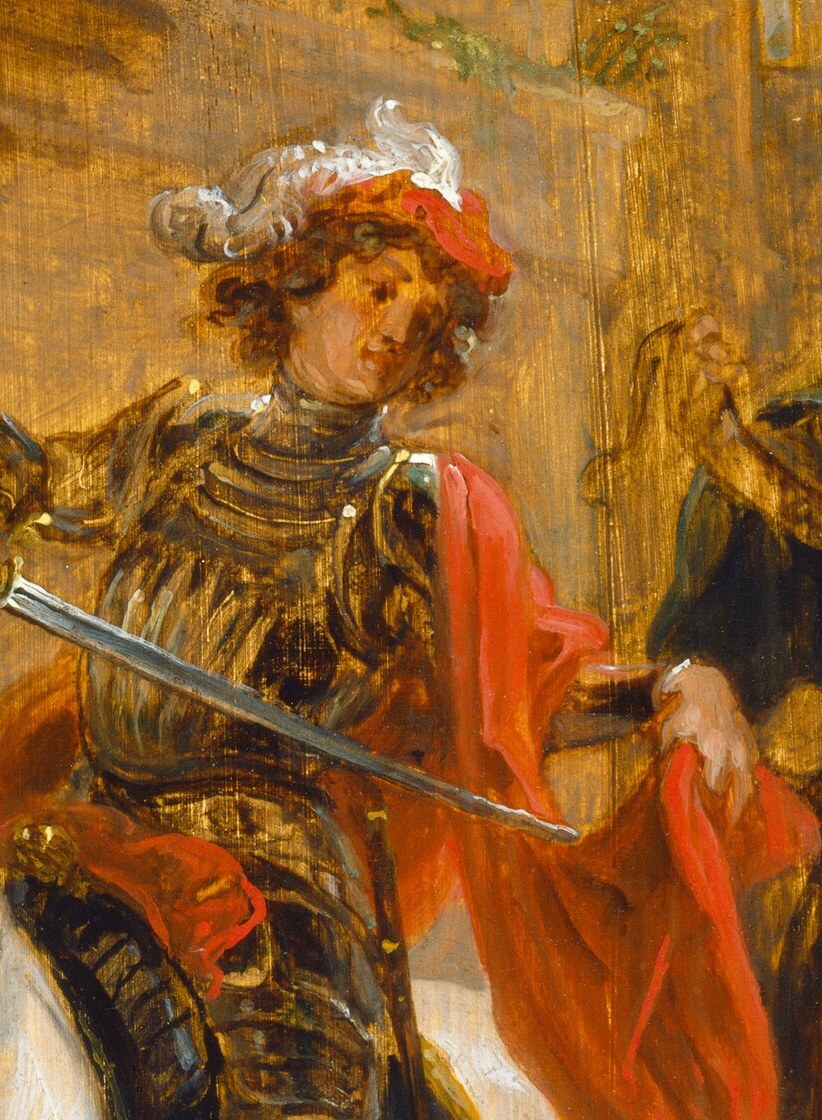
But the detail that matters is the blade. Martin uses a sword, not shears. That sword identifies him as an active soldier, a man still embedded in the imperial war machine, performing an act of Christian charity before his famous conversion and conscientious objection. The painting captures a hinge moment in a saint's biography.
Jan Boeckhorst was a German-born painter working in Rubens' Antwerp. He absorbed the grand manner and put it to work on hagiographical subjects like this one. Next time you see a saint-and-horse painting, check what they are holding. It often tells you the real story.
Details
Transcript
He looks like any nobleman on horseback. But a beggar reaches up from the cold ground. Martin was a Roman soldier. A man of rank and violence. Now look at the blade he's holding. It is a sword. He's still a soldier. This act of mercy came before his conversion.