Winter in Amsterdam by George Hendrik Breitner
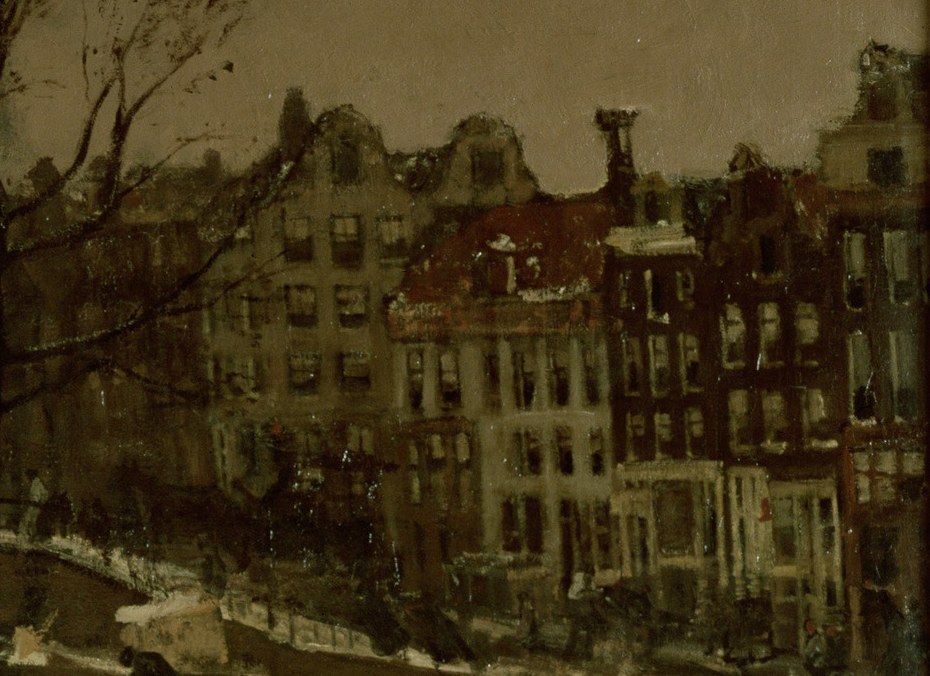
Winter in Amsterdam by George Hendrik Breitner is a painting built from photographs. Around 1900, Breitner walked the Dutch capital with a handheld camera, shooting street scenes he would later turn into canvases in his studio. The painting hangs in the Rijksmuseum, part of its collection of Amsterdam Impressionism.
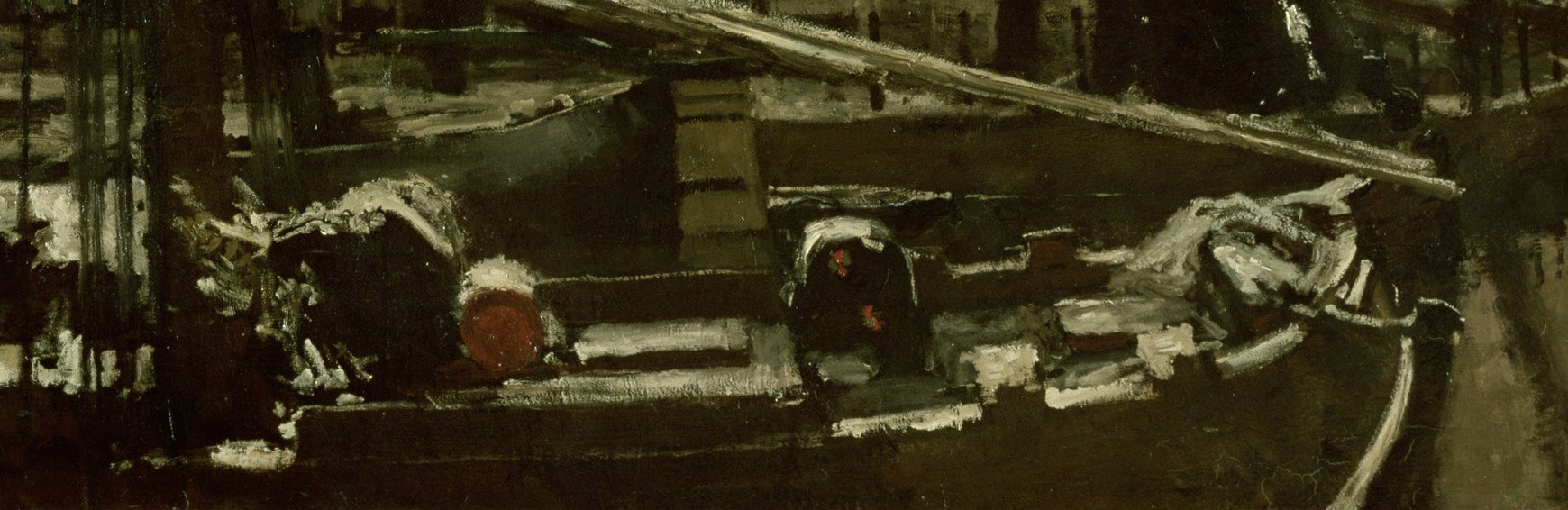
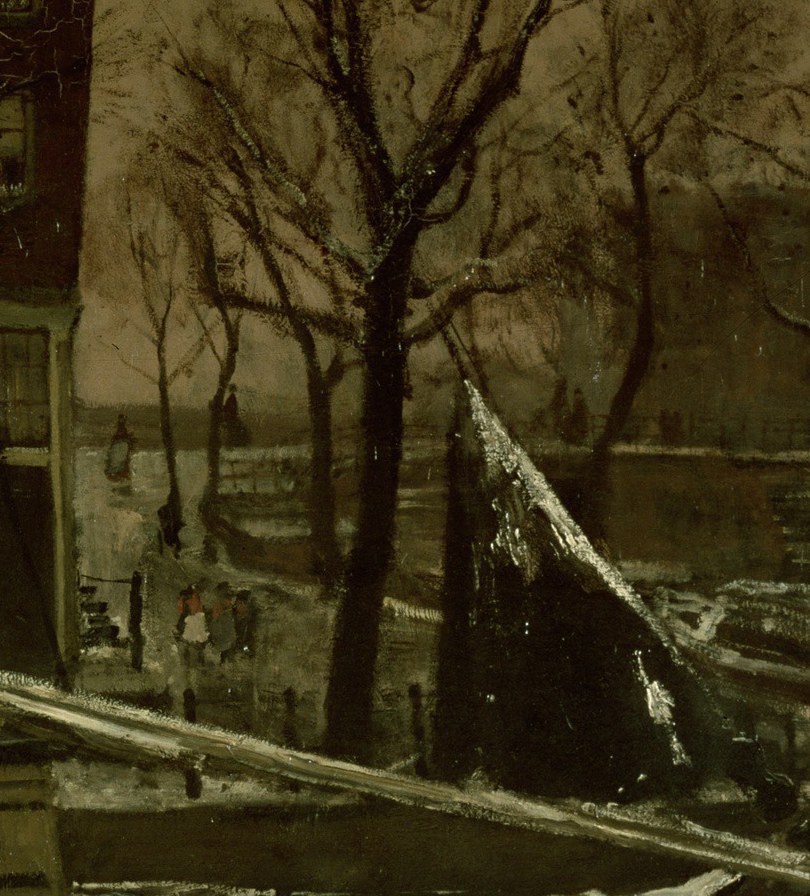
At first glance it is a quiet winter canal scene: gabled houses, bare trees, a work boat idle in the foreground under a muted gray sky. But look along the far bank. A lone figure walks there, small enough to miss entirely.
Breitner was among the first Dutch painters to use photography as a systematic tool for his art. His street photographs became studies; his canvases became something slower and more deliberate, the same observant eye, rendered in oil. He anticipated a way of working that would become ordinary for painters in the century that followed.
A hundred and twenty years later, the walker is still there.
Details
Transcript
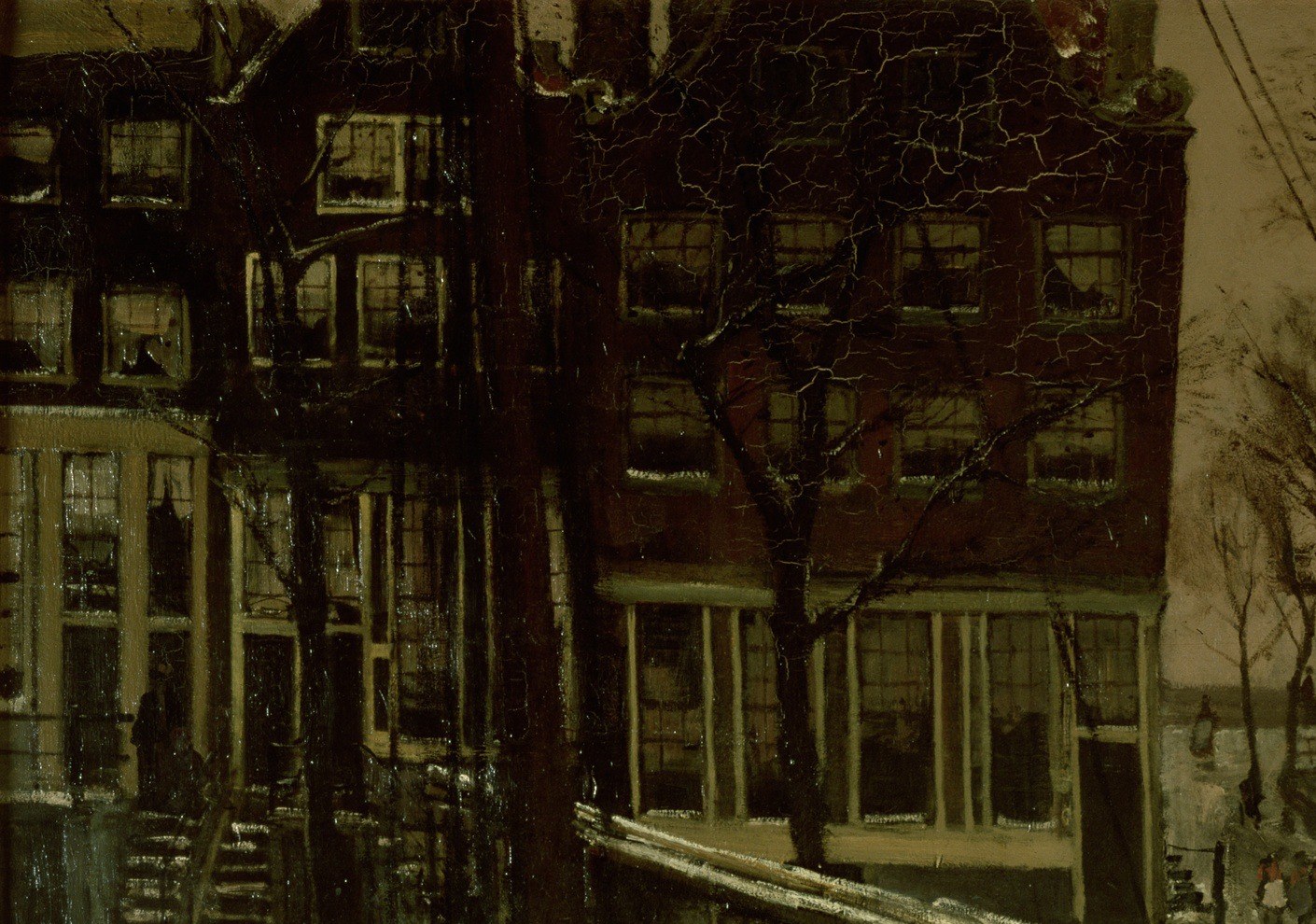
This painter carried a camera through the streets of Amsterdam. Gabled canal houses line the far bank. A working boat, idle for the winter. A bare tree rises through the winter gray. A lone figure on the far bank. Breitner photographed passersby, then painted them.