Siegfried and the Rhine Maidens by Ryder, Albert Pinkham
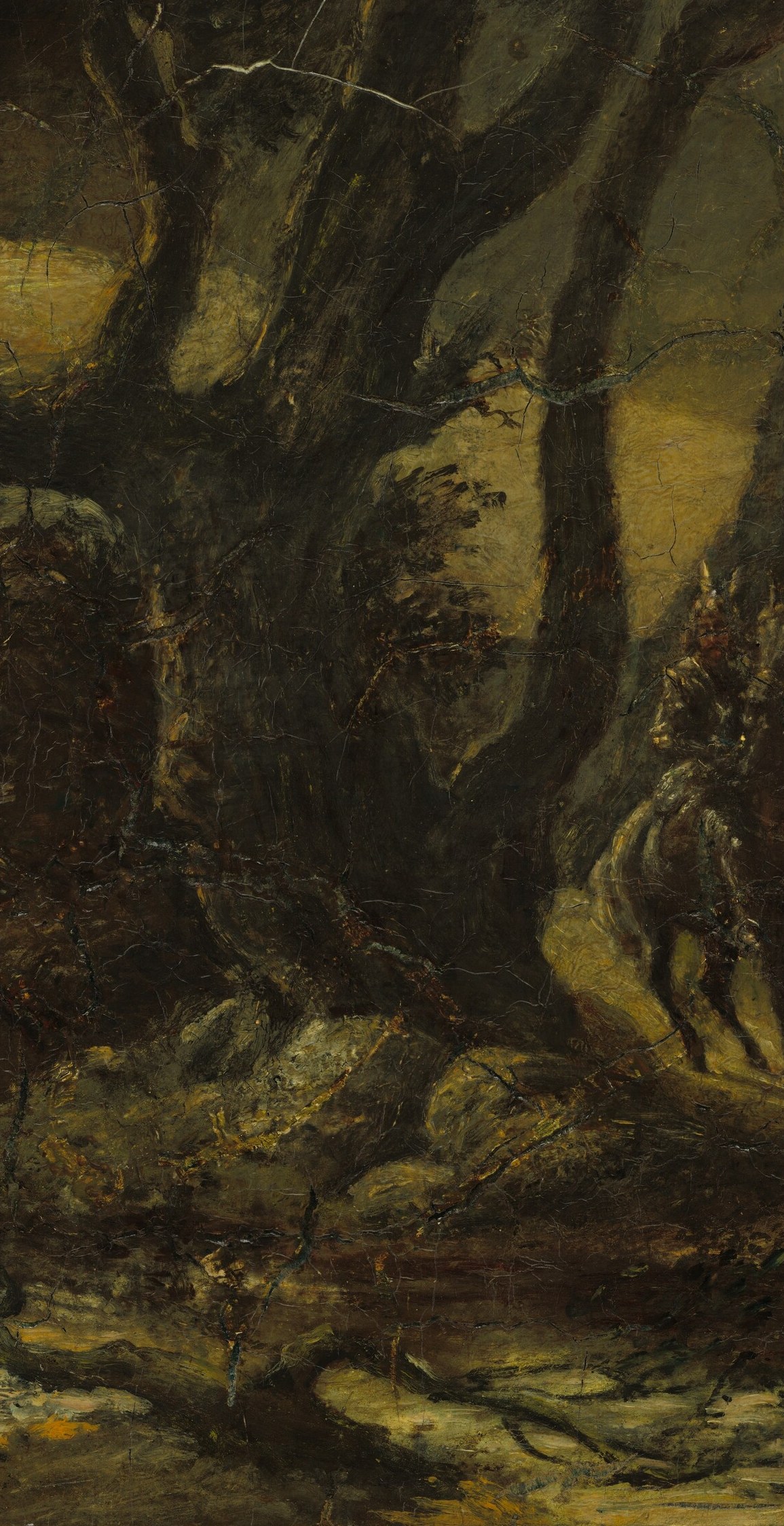
Albert Pinkham Ryder's "Siegfried and the Rhine Maidens," painted around 1890, at the National Gallery of Art, is a masterclass in creating atmosphere through technique. Ryder didn't just paint a scene; he sculpted it, using thick impasto to give the canvas a tactile, almost three-dimensional quality.
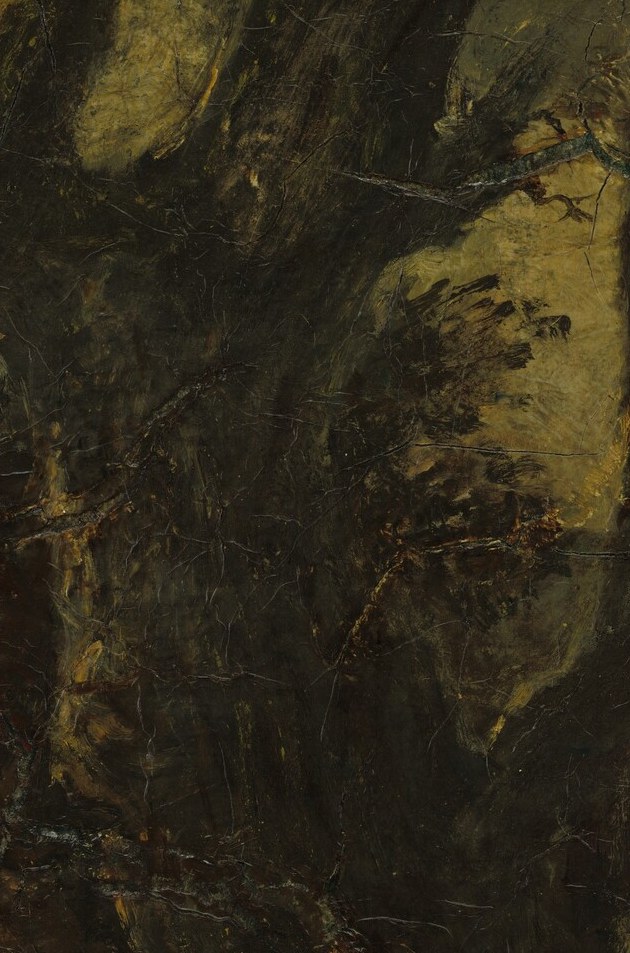
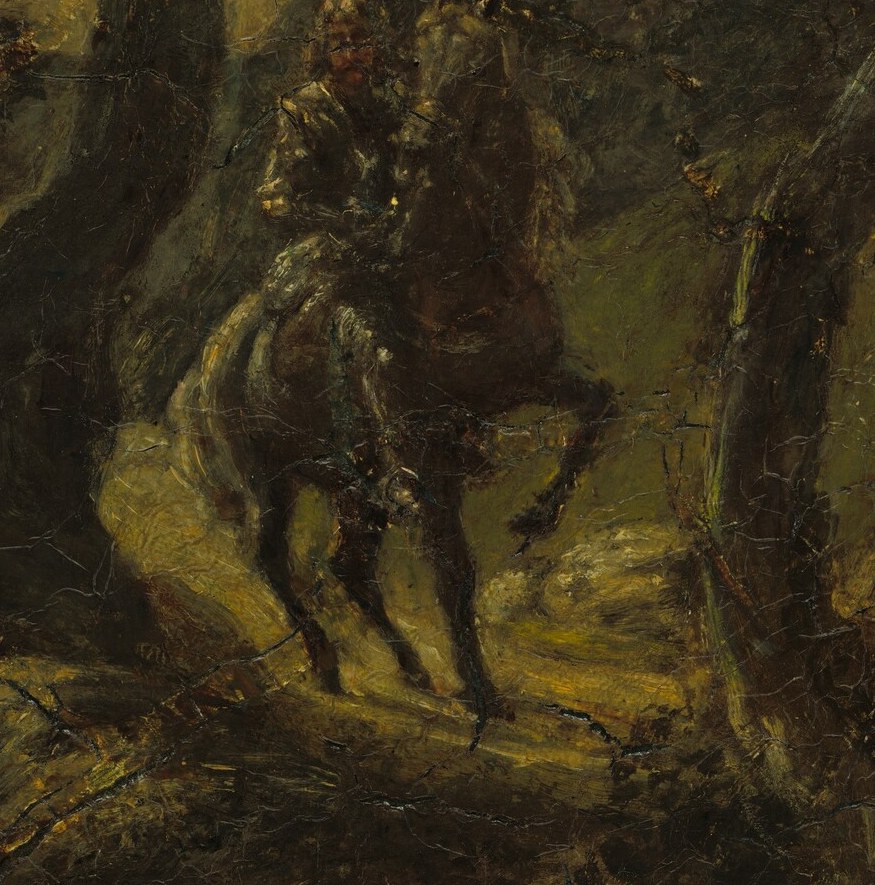
Look closely at the gnarled tree trunk, for instance. The heavy application of paint isn't just color, it's texture, making the bark feel rugged and ancient. This technique extends to the figures, especially Siegfried, who seems to emerge from the canvas itself, rather than simply sit on its surface.
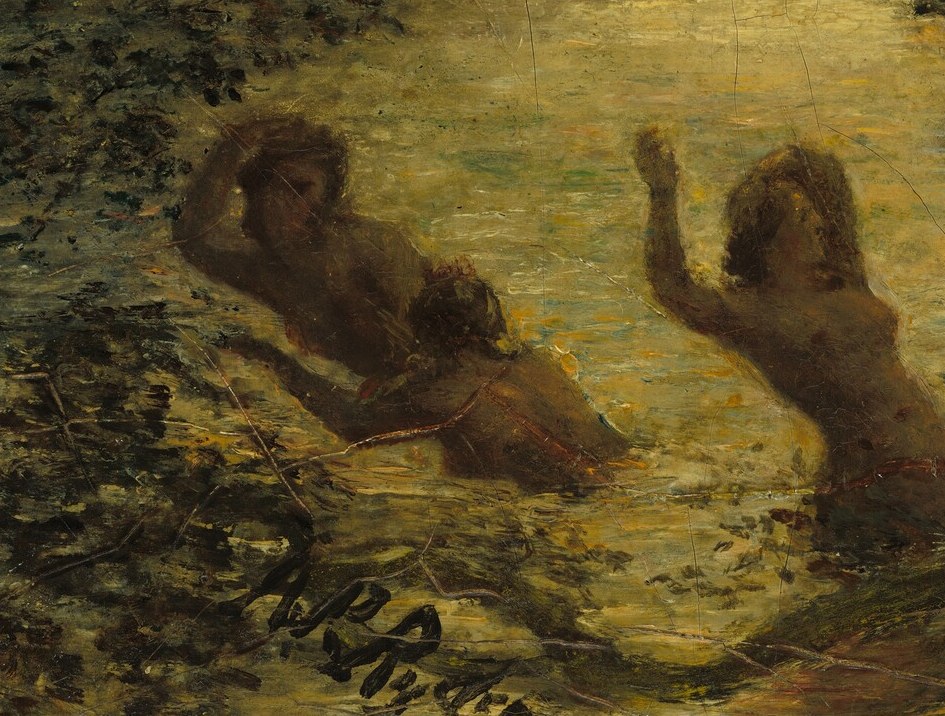
Ryder drew inspiration from Richard Wagner’s opera cycle, "Der Ring des Nibelungen," to depict the hero Siegfried's encounter with the mythical Rhine Maidens. His distinctive style, characterized by dramatic light and shadow and simplified forms, creates a dreamlike, almost mystical effect, pulling viewers into a world of myth and elemental power. He captures the essence of the legend without illustrating it literally.
How does this unique layering technique enhance the story being told?
Details
Transcript
This painter creates a world of myth and shadows. See how thick he laid the paint, especially on this tree. It gives the bark a rugged, almost sculptural texture. Then, he uses light to pull figures from the darkness. The pale moon, or sun, diffuses an otherworldly glow. He built up layers to make Siegfried emerge from the canvas.