Madonna of Saint Jerome by Pratt, Matthew
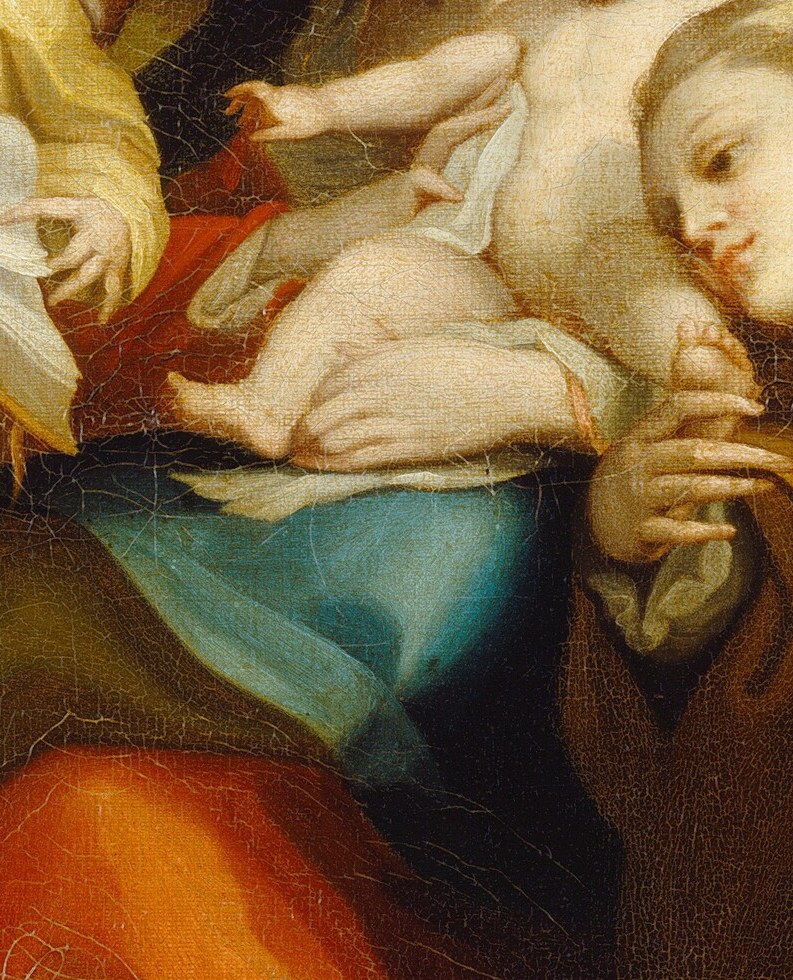
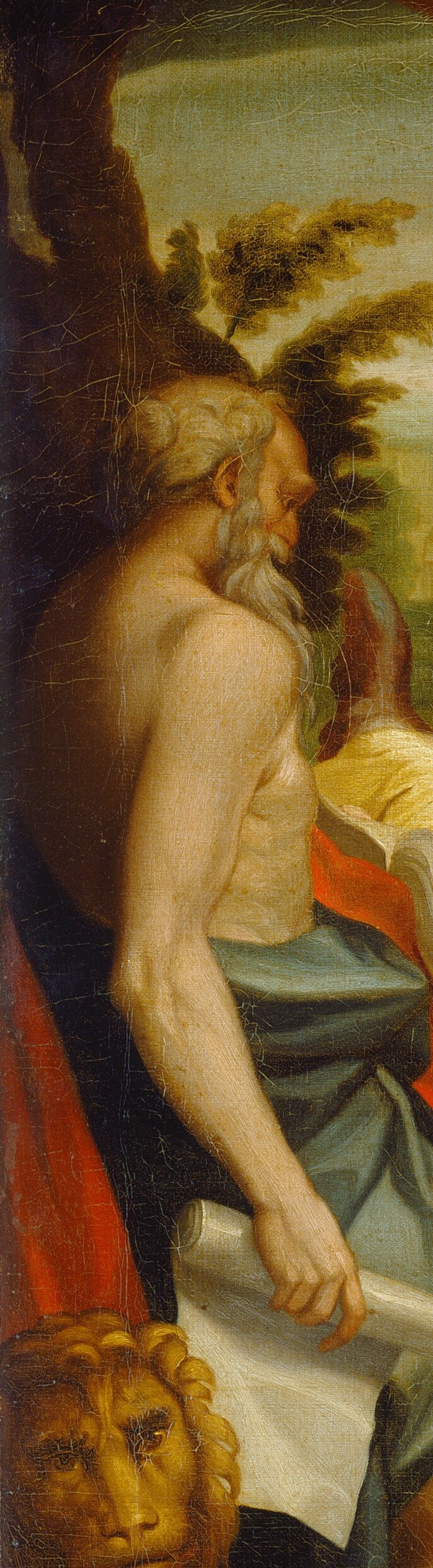
Matthew Pratt's "Madonna of Saint Jerome," painted between 1764 and 1766, is a religious oil painting housed in an unknown collection. While the painting depicts the Virgin Mary, the Christ Child, Mary Magdalene, and another young figure, the titular Saint Jerome is conspicuously absent from the main scene.
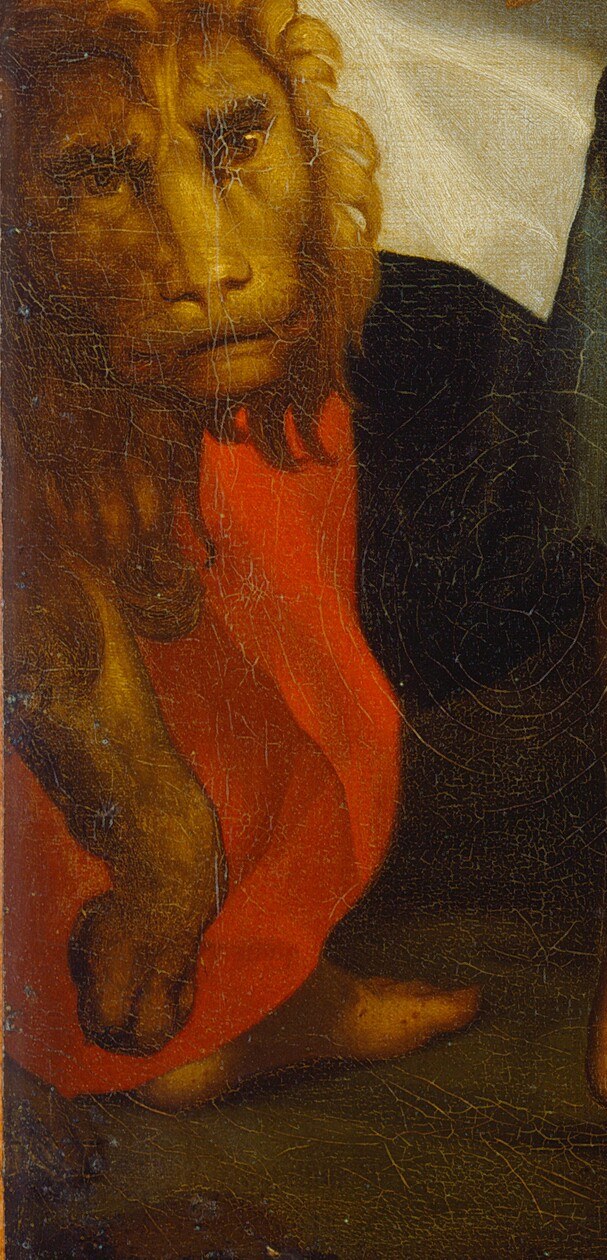
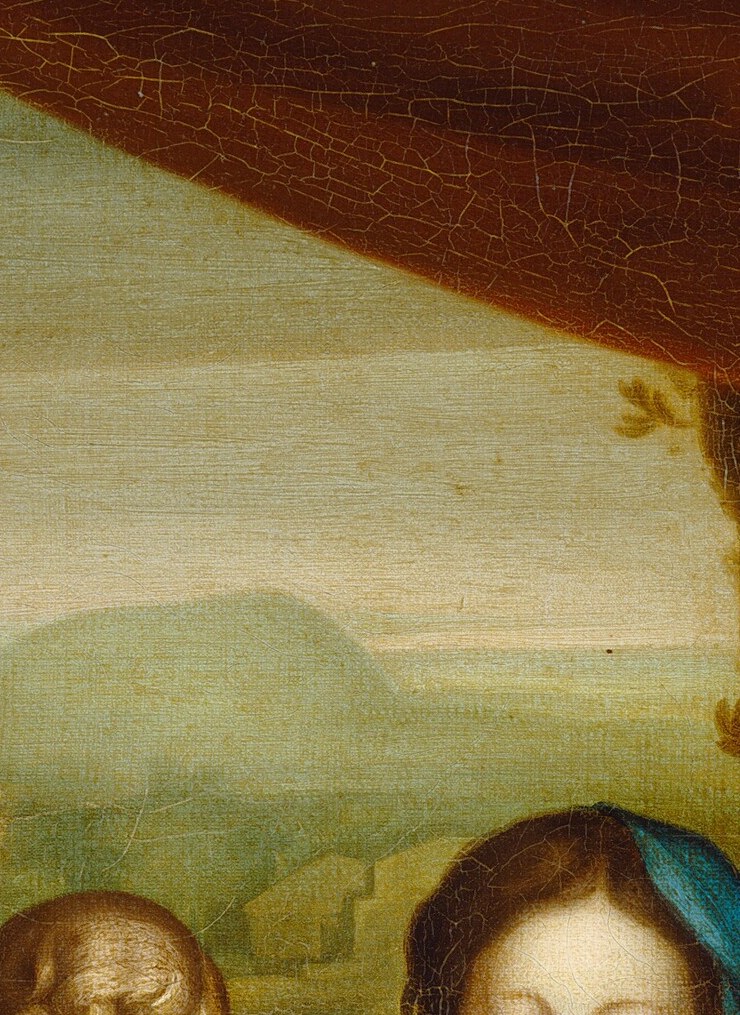
Yet, a crucial detail identifies the missing saint: a small, almost hidden lion's head peeking out from the lower-left shadows. The lion is Saint Jerome's traditional attribute, a companion he reputedly tamed after removing a thorn from its paw. This subtle inclusion confirms Jerome's connection to the painting, even in his non-visual presence.
Pratt, an American artist working in the 18th century, engaged with established European religious themes. His work demonstrates how artists could subtly weave iconography into compositions to convey complex narratives and honor traditional subjects, even when deviating from direct representation. It's a clever way to include a key figure without literally painting them in.
What other hidden symbols do you think artists used to tell their stories?
Details
Transcript
This painting looks like a devotional scene. The Madonna cradles her child, presented for worship. Mary Magdalene adores the infant, hands reaching. But the painting's title is, "Madonna of Saint Jerome." Saint Jerome himself is not here. Yet a small detail identifies him, tucked away. Beneath the shadows, a lion's head marks his presence.