The Interior of the Oude Kerk, Amsterdam by Witte, Emanuel de
View the artwork: The Interior of the Oude Kerk, Amsterdam →
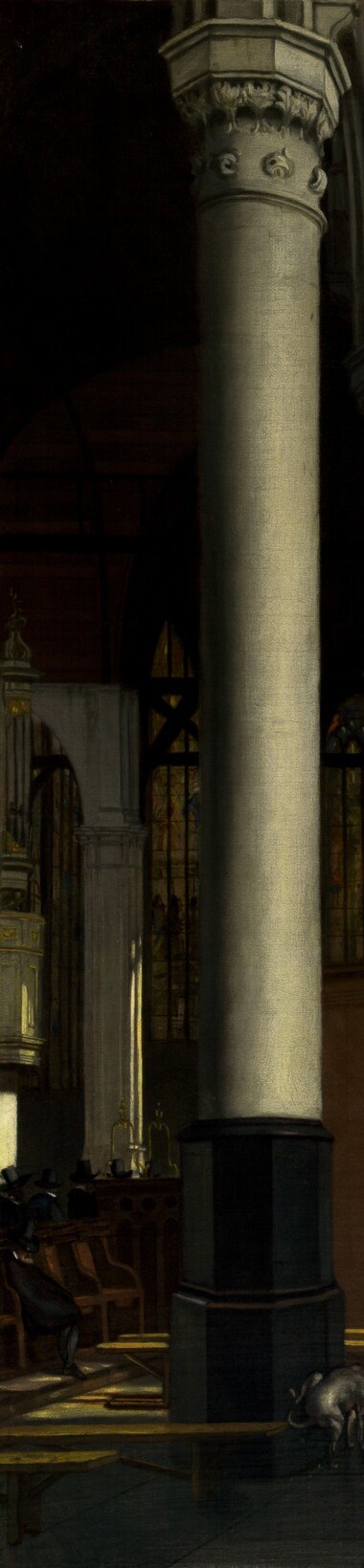
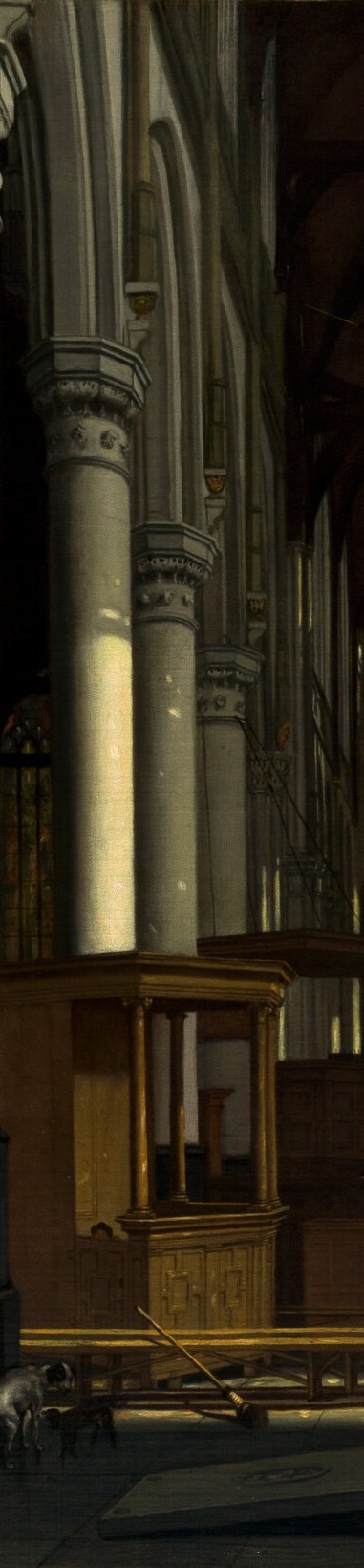
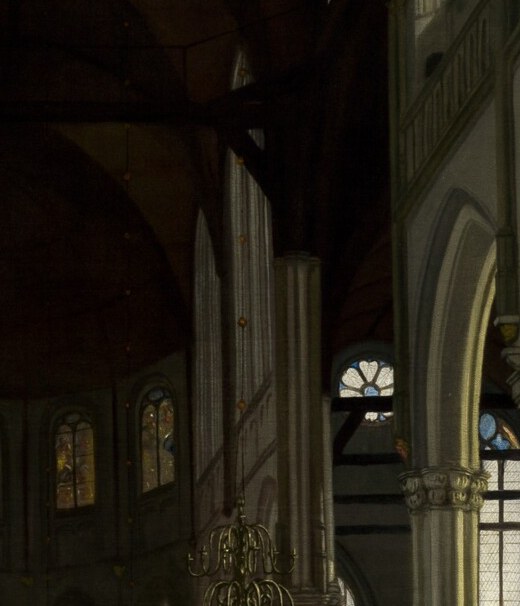
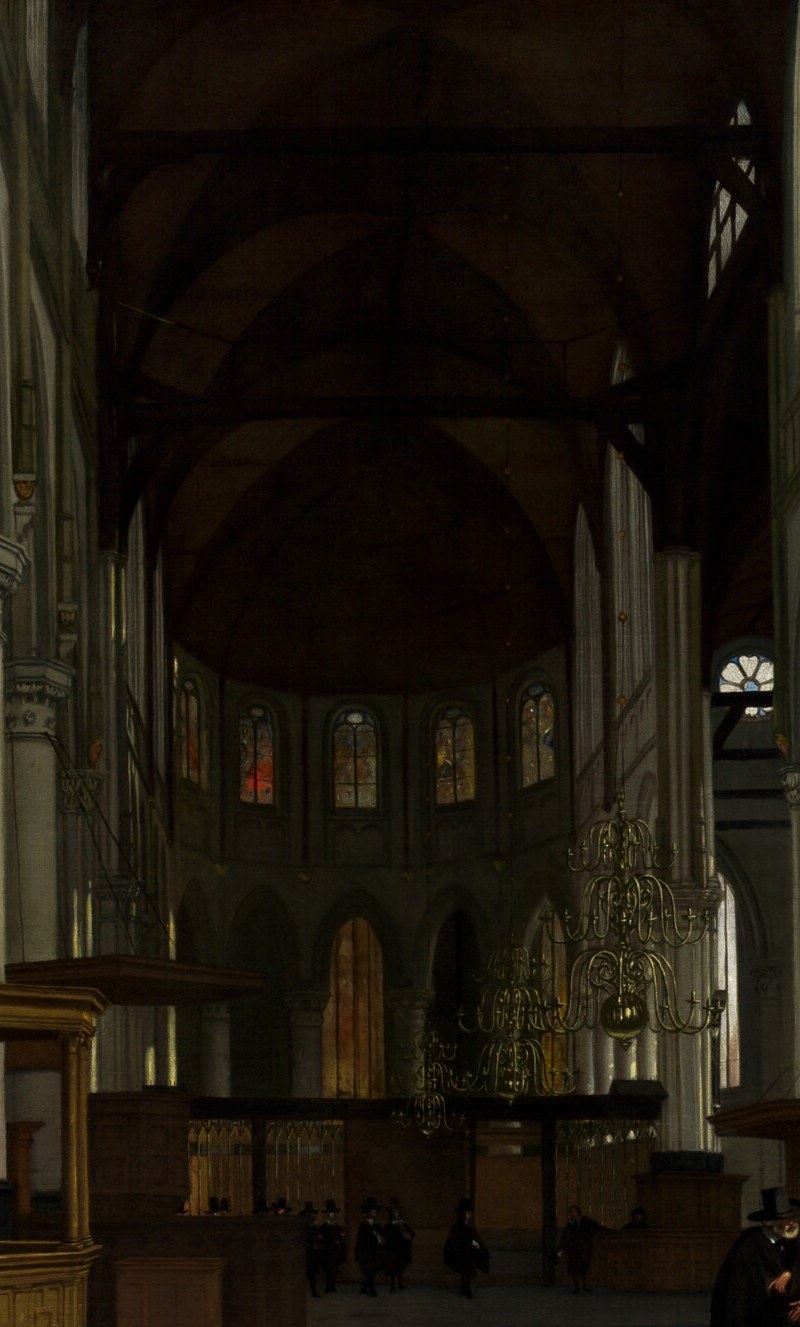
Emanuel de Witte's "The Interior of the Oude Kerk, Amsterdam" (c. 1660) is not a faithful portrait of a building, it is a deliberately staged argument about mortality, painted on a coarse open-weave canvas now held by the National Gallery of Art in Washington.
Let your eye follow the column arcade toward the distant choir window, then drop to the nave floor. There, an open grave cuts across the stone at a telling angle. De Witte oriented it north-south, deliberately breaking from the church's true east-west axis. Two elderly men converse beside it, unhurried, while just a few feet away a woman nurses an infant on a wooden bench. A dog wanders between them.
The artist stripped the walls bare, removing the heraldic banners that actually hung in the Oude Kerk. He wanted a purified space, no family crests, no civic pride, just stone, light, and the human cycle compressed onto one nave floor. Where his Dutch peers pursued architectural precision, de Witte chased something closer to theater.
He knew the Oude Kerk intimately after moving to Amsterdam in the early 1650s, and he returned to it again and again. Each time he rearranged its elements to suit his meditation on time. This version, with its north-south grave and nursing mother, may be his most distilled.
#arthistory #dutchgoldenage #emanueldewitte
Details
Transcript
He was famous for painting Amsterdam's grandest church. Look at the floor. A grave cut right into the stone. He painted it north-south, against the church's true axis. Beside the grave, two gentlemen chat without concern. Just behind them: a mother nurses her infant. He erased every heraldic banner from these walls. A stripped-down space holding birth and death together.