Artwork
The Interior of the Oude Kerk, Amsterdam
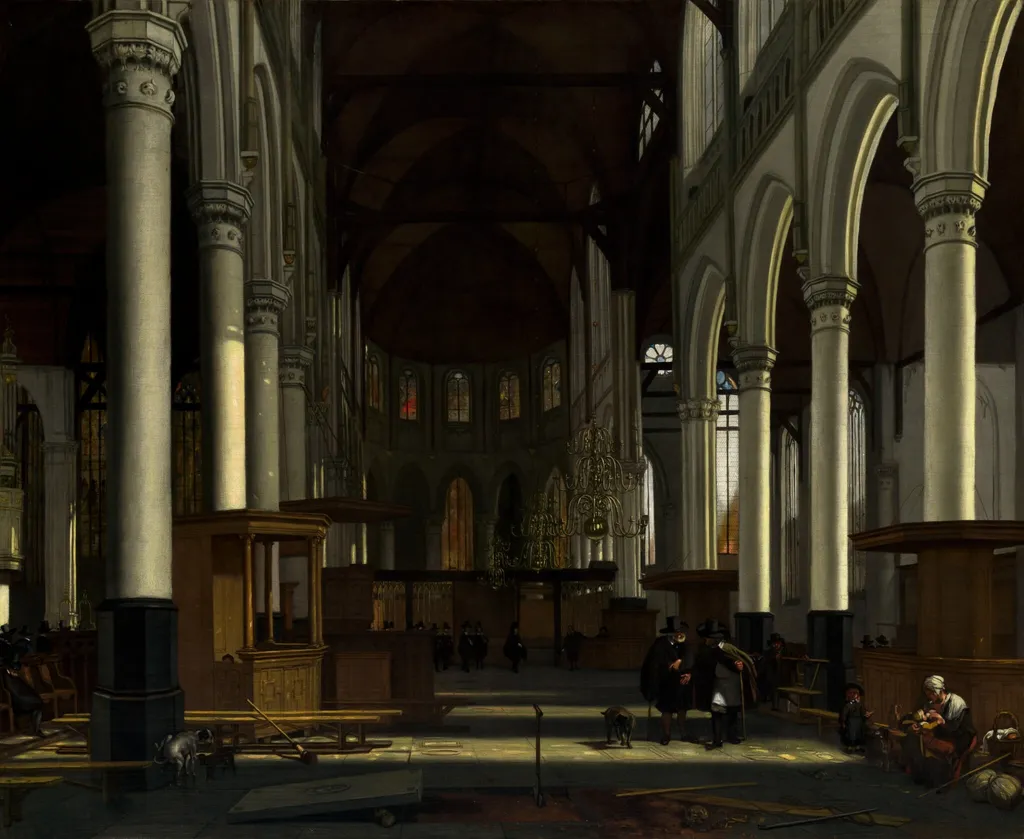
The Interior of the Oude Kerk, Amsterdam is an oil painting by the Baroque artist Emanuel de Witte. It dates from 1660 and is held in the collection of the National Gallery of Art.
About this work
Bands of light cut through the gloom of Amsterdam's Oude Kerk, catching brass chandeliers and fluted columns that march toward the choir. Emanuel de Witte painted it around 1660, setting two elderly men arguing beside an open grave while a young mother nurses her child. He elongated the architecture to heighten the drama. The National Gallery of Art acquired it in 2004.
Subject & Meaning
The painting depicts the interior of the Oude Kerk in Amsterdam, populated with a range of figures and objects that blend the sacred with the quotidian.
The painting depicts the interior of the Oude Kerk in Amsterdam, populated with a range of figures and objects that blend the sacred with the quotidian. Among the depicted elements are a woman breastfeeding a child, a man, a dog, a broom, a ladder, a shovel, a skull, and a grave. The skull and grave introduce a vanitas motif, serving as memento mori symbols that contrast with the everyday domestic activities and tools.
This juxtaposition of life and death within a church interior is characteristic of Dutch church interior paintings and implies a moralizing reflection on the transience of earthly life in a space dedicated to the eternal.
History & Provenance
Emanuel de Witte painted The Interior of the Oude Kerk, Amsterdam in 1660. The earliest recorded provenance is a sale in Amsterdam (Philippus van der Schley et al., 1793, no. 215), followed by a second Amsterdam sale (1804, no. 194) and a London auction (Christie, Manson & Woods, 1883, no. 123). Subsequent owners included John Femor-Hesketh and the dealer Mortimer Brandt (by 1951–1963).
Noortman & Brod, New York, held the work by 1981. It then passed to Saul P. and Gayfryd Steinberg, was sold at Christie’s New York in 1996, and entered a private collection before being purchased through Gurr-Johns, London, on 17 November 2004 for the National Gallery of Art.
Overview
Emanuel de Witte's oil on canvas, "The Interior of the Oude Kerk, Amsterdam," dates to approximately 1660. It depicts the oldest parish church in Amsterdam, a subject the artist frequently explored after moving to the city. The painting captures the vastness of the church's nave, illuminated by dramatic light, and populated by everyday activities, while subtly conveying themes of human existence and spiritual reflection.
Technique & Style
De Witte positioned the viewer at a low point within the nave, looking eastward. This perspective, combined with the rhythmic recession of fluted columns and large brass chandeliers, emphasizes the church's cavernous scale. Dramatic shafts of daylight pierce the interior, highlighting architectural details and creating deep shadows.
The artist also subtly elongated the architecture and widened the aisle, enhancing the sense of grandeur and theatricality within the composition. The work is executed in oil on a coarse, open-weave canvas.
Own this work as a print
Artist & collection
Artist
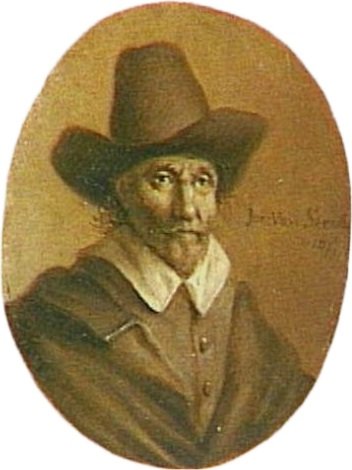
Emanuel de Witte (1617–1692) was a Dutch perspective painter. In contrast to Pieter Jansz Saenredam, who emphasized architectural accuracy, De Witte was more concerned with the atmosphere of his interiors. Though few in…

 Interior of the Oude Kerk, Delft
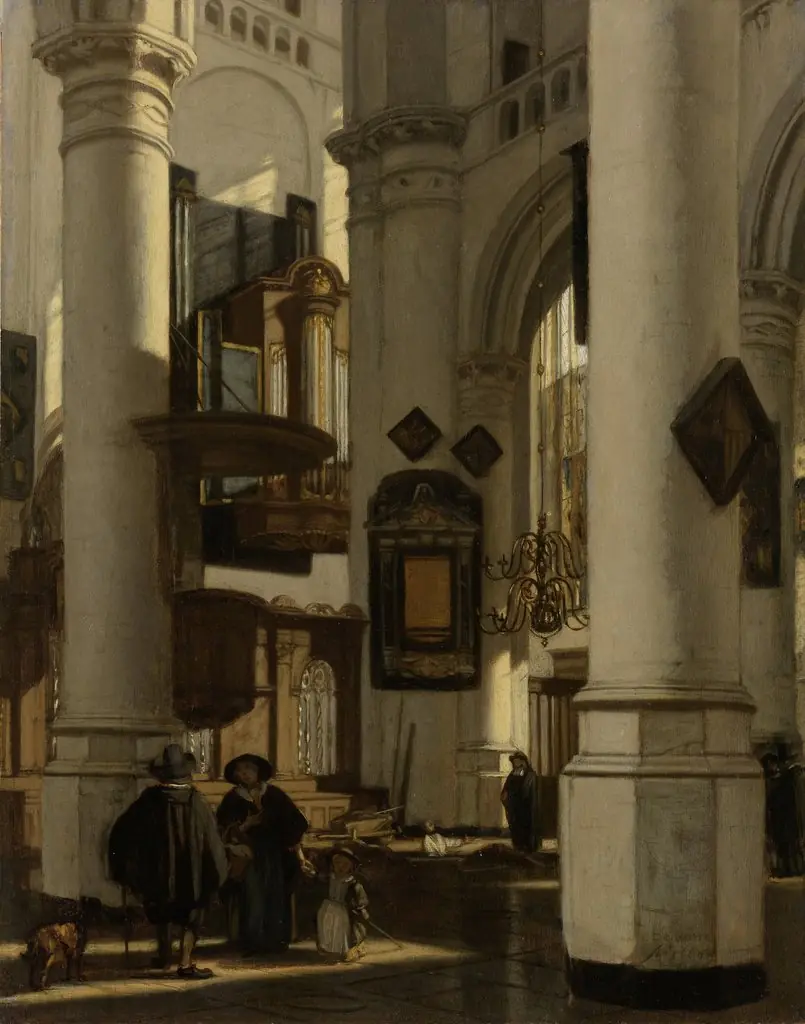 Interior of a Protestant, Gothic Church, with a Gravedigger in the Choir
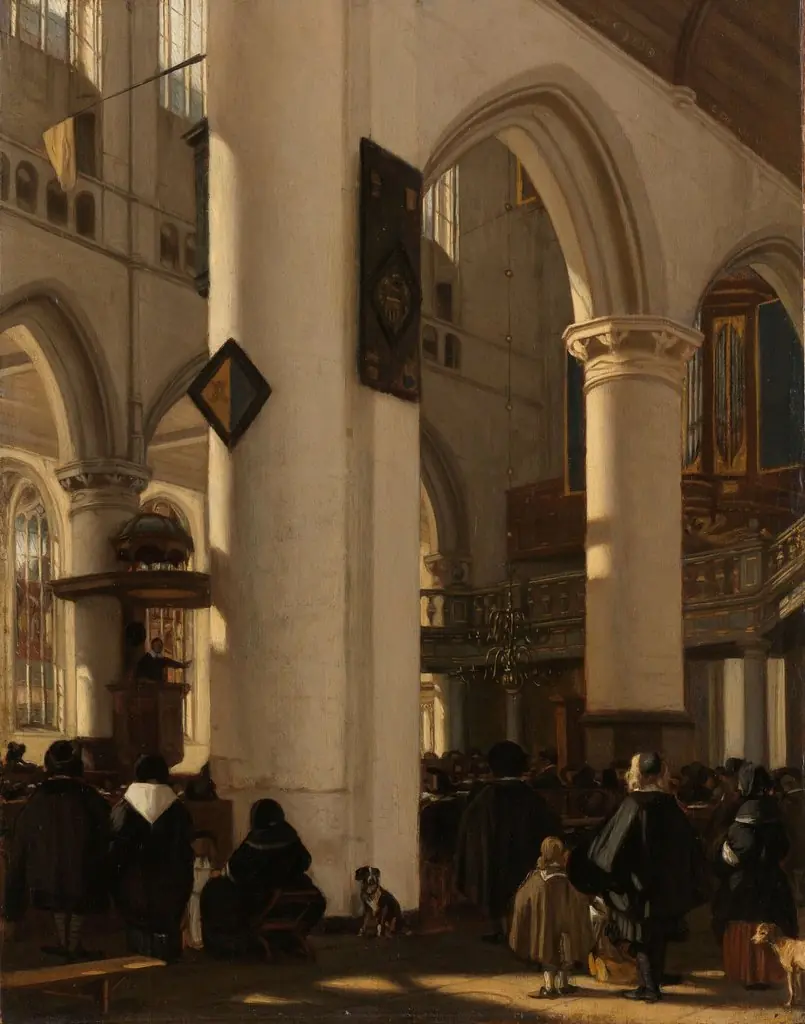 Interior of a Protestant, Gothic Church during a Service
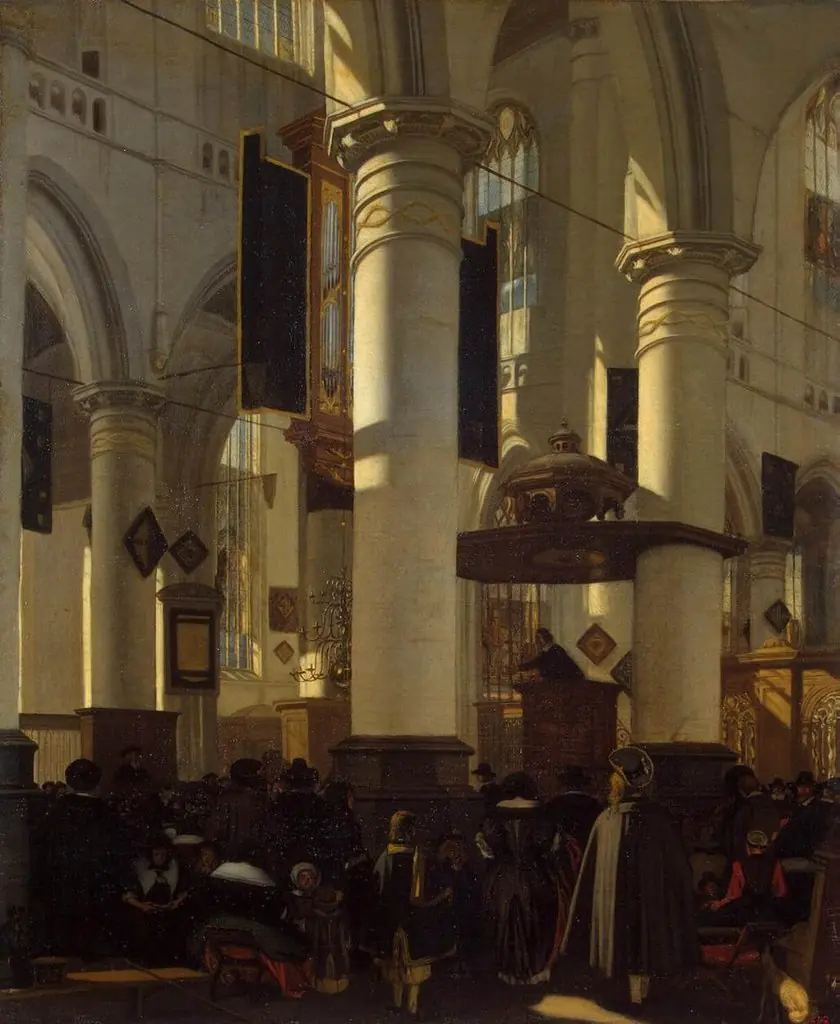 Interior of a Church
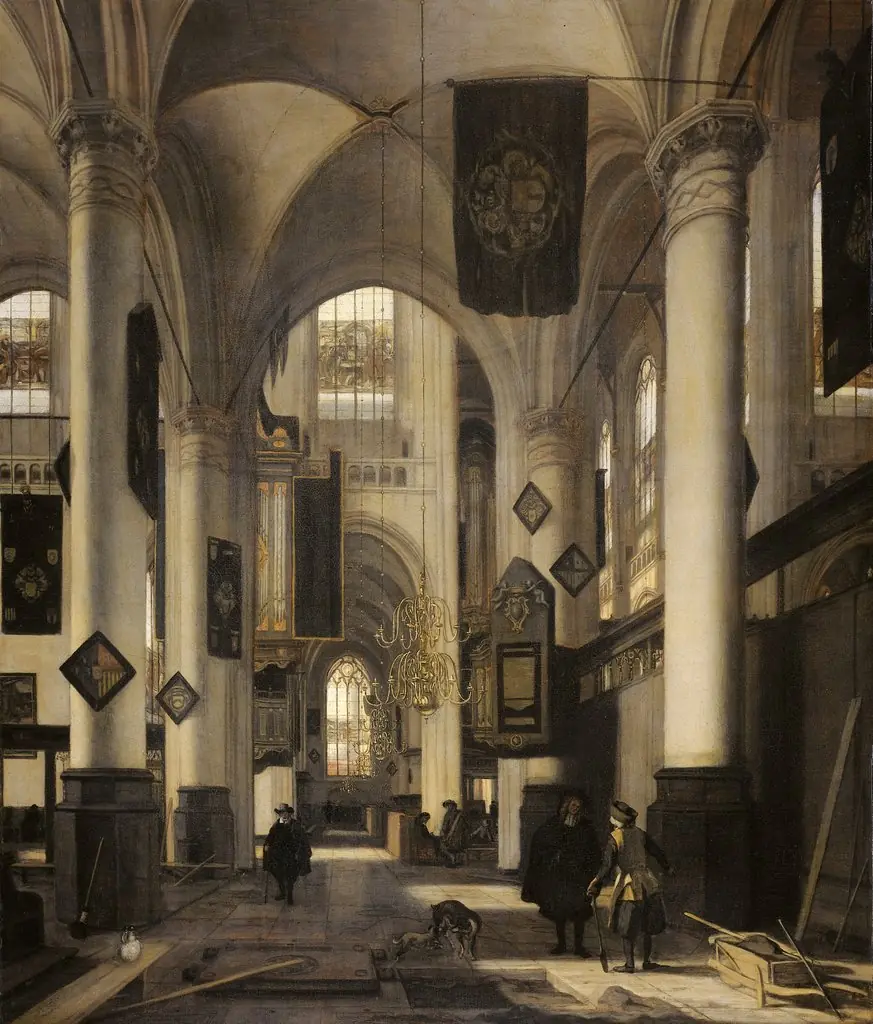 Interior of a Protestant Gothic Church
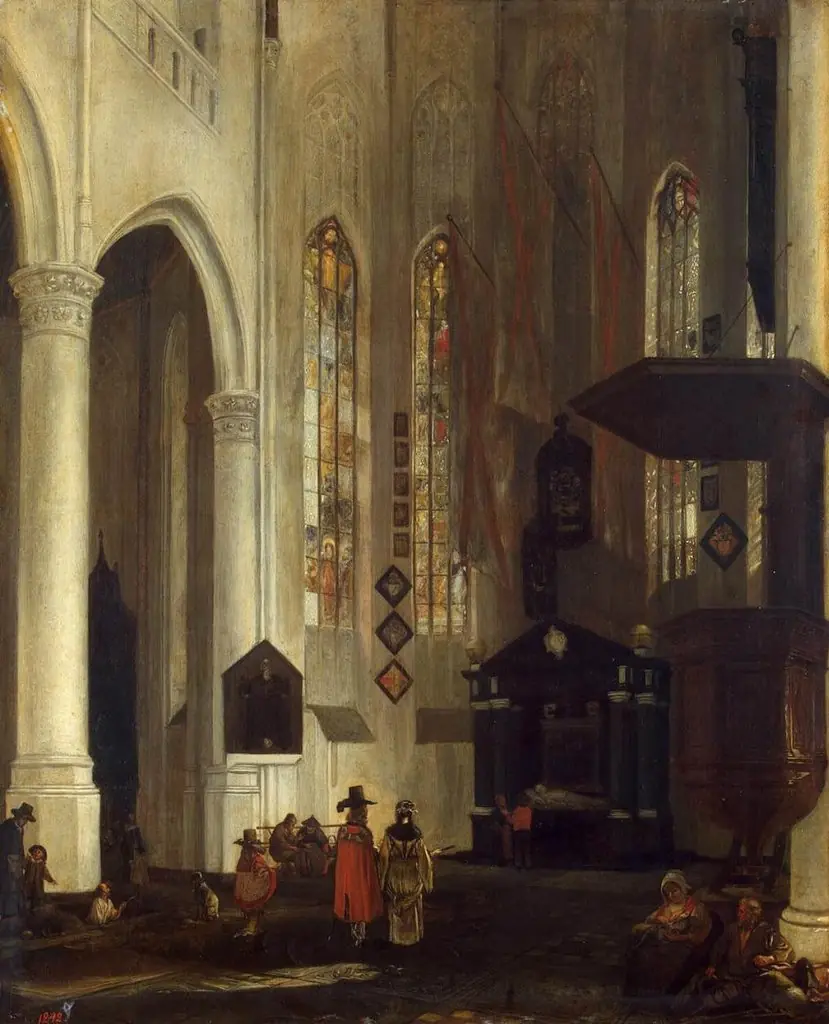 Old Church (Oudekerk) in Delft with the Tomb of Admiral Pieter Pieterszoon Hein (Heyn)
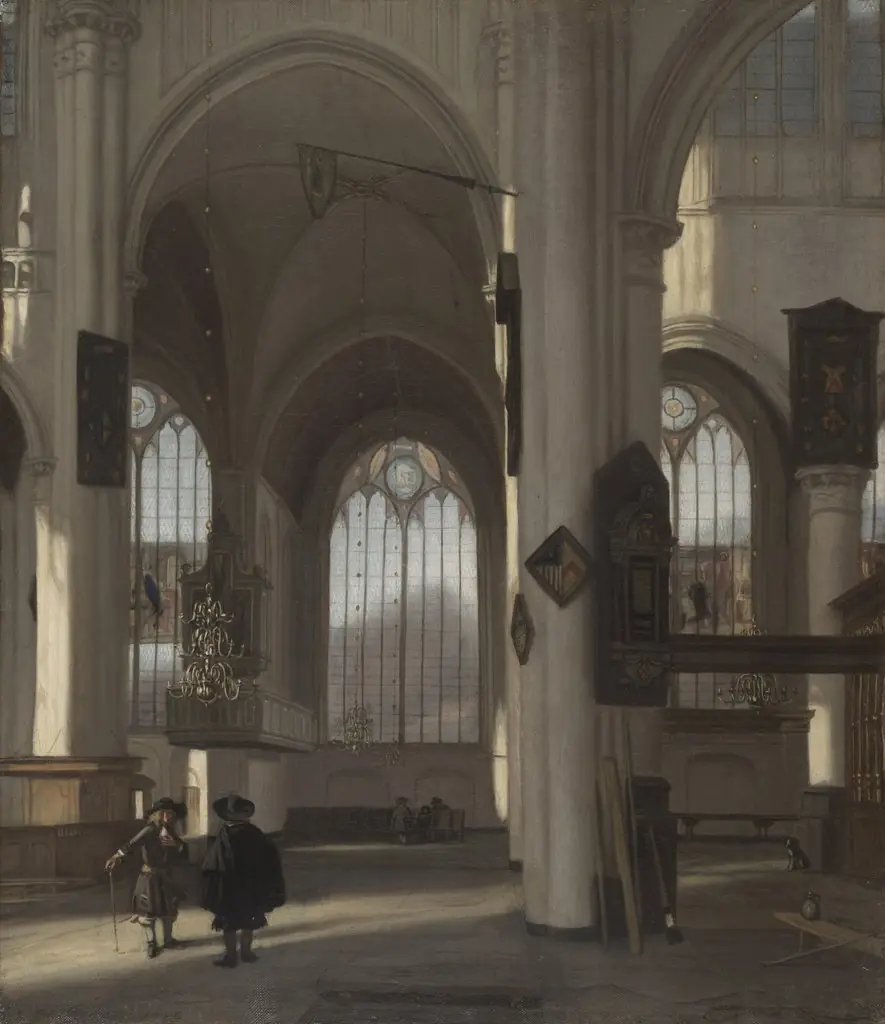 Interior of a Church
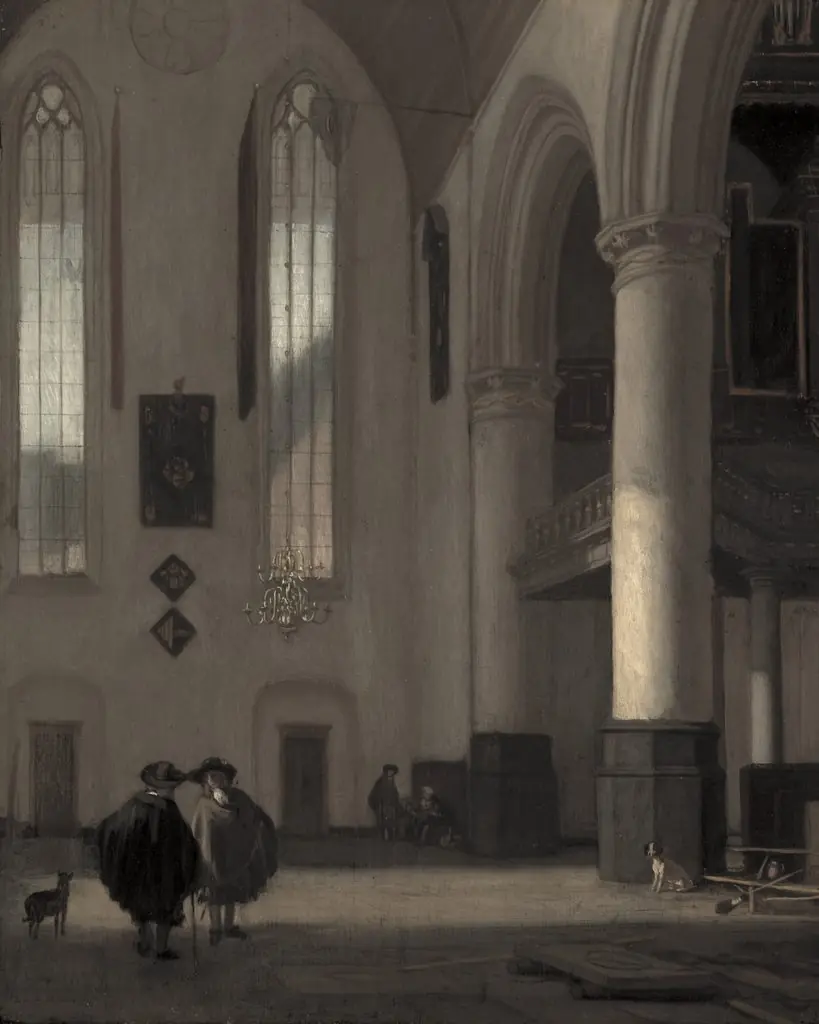 Interior of a Protestant Church
- Interior of the Oude Kerk, Amsterdam
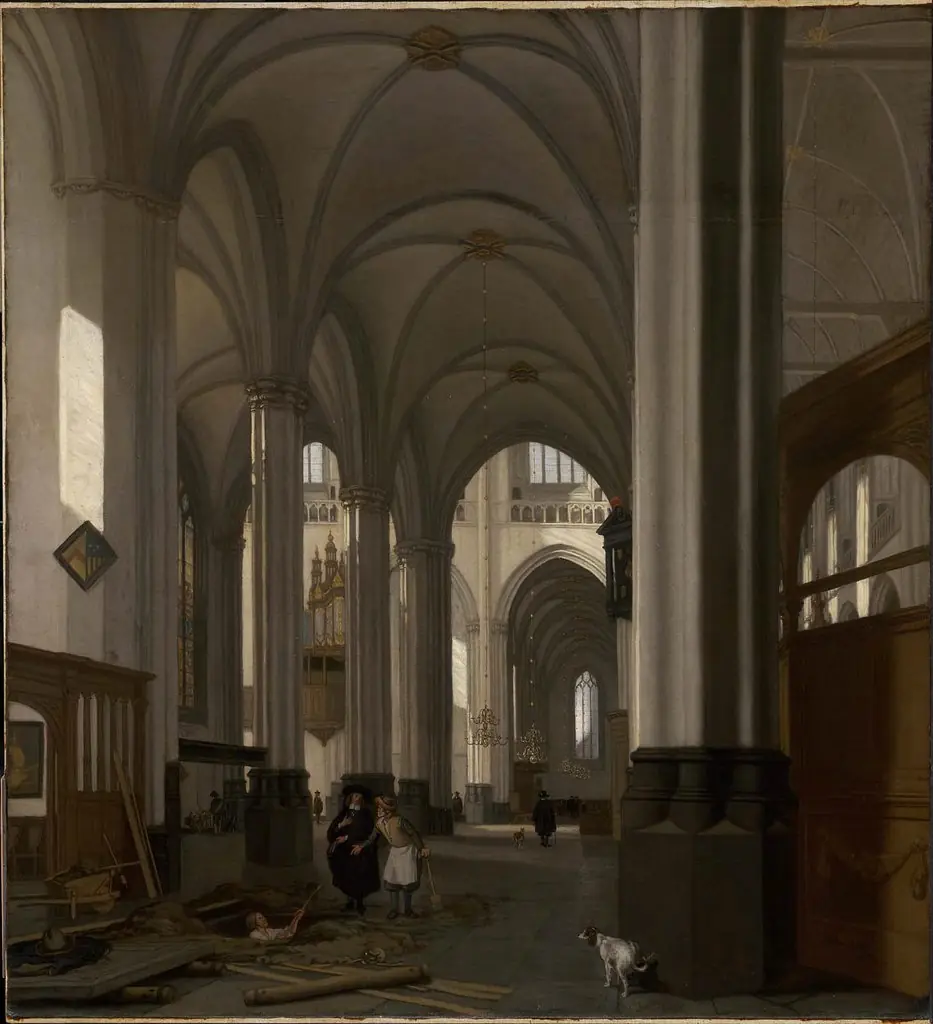 Interior of the Nieuwe Kerk, Amsterdam
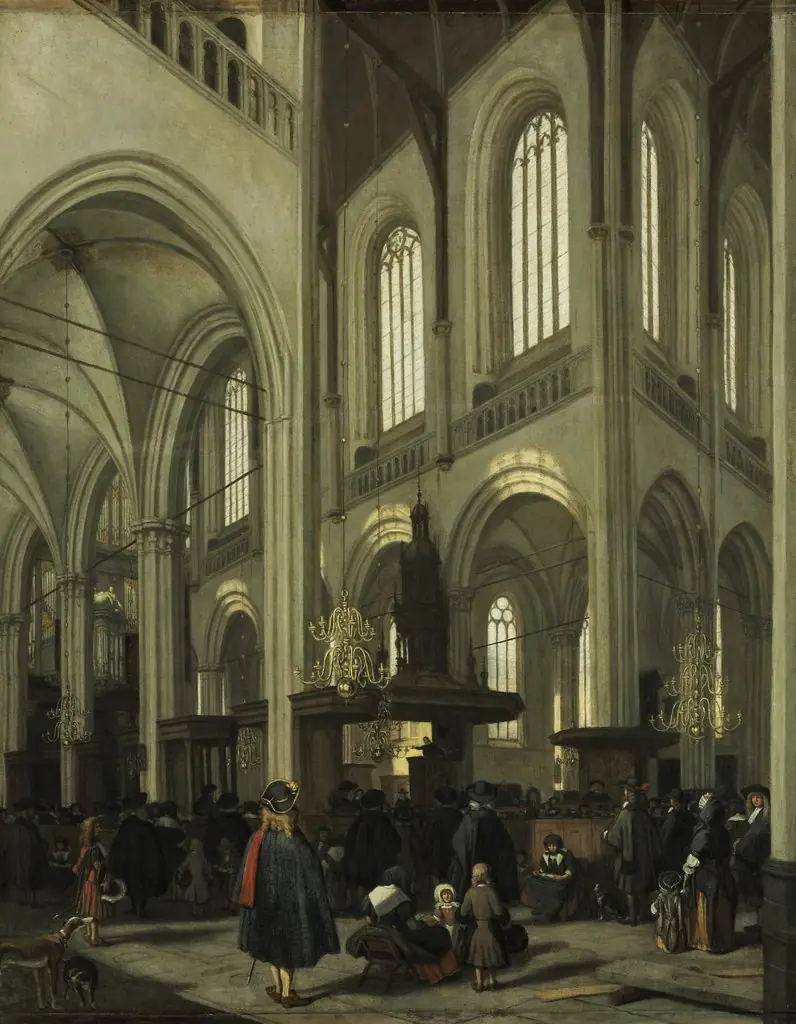 Interior of the Nieuwe Kerk in Amsterdam
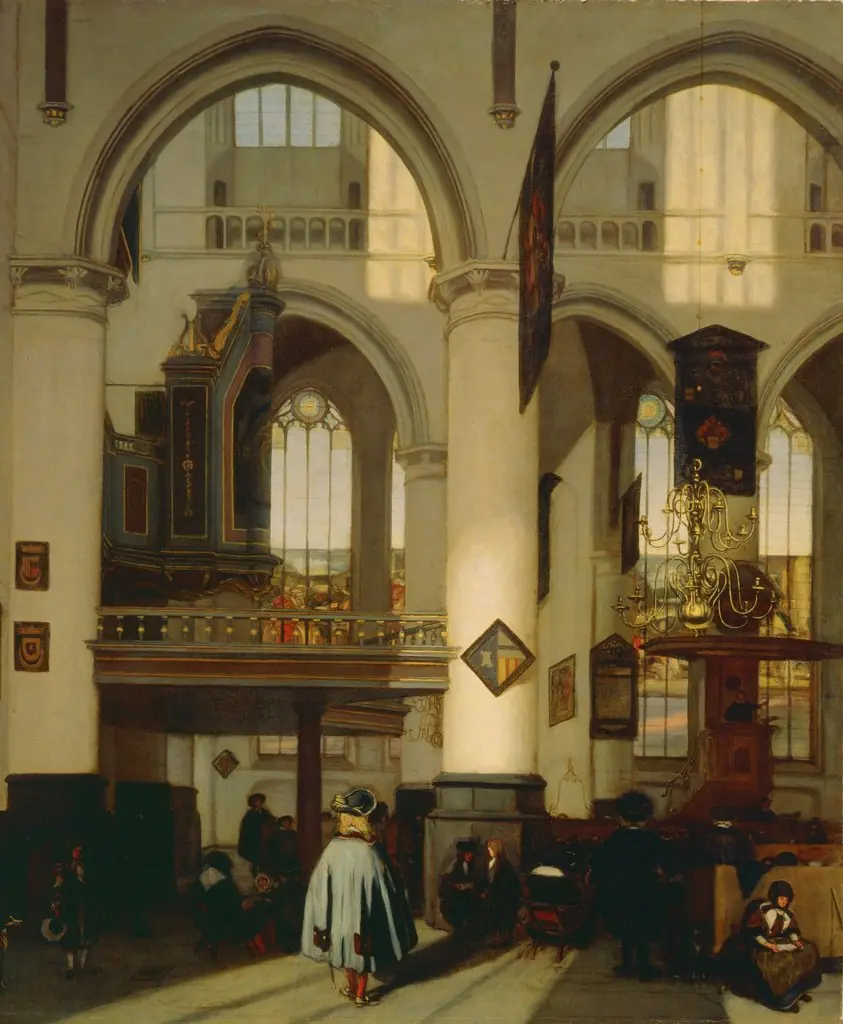 Interior of the Oude Kerk in Amsterdam
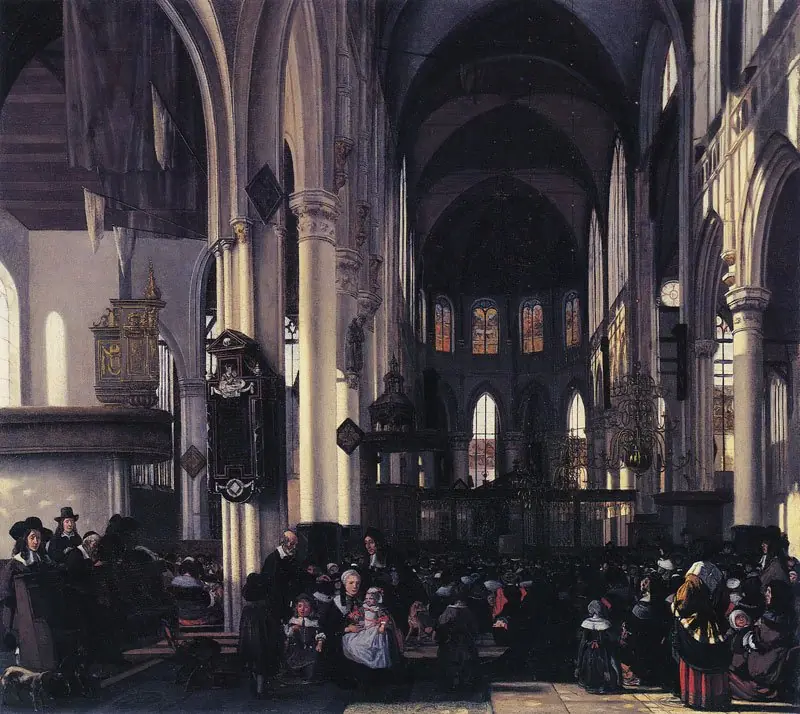 Interior of the Oude Kerk in Amsterrdam
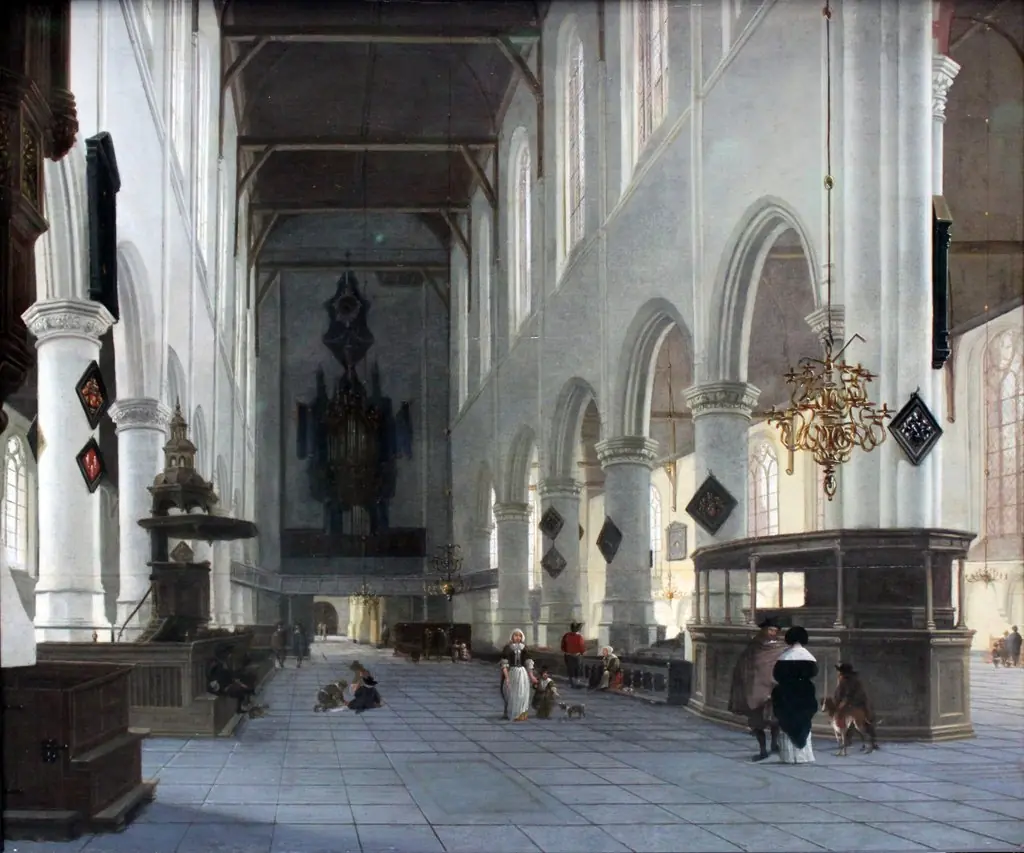 The Interior of the Oude Kerk in Delft
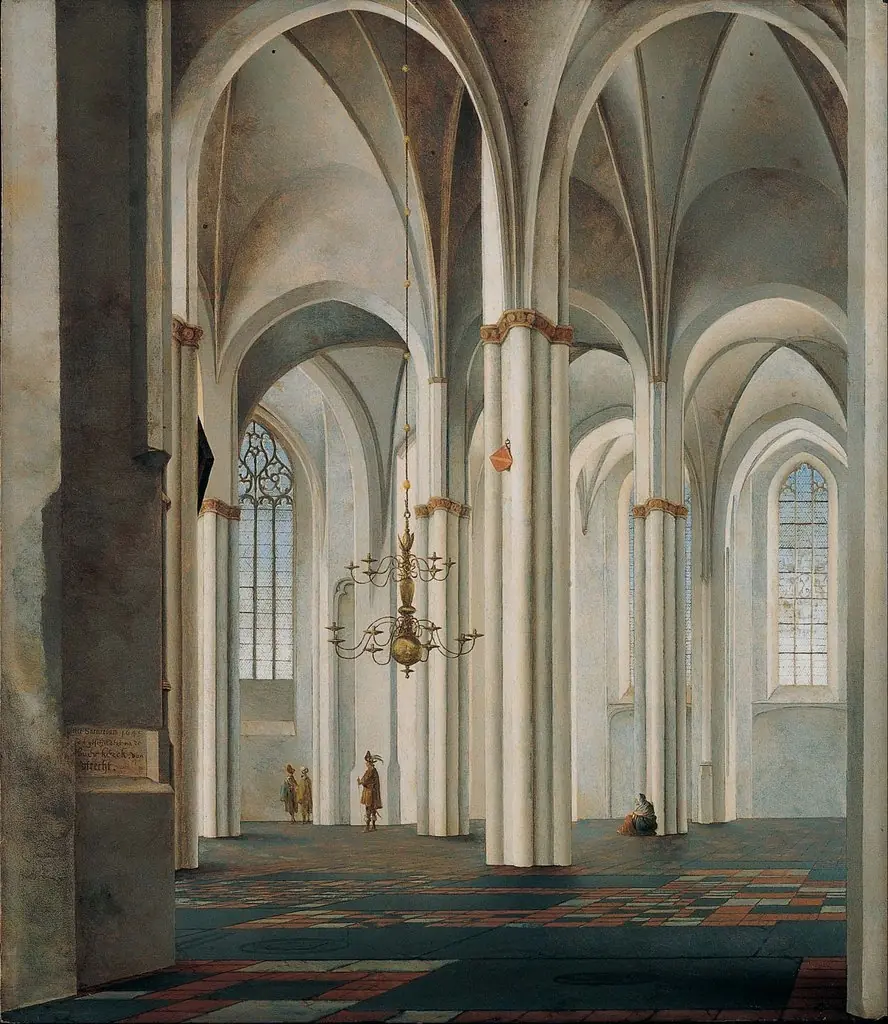 Interior of the Buurkerk, Utrecht
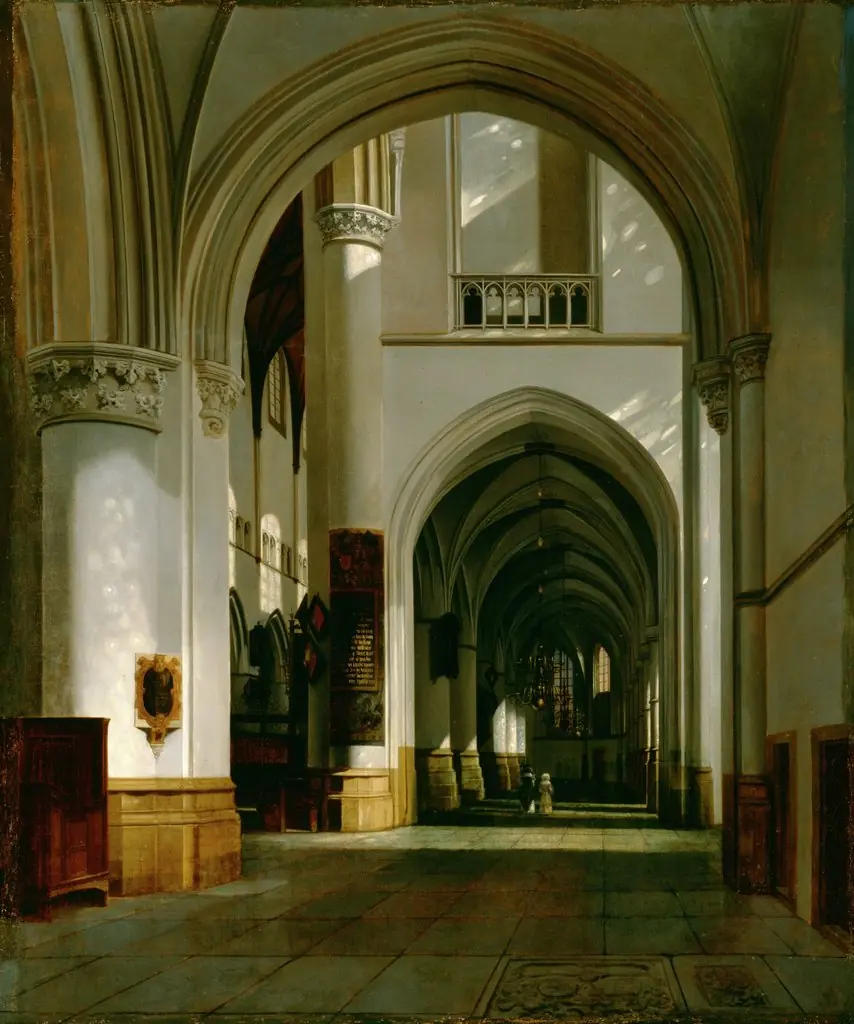 Interior of the Grote Kerk, Haarlem
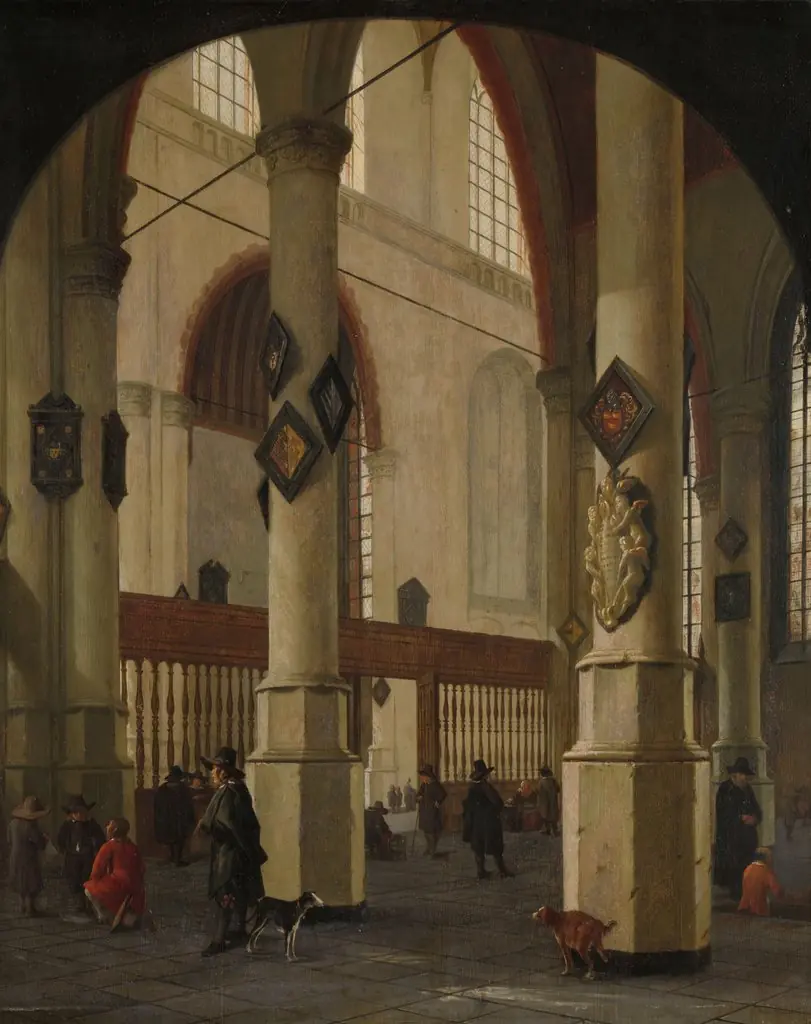 View in the Oude Kerk, Delft
 Studied in the Dutch Golden Age course