Thomas Jefferson by Healy, George Peter Alexander
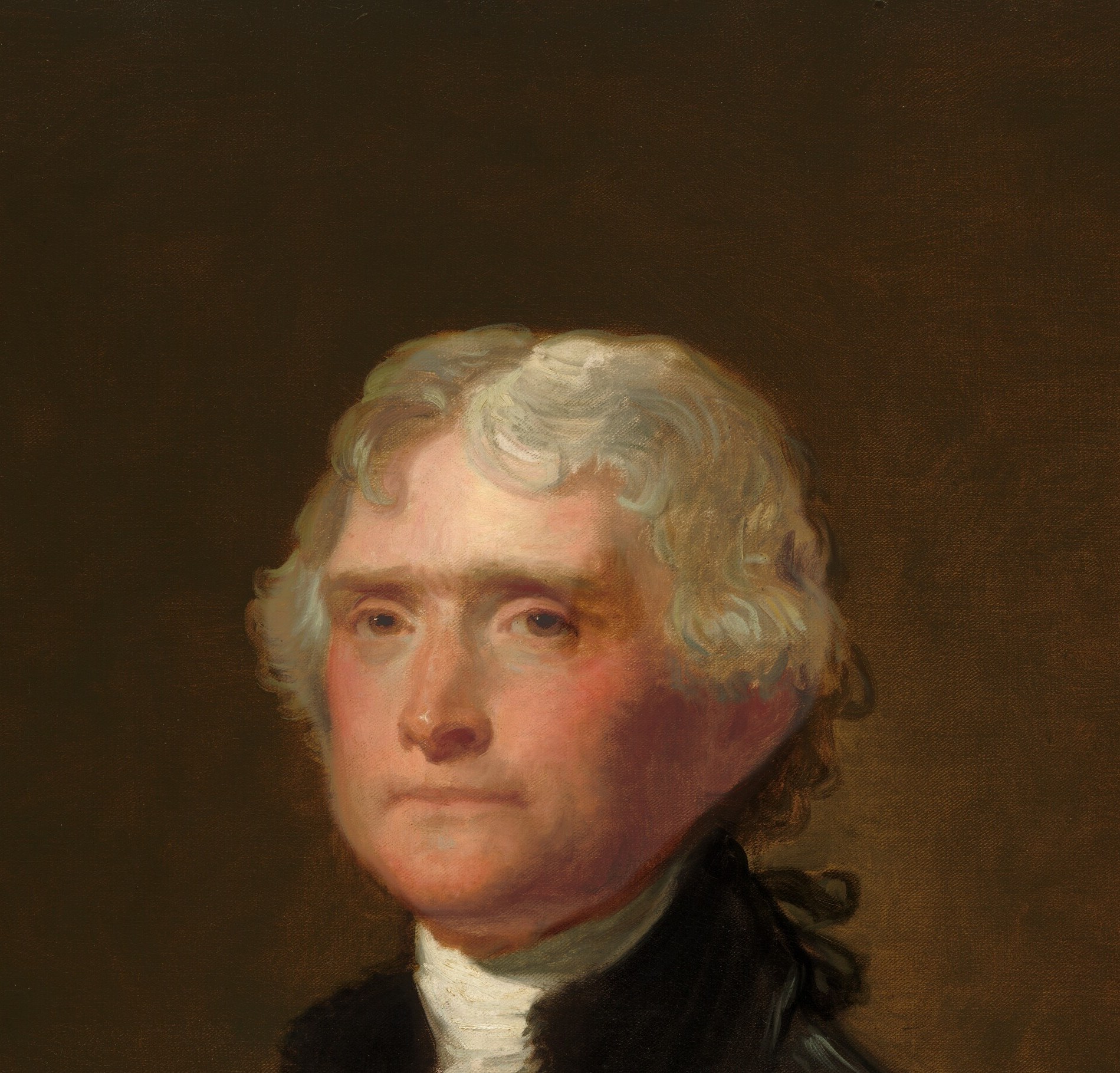
This is George Peter Alexander Healy's 1863 portrait of Thomas Jefferson. It hangs in the White House today, but it is a copy, painted in Paris nearly forty years after Jefferson's death. The original it copies was lost when British soldiers burned the White House in 1814.
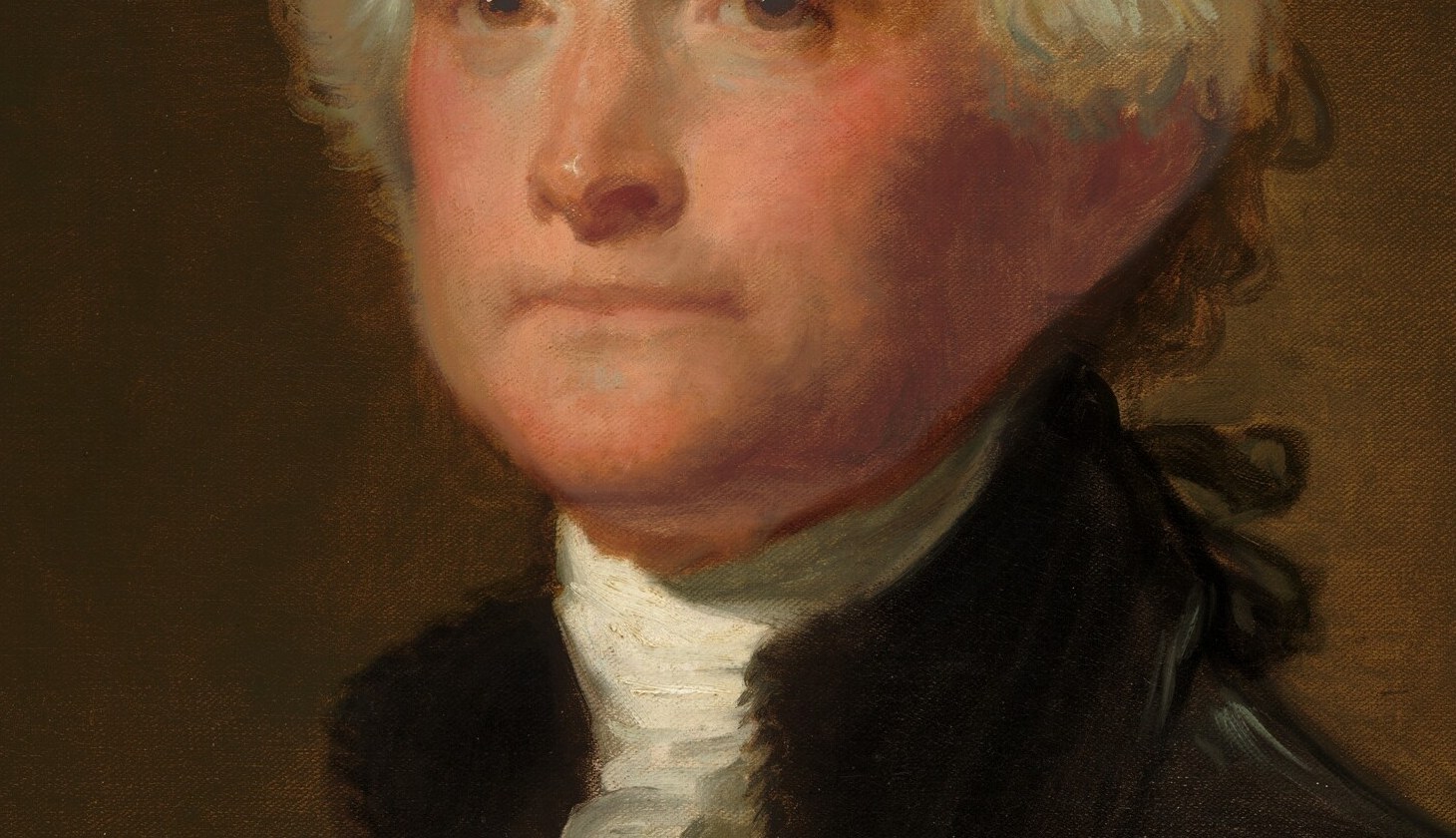
The face you see is a reconstruction. Healy worked from earlier portraits, written descriptions, and the memories of men who had known Jefferson. The result is a face that feels measured, heavy with thought, but it is a composite, not a likeness from life. Look at the left eye, the one in the light. Healy gives it a directness that carries the whole portrait.
This painting has its own crime story. In 1944 it was stolen from a New York gallery. A man simply walked in, cut the canvas from its frame, and vanished into the street. The FBI recovered it in 1946, and it returned to the White House, where it remains.
A portrait of a man who had been dead for decades, painted from fragments, and then stolen from its own frame. It is a painting that has been rescued twice.
Details
Transcript
Healy painted this in Paris, 1863. A copy of an earlier portrait. The original hung in the White House. Until the British burned it. 1814. Soldiers looted the mansion. The portrait vanished into the night. Look at his face. Healy rebuilt a dead president from sketches and memory. Then, in 1944, this copy was stolen from a New York gallery. A man walked in, cut it from the frame, and disappeared. The FBI recovered it two years later. It hangs in the White House once more.