Landscape by http://www.wikidata.org/.well-known/genid/8b21622849f52ac2c7971832242662b4
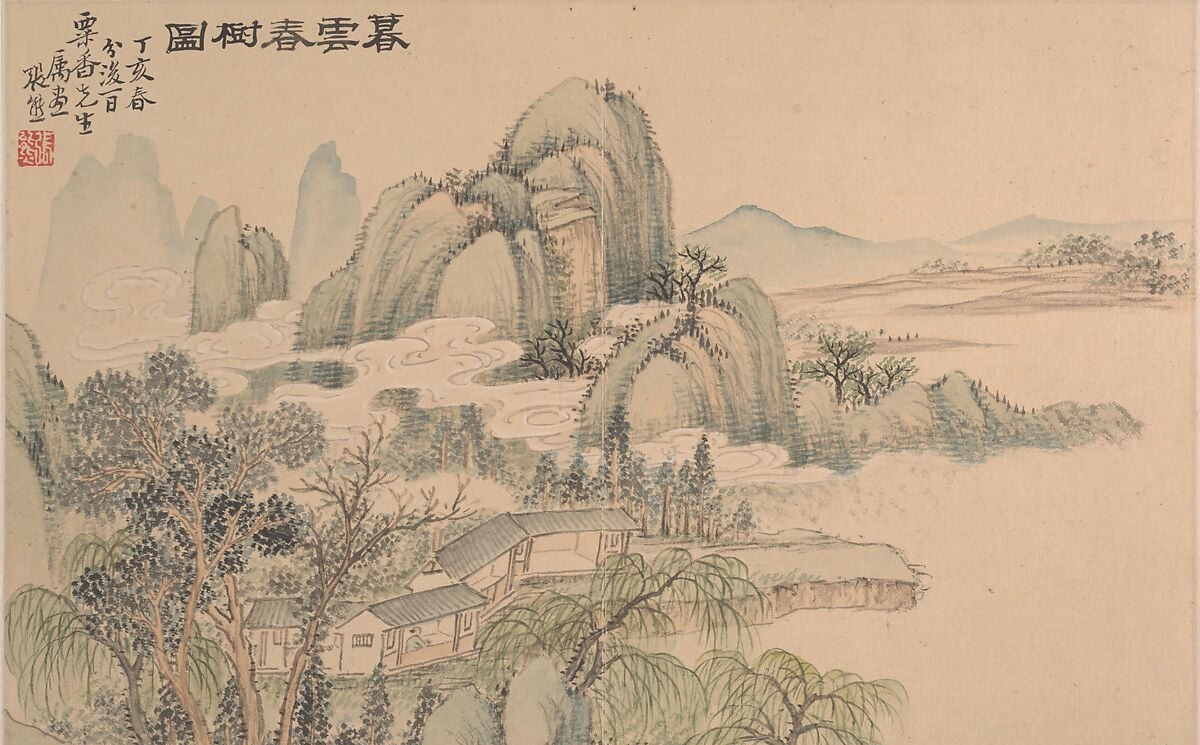
J.M.W. Turner's "Landscape," painted around 1835, is a testament to the power of subtlety and atmosphere. Though seemingly simple at first glance, the painting rewards closer inspection with its delicate details and evocative brushwork.
Look closely at the foreground of the painting, and you'll find a small passage of textured paint. This isn't just a brushstroke; it's a deliberate choice by Turner to add a tactile quality, inviting the viewer to engage with the canvas on a deeper level. This minute detail creates a sense of depth and movement within the otherwise serene composition.
Turner, a master of light and atmosphere, often used such understated techniques to convey profound emotions and the vastness of nature. This piece, with its high proportion of sky and muted earth tones, reflects his fascination with transitional moments, like dawn or dusk, and the quiet beauty of an unadorned landscape.
What other subtle details do you notice in Turner's work?
Details



Transcript
At first, this looks like a simple, empty landscape. But look closely at the foreground. There is a texture, an almost unseen detail here. This subtle touch reveals the painter's hand. They loved the quiet power of understated nature.