The Annunciation of the Death of the Virgin by Samuel van Hoogstraten
In Samuel van Hoogstraten's "The Annunciation of the Death of the Virgin" (c. 1670), a quiet, profound narrative unfolds. This oil painting, held at The Metropolitan Museum of Art, depicts a deeply personal moment for Mary, as she receives news of her impending passing from a luminous angel.
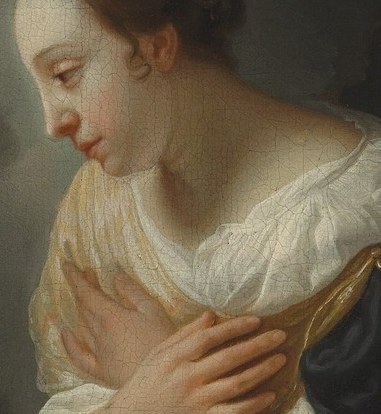
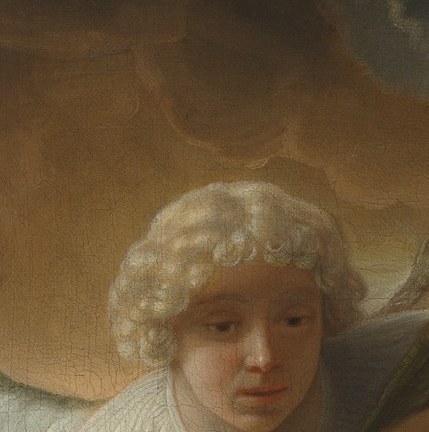
Observe Mary's downcast face and clasped hands, conveying a solemn acceptance. The angel's outstretched hand delivers the divine message, highlighted by a subtle glow against the dark, intimate background. The scene is grounded by the polished wooden floor and a vibrant red stool, adding depth and earthly richness.
Hoogstraten was not only a prominent Dutch Golden Age painter but also a poet and art theorist, whose intellectual pursuits often influenced his thoughtful compositions. His mastery of chiaroscuro creates dramatic contrast, guiding the viewer's eye and imbuing the work with spiritual intensity. Look closely on the floor, where the artist left his subtle, yet significant, signature.
This painting invites contemplation on themes of faith and mortality, presented with an intimate and spiritual touch. What do you notice in the quiet details?
Details
Transcript
This isn't a famous scene, but it tells a quiet, profound story. Mary receives the news of her own impending death. The angel's gesture delivers the divine message. This painter was also a poet and art theorist. He signed his name here, on the wooden floor. A humble, personal touch in a sacred moment.