Renbjærg Tileworks by Flensburg Fiord by Christoffer Wilhelm Eckersberg
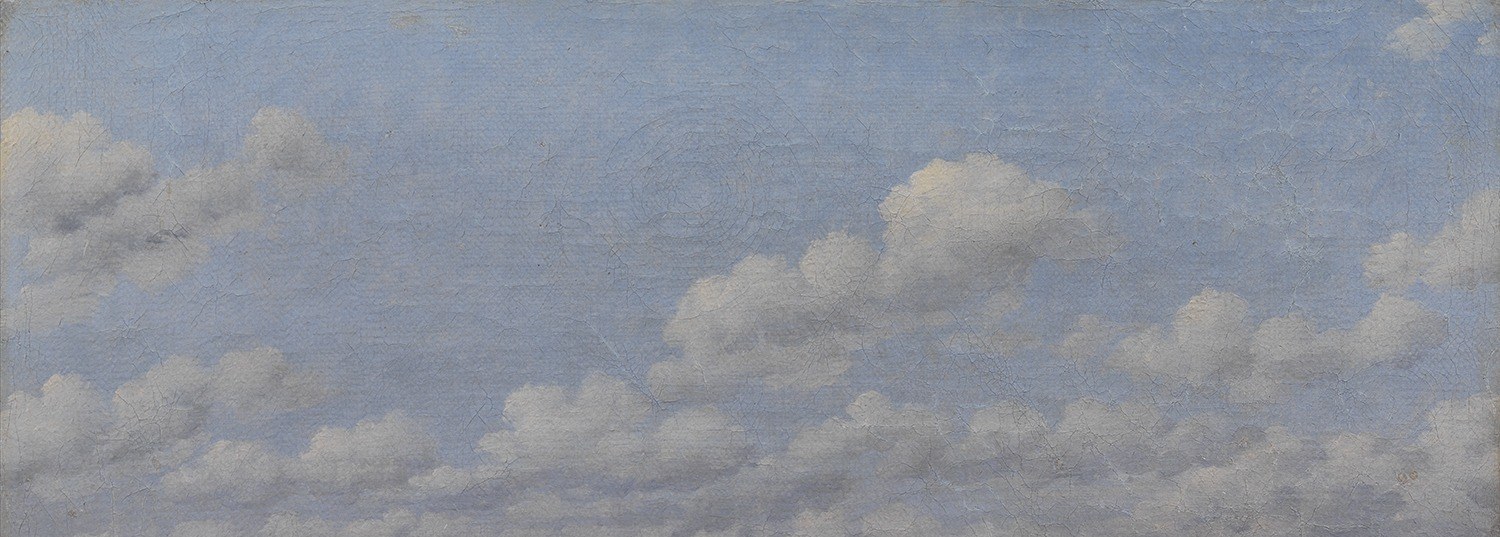
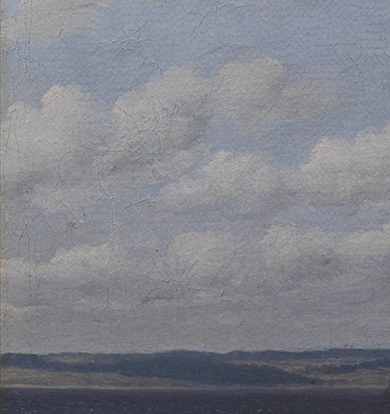
This is 'Renbjærg Tileworks by Flensburg Fiord,' painted by Christoffer Wilhelm Eckersberg in 1830. It hangs in the Statens Museum for Kunst in Copenhagen, and on first glance, it reads as a quiet coastal scene. But the sky is the real event here, a cloud study so precise it borders on meteorology.
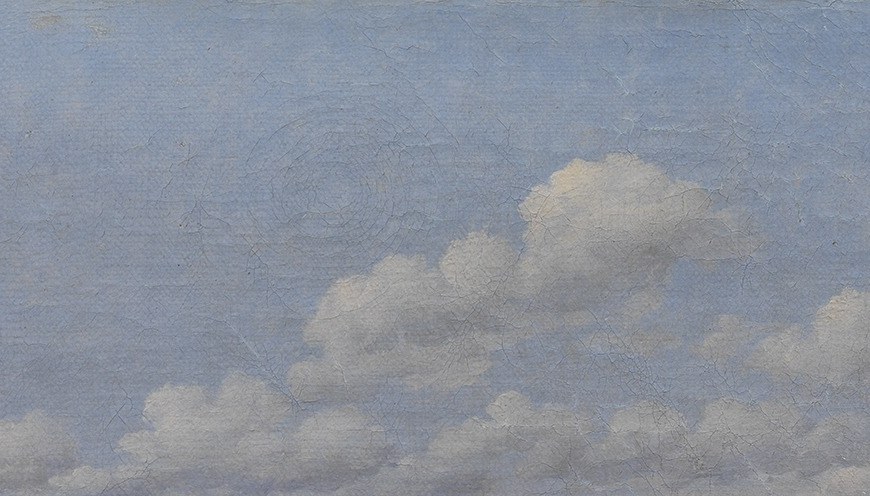
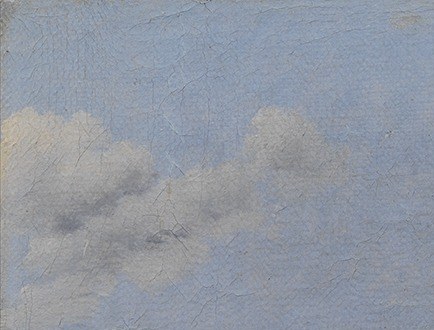
Look at the clouds. They are not generic fluff; they are layered cumulus formations built from separate outdoor studies. The bright central tower acts like the painting's hidden light-source reference. That deep blue gap at the upper left is the highest-chroma note in the whole canvas, a sliver of saturated northern summer daylight framed by cloud edges.
Eckersberg is known as the 'Father of Danish Painting,' and this work shows why. He used a mechanical perspective frame to lock the horizon with scientific accuracy. The razor-level line where water meets sky is not freehand, it is an artifact of a proto-photographic method. A functioning brickworks sits on the left, making this a rare documentary record of coastal industry, but the subject Eckersberg really chased was the light itself.
Calm windless water, a crescent of pale sand, and small strolling figures give human scale to something far larger. It is a painting about the weather, captured with an instrument's precision and a painter's eye.
Details
Transcript
Summer, 1830. A tileworks on a Danish fjord. Now look at the sky. It fills half the canvas. Eckersberg trained by painting cloud studies outdoors. Every cloud layer here has a meteorologist's precision. He locked this razor-level horizon with a mechanical frame. The machine gave the painting its uncanny, held-breath stillness.