Ottowa Chief, His Wife, and a Warrior by Catlin, George
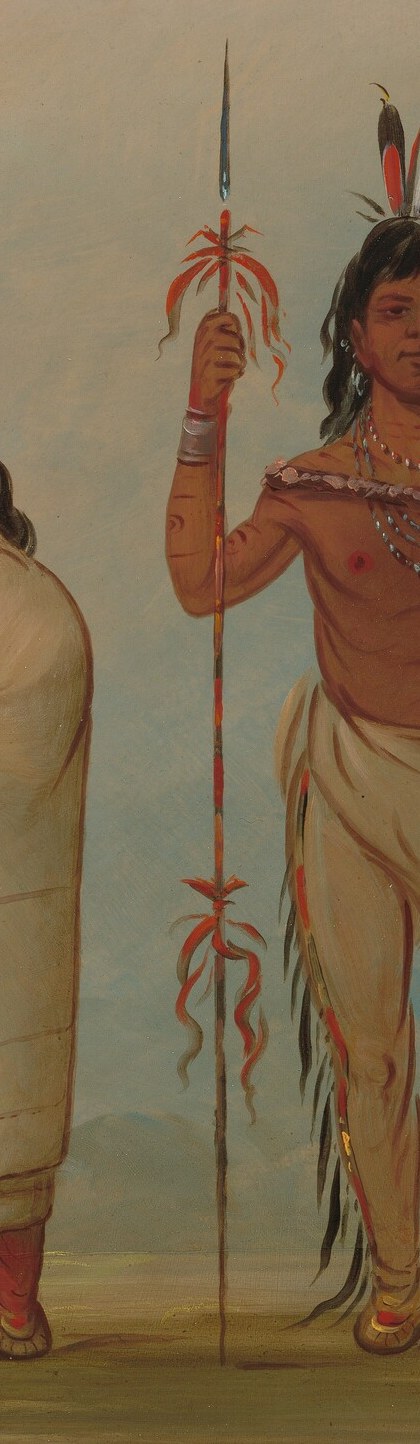
George Catlin's 1865 painting, *Ottawa Chief, His Wife, and a Warrior*, captures a powerful group portrait, now housed at the Smithsonian American Art Museum. Catlin, a lawyer turned artist, dedicated his career to documenting Native American life on the American frontier. This work, rendered in oil on card, offers a direct and intimate view into the lives of these individuals.
Look closely at the chief's feather headdress, a significant symbol of his status and spiritual connection within his community. His spear, held upright, and the hide shield reinforce his crucial role as a warrior and protector. These elements provide a window into the cultural significance of their attire and objects.
Throughout the 1830s, Catlin traveled extensively, creating numerous portraits and written accounts of Plains Indian life. This painting reflects his enduring commitment to recording Indigenous peoples and their traditions, offering a valuable historical record rather than an idealized portrayal. It stands as a testament to his unique artistic and documentary vision.
What details in their attire or expressions strike you most?
Details
Transcript
This 1865 portrait shows an Ottawa Chief, his wife, and a warrior. The painter, George Catlin, documented Native American life. He sought to record individuals and their traditions. The chief's feather headdress signifies status and spiritual connection. His upright spear and hide shield show his role as warrior and protector. This work is a direct observation, not an idealized representation.