Self-Portrait by Anton Raphael Mengs
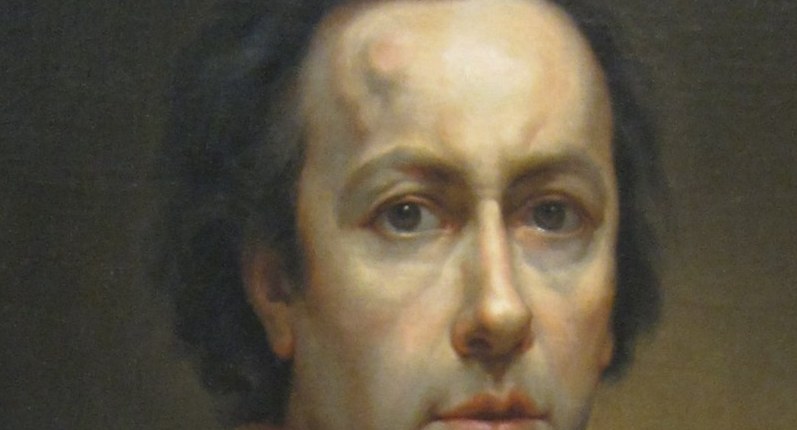
This is Anton Raphael Mengs's Self-Portrait, painted in 1776 and now in the Metropolitan Museum of Art. By the time he made this, Mengs was arguably the most celebrated painter in Europe. He was court painter to Charles III of Spain and had been called the greatest living artist by his contemporaries. And yet, when he turned his mirror on himself, he produced an image of almost startling psychological directness and unadorned honesty.
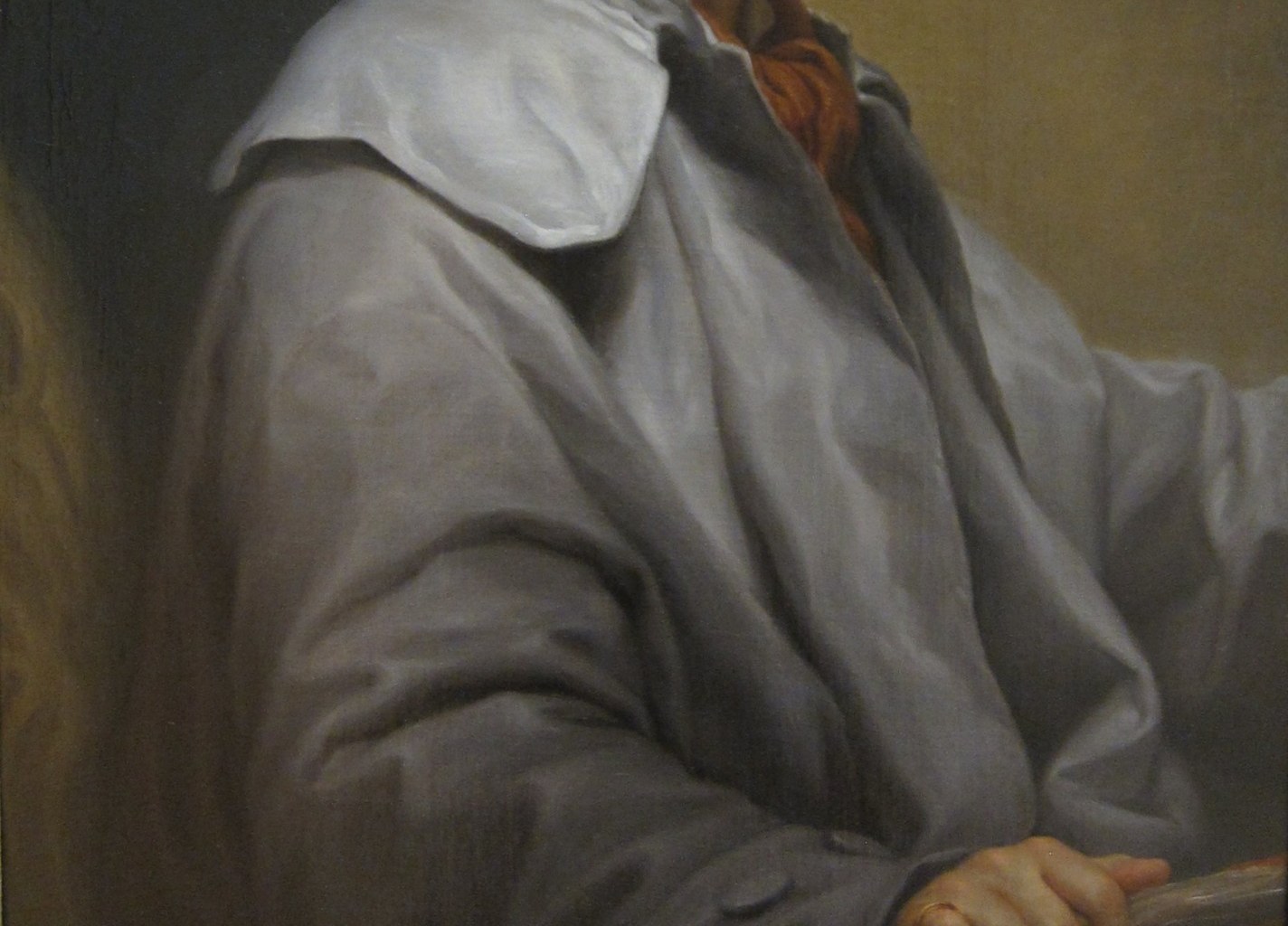
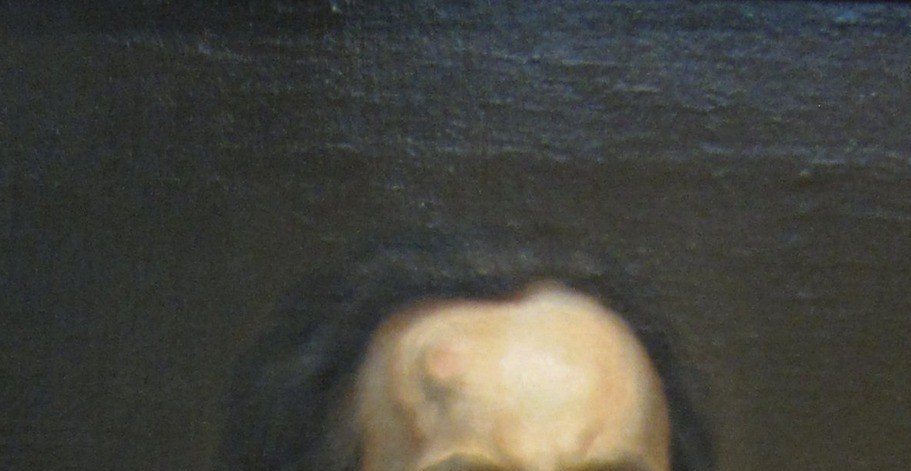
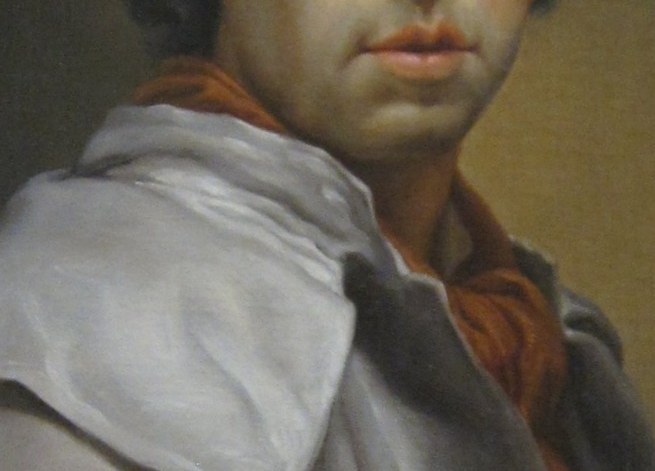
What you notice first is the gaze. He locks eyes with the viewer and holds them, unsentimental and searching. There is no flattery here. He paints his balding crown, the tight set of his lips, the strong bone structure of his nose and cheeks. The only concession to painterly drama is a thin sliver of red silk at his collar; the rest is a near-monochrome study in gray and shadow. The rolled paper in his hands is the sole symbol: a sign of a man of ideas, a theorist as much as a craftsman.
The forced darkness behind his right shoulder is a compositional trap designed to push your eye back to the face. You can sense a kind of isolation in its emptiness. Mengs was a Neoclassicist, a rival of Tiepolo, a friend of Winckelmann, and this self-portrait was made at a turning point. His health was declining. He had just survived a serious illness in Madrid and his physical decline was apparent to him. The painting is an act of witness to his own body.
This is a painting about the courage to look at a life as it actually is: aging, unsentimental, and still fiercely immediate. It shows us an artist choosing, in his one guaranteed truthful portrait, to leave nothing out.
Details
Transcript
He was the most famous painter in Europe. Everyone wanted a portrait. But when he turned the mirror on himself, he painted this. A receding hairline. A broad, lit forehead. Tight lips. Lean, bony cheeks. He doesn't smile. He doesn't judge. He simply looks back at you. A single flash of red silk at the throat: the only trace of a painter's flair. He holds a rolled drawing. A man of work, of plans, of a life still in his hands. Three years later, Anton Raphael Mengs was dead. This remained: the truest face he could make.