Madonna and Child by Master of the Magdalen
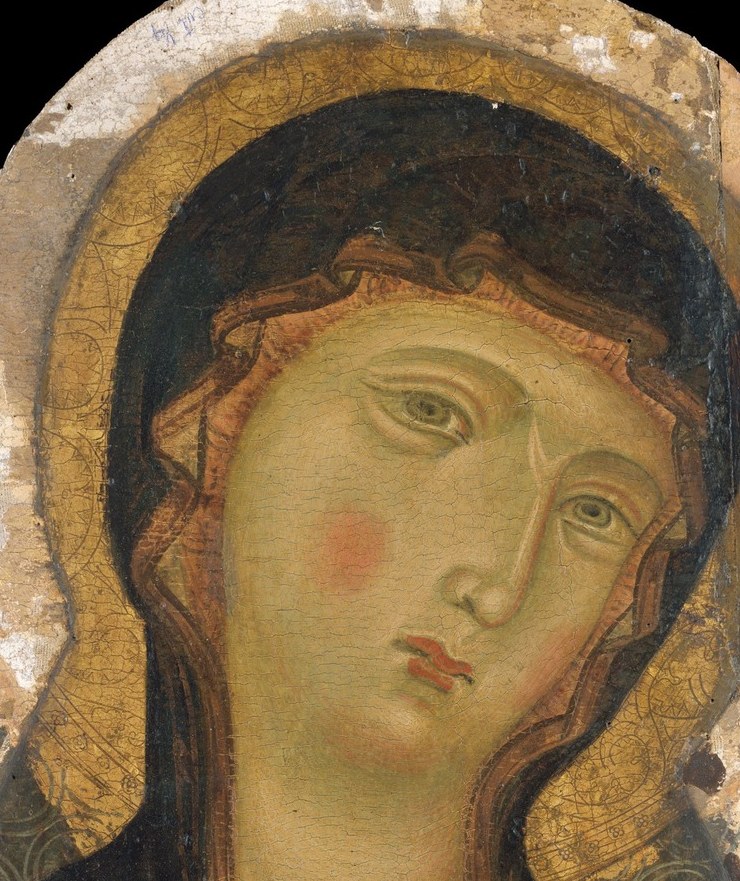
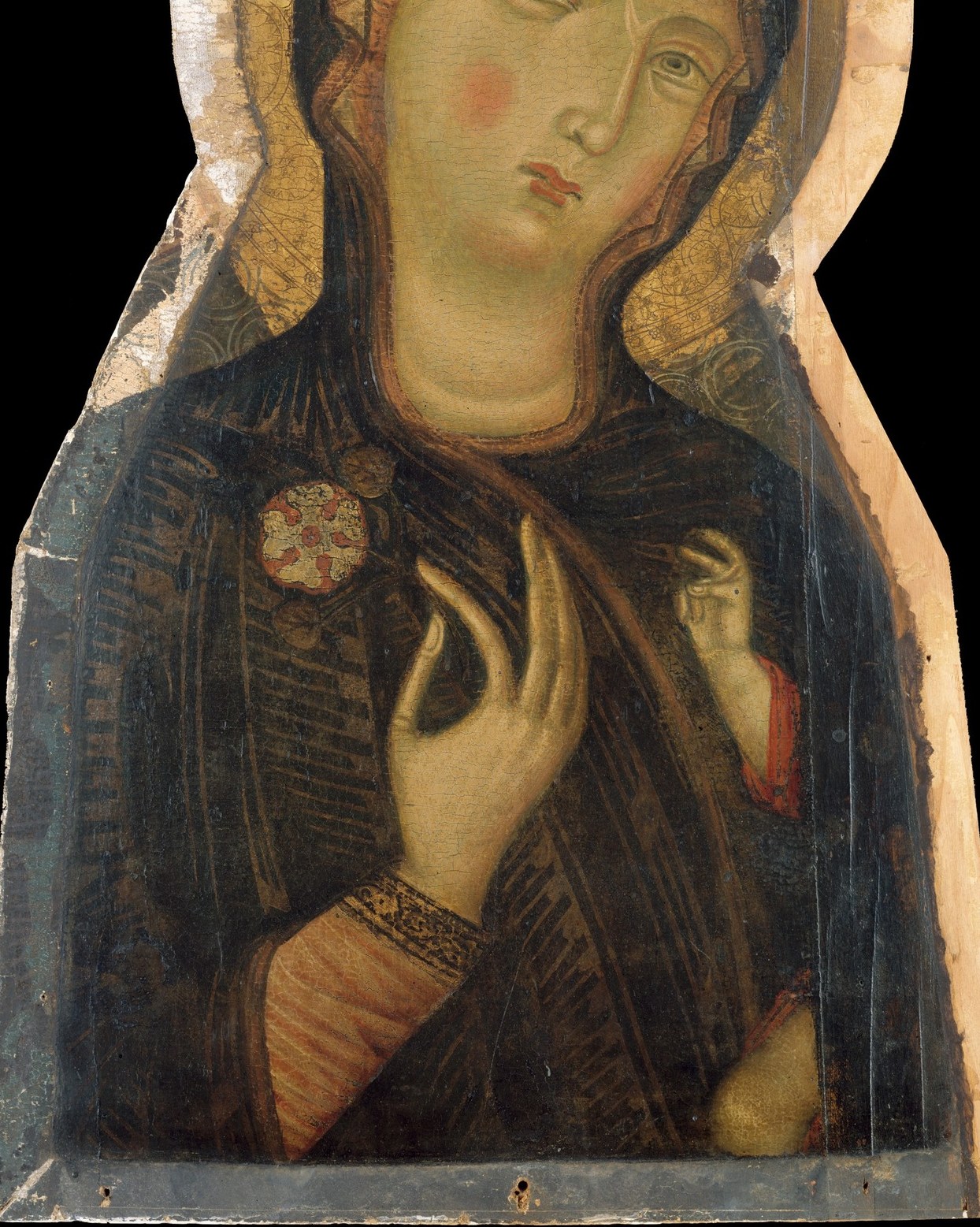
This is 'Madonna and Child,' painted around 1290 by an anonymous Florentine artist we now call the Master of the Magdalen. It lives at The Metropolitan Museum of Art, and at first glance it reads as a standard Byzantine-style icon, gilded, solemn, hieratic. But the painting carries a secret signature hidden in the brushwork.
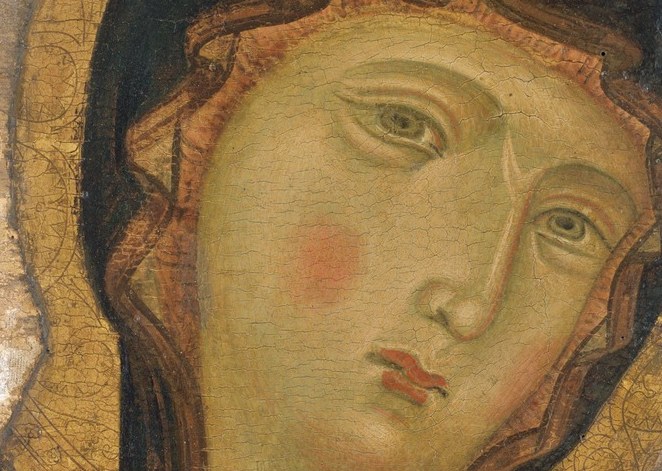
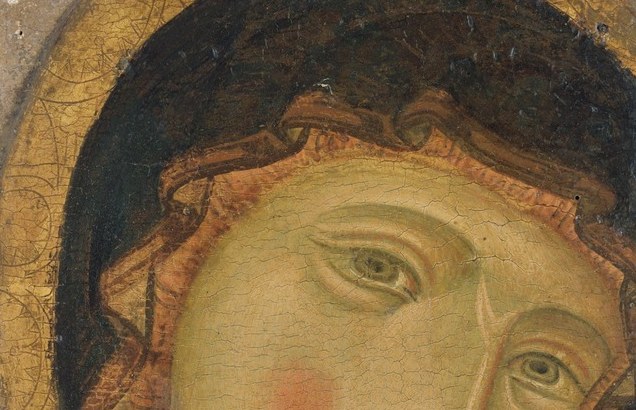
Look at her cheeks. Those are not blended blushes, they are schematic rosy disks applied as a flat, stylized stamp. In the 1290s, no other Florentine hand placed blush quite this way. Connoisseurs use that very detail to link unsigned panels to this master and his workshop. The gold border along her dark maphorion is chrysography, fine gilded lines painted to catch candlelight in a dim church, asserting divine radiance and the painter's own virtuosity in the same stroke.
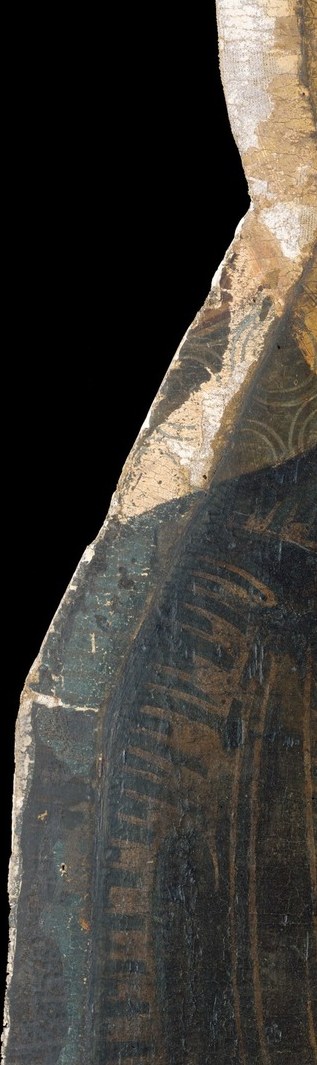
The Master of the Magdalen ran an active workshop in late-Duecento Florence. His name comes from a larger altarpiece, 'Mary Magdalene with Eight Scenes from her Life,' which remains his most famous attribution. He even trained Grifo di Tancredi, a documented Florentine painter of the next generation. This panel, with its arched top cut from a single plank, was likely a private devotional object, small enough to travel, precious enough to pray before.
A signature was not the custom yet. The brush had to do the signing.
Details
Transcript
She looks like a thousand other Madonnas. But one detail tells you exactly whose hand painted her. These rosy discs. Not natural blush, a workshop stamp. Art historians call them a connoisseur's fingerprint. The painter's name is lost. We call him the Master of the Magdalen. But every line of gold on her veil he laid himself.