Saul honoring David after his victory over Goliath by Gerrit de Wet
Gerrit de Wet's "Saul Honoring David after his Victory over Goliath," painted in 1640, is a compelling example of Dutch Golden Age biblical art, held at the Rijksmuseum. It captures the dramatic moment of public recognition following David's triumph over Goliath.
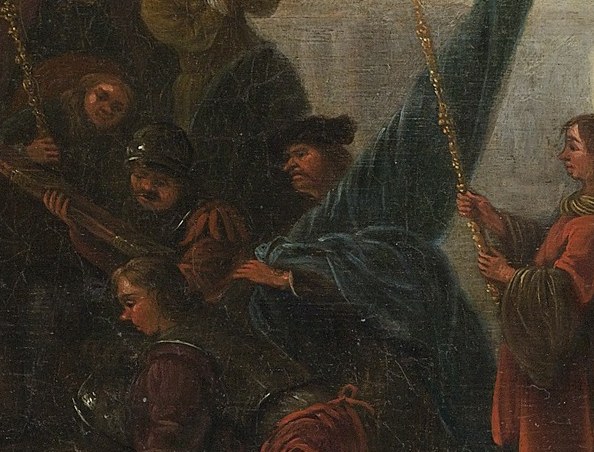
Observe the rich symbolism: the golden cloth represents the honor and reward bestowed, while the victory flag held aloft underscores the conquest. The strong chiaroscuro, a technique de Wet learned from his likely mentor Rembrandt, dramatically highlights the central figures against a shadowed backdrop.
De Wet, active in Haarlem from 1643 to 1662, specialized in religious and landscape subjects. This painting aligns with the 17th-century Dutch interest in heroic virtue and divine providence, reflecting civic order and the collective celebration of triumph.
What other details do you notice that add to the story's depth?
Details



Transcript
This painting tells a familiar story from the Bible. It's the moment King Saul honors David after defeating Goliath. David kneels, having just proven his divine favor. The golden cloth draped between them symbolizes honor and reward. And this young man holds a flag, a clear symbol of victory. Created in 1640, it shows the Dutch love for heroic narratives. The artist, Gerrit de Wet, trained under Rembrandt's influence.