Early Spring by Ernest Lawson
Ernest Lawson's Early Spring, painted in 1918, is a landscape that feels alive with the season's change. The thick, textured brushstrokes are characteristic of American Impressionism. This work is part of the collection at The Cleveland Museum of Art.
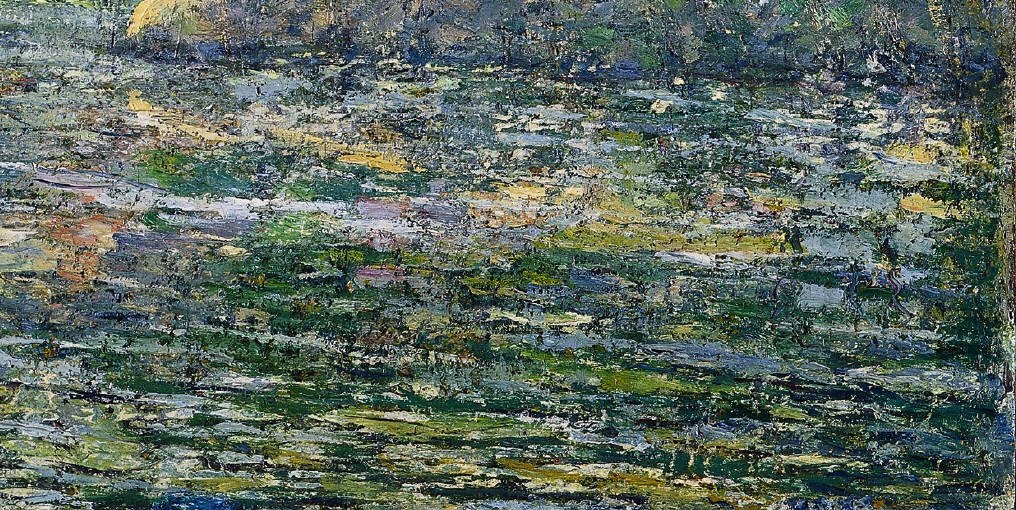
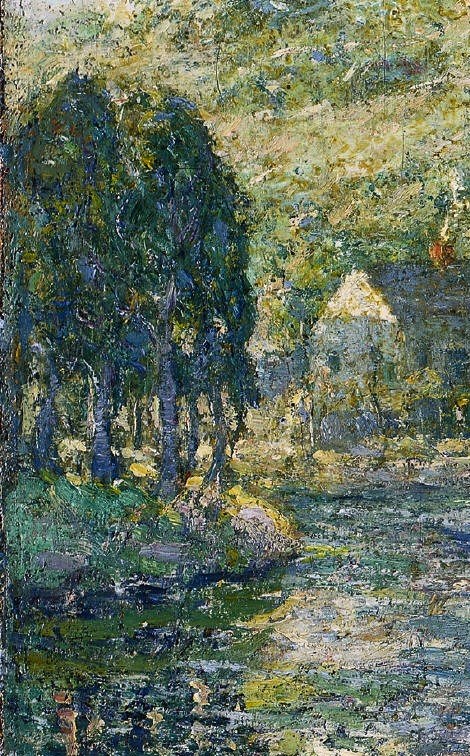
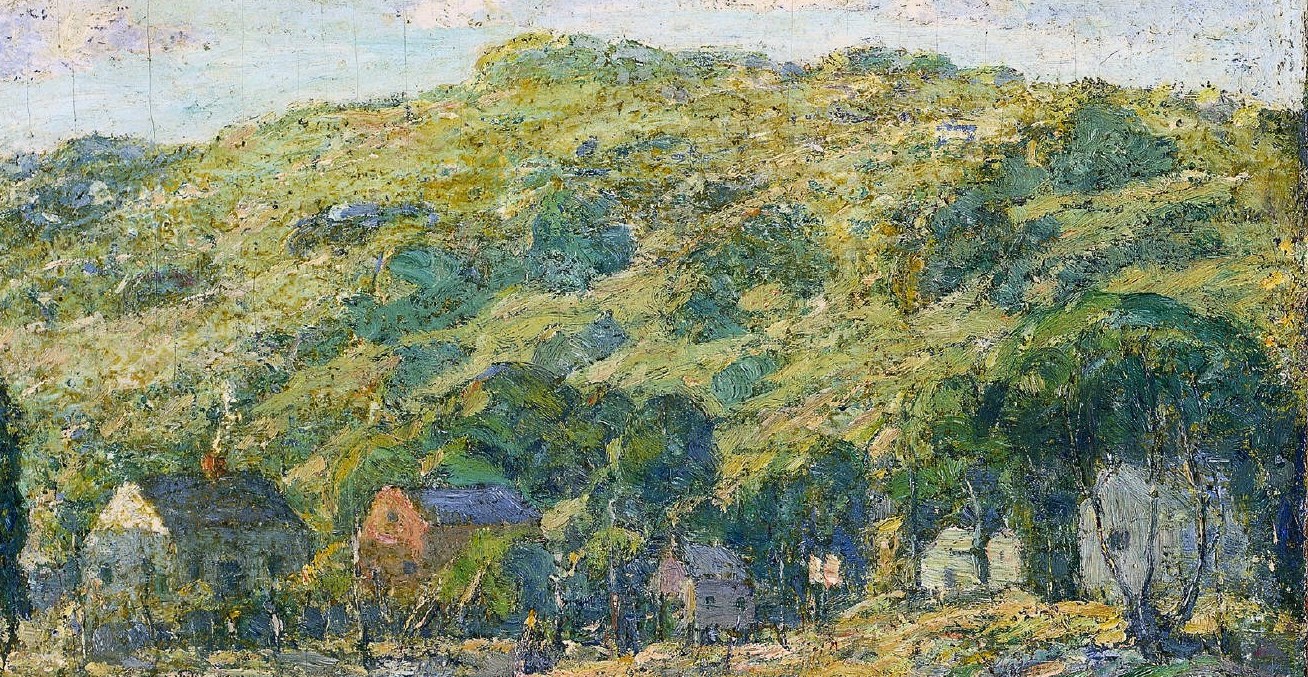
Notice the contrast between the stark, bare trees on the left and the vibrant, green hillside bursting with life. The artist’s application of paint, especially on the river's surface, creates a dynamic, almost three-dimensional effect.
Lawson was a member of The Eight, a group that pushed against the conservative art establishment of their time. This painting, created during a period of artistic and societal transition, reflects that spirit of challenging norms.
A small, barely discernible figure stands by the water's edge, adding a human element that grounds the expansive natural scene.
Details
Transcript
The whole landscape breathes with new life. The painter uses thick paint to build texture. Look at the trees, bare on the left. Yet the hillside is already bursting green. This was painted in 1918, during a time of change. The artist was part of a group challenging the Academy. Can you see the tiny figure by the water? He adds a human presence to the wild scene.