Portrait of a Man, possibly Jan Snoeck by Gossaert, Jan
View the artwork: Portrait of a Man, possibly Jan Snoeck →
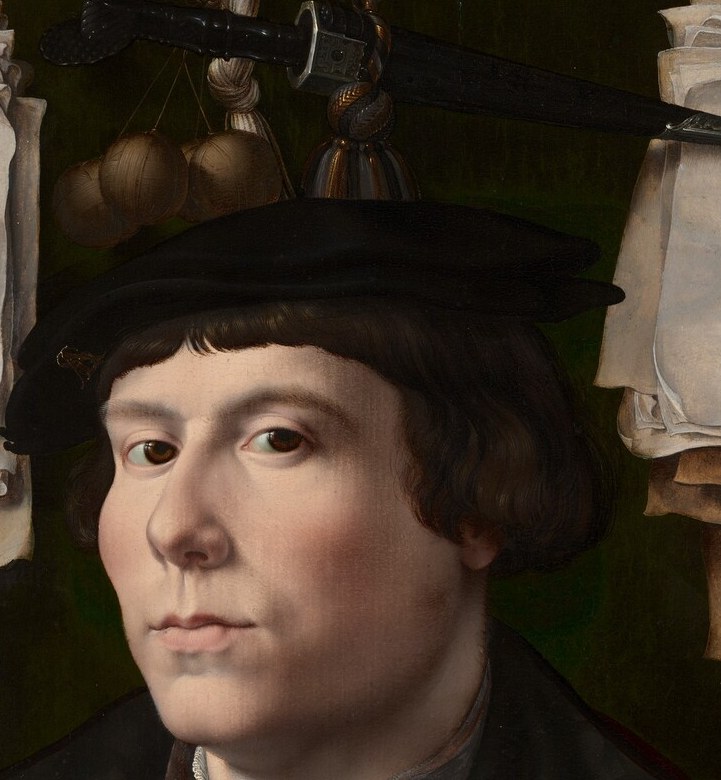
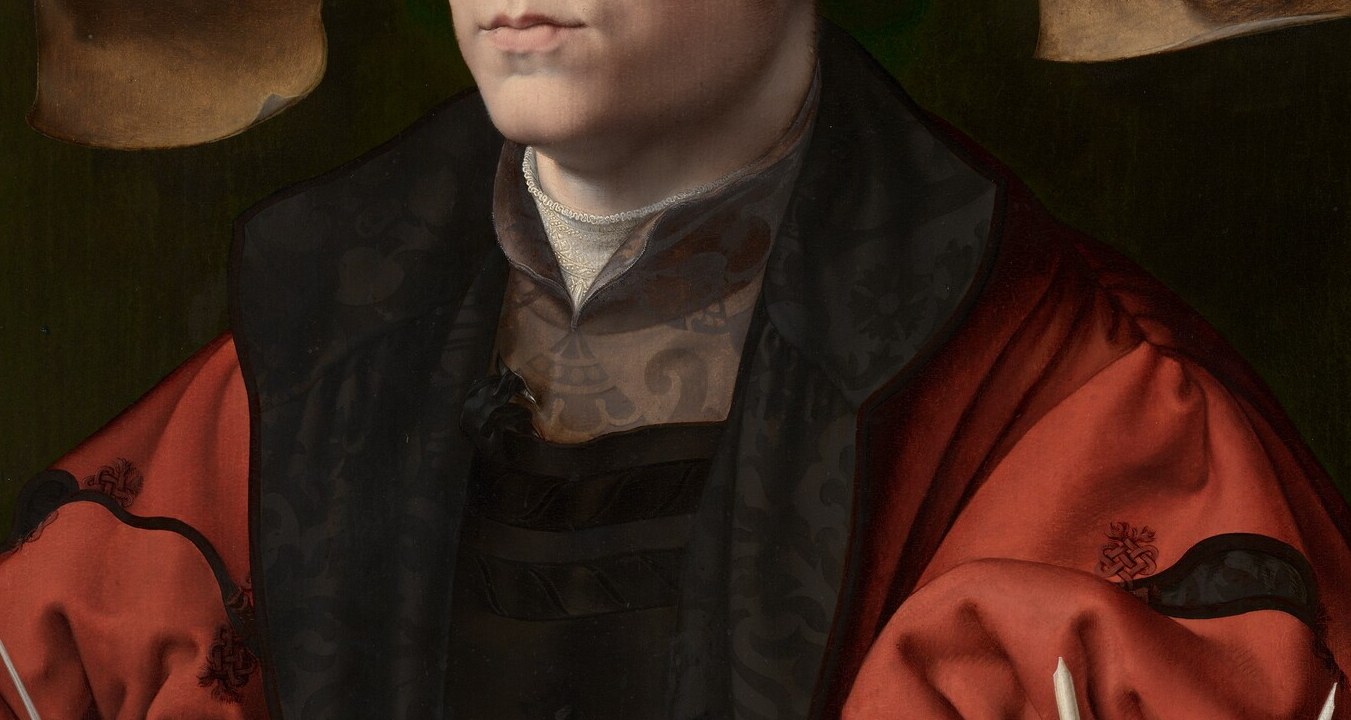
This is Jan Gossaert's "Portrait of a Man," painted around 1530 and now in the National Gallery of Art in Washington. For over a century, it hung in British collections mistakenly attributed to Hans Holbein. The sitter's identity was lost.
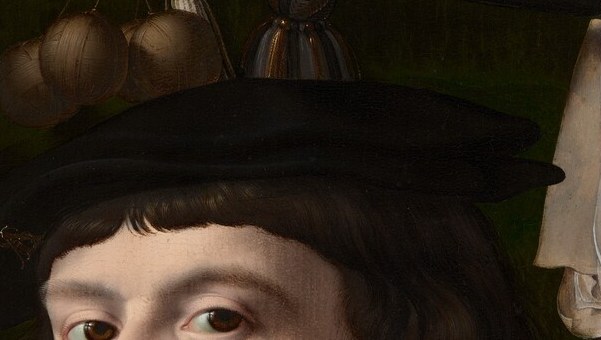
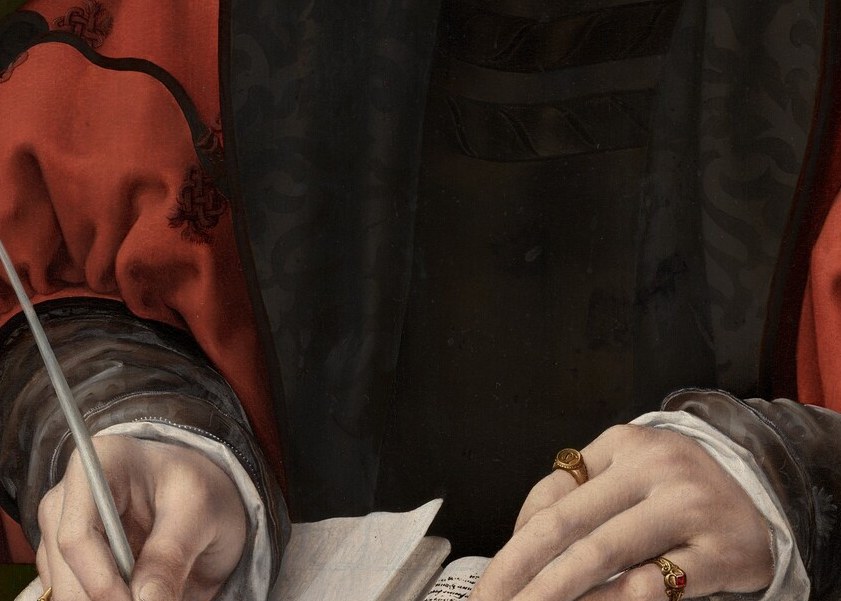
But the painting itself holds a carefully constructed answer. Look closely at the black beret: a tiny gold badge bears the intertwined monogram "IAS." Then look at his right index finger, where a ring is clearly inscribed with the initials "IS." Together, these details form a kind of hidden signature, placed by the sitter to ensure his presence outlasted his name.
In 2010, the art historian Herman Th. Colenbrander published a study linking these initials to Jan Jacobsz. Snoeck, a merchant from Middelburg born around 1510. The identification remains provisional, but the argument is compelling. The man in the portrait built a paper fortress around himself and then labeled it.
The painting may have influenced Holbein himself, who likely saw it while traveling through the Netherlands in 1532. His famous portrait of Georg Gisze in Berlin shares a similar composition: a merchant surrounded by the tools of his trade. But Gossaert's version is quieter, more direct. The sitter doesn't just display his wealth; he meets your eye and waits for you to understand.
What would you have labeled on your own desk, if you knew someone would be looking five hundred years later?
#arthistory #janegossaert #renaissanceportrait
Details
Transcript
A merchant sits at his desk, caught mid-task. His papers are labeled in plain Dutch. Drafts and letters. The raw material of a life in trade. Now look at his hat. A monogram: IAS. And on his finger, a second clue. A ring inscribed IS. The initials match. For centuries, his identity was a mystery. In 2010, a scholar finally assembled these hidden signatures.