The Farrier by Aert van der Neer
This is The Farrier, painted in 1653 by Aert van der Neer, a Dutch Golden Age artist who died in such total obscurity that his name barely appears in his own era's records. Today it hangs in The Metropolitan Museum of Art.
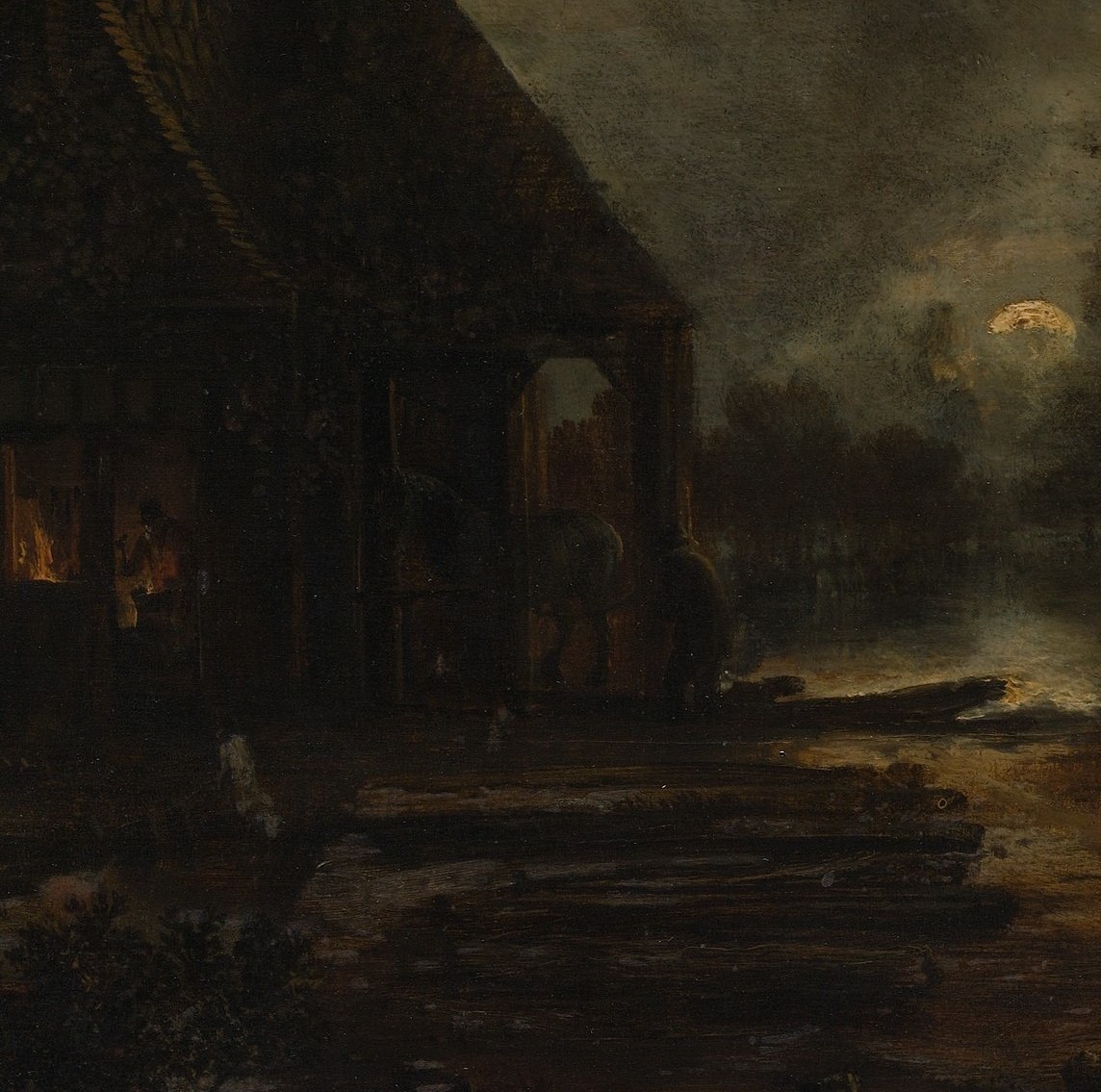
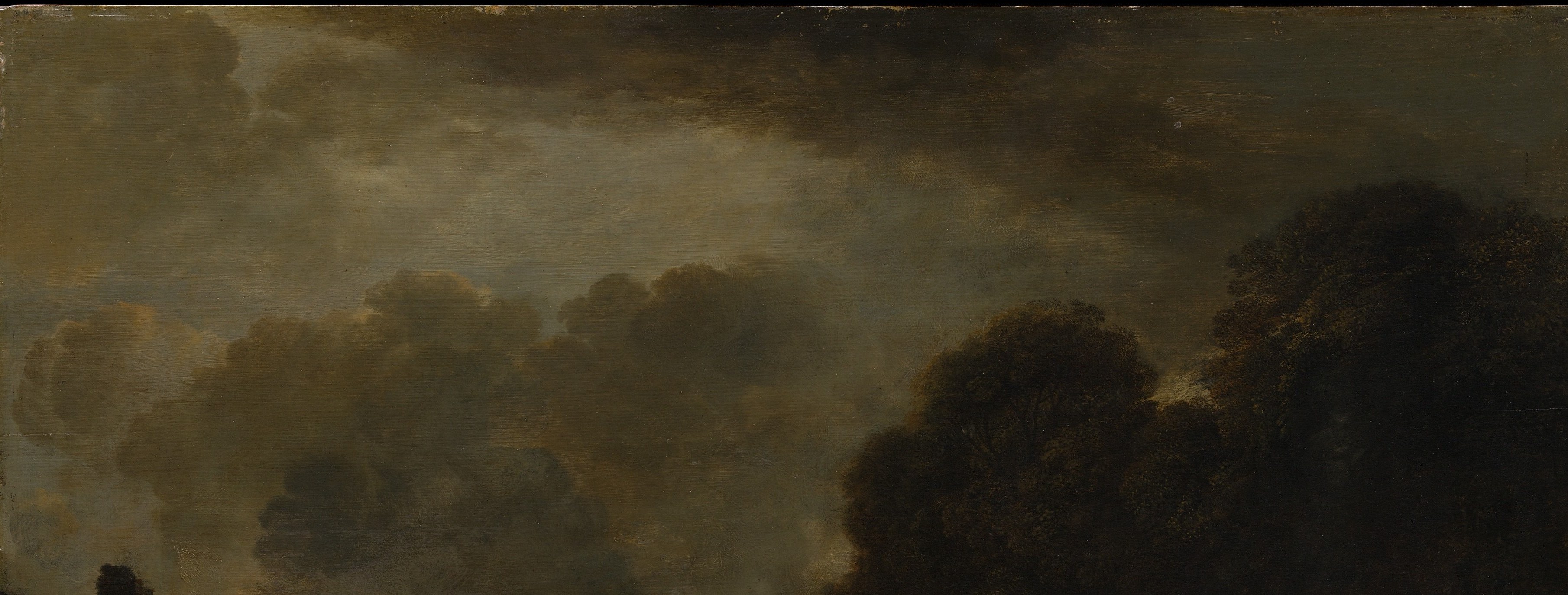
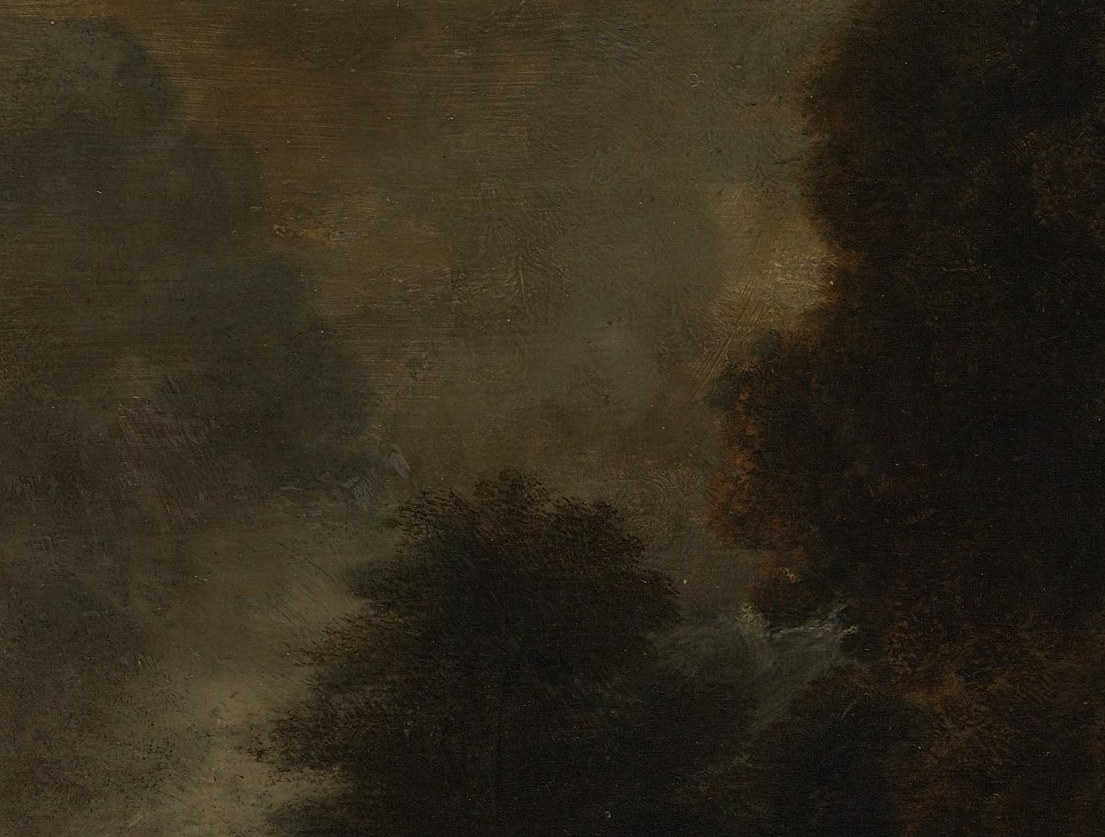
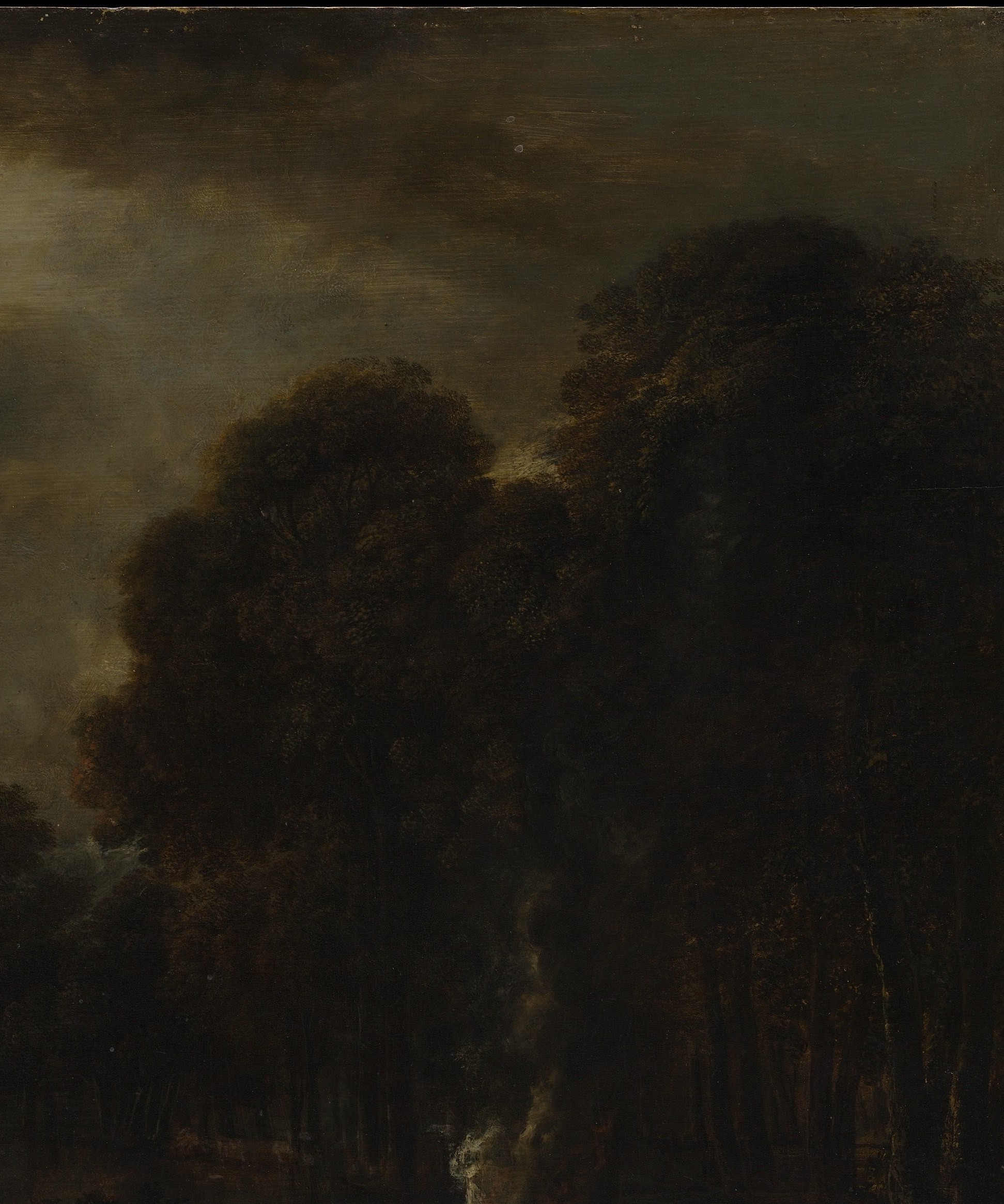
Two lights operate in this painting. The obvious one is the forge fire at left, glowing amber-orange and casting the farrier and his horse into silhouette. But look to the mid-right and you will find a second, cooler glow: moonlight breaking through a gap in the clouds. Van der Neer built his reputation on this double-light trick, and once you see both sources, the whole composition opens up.
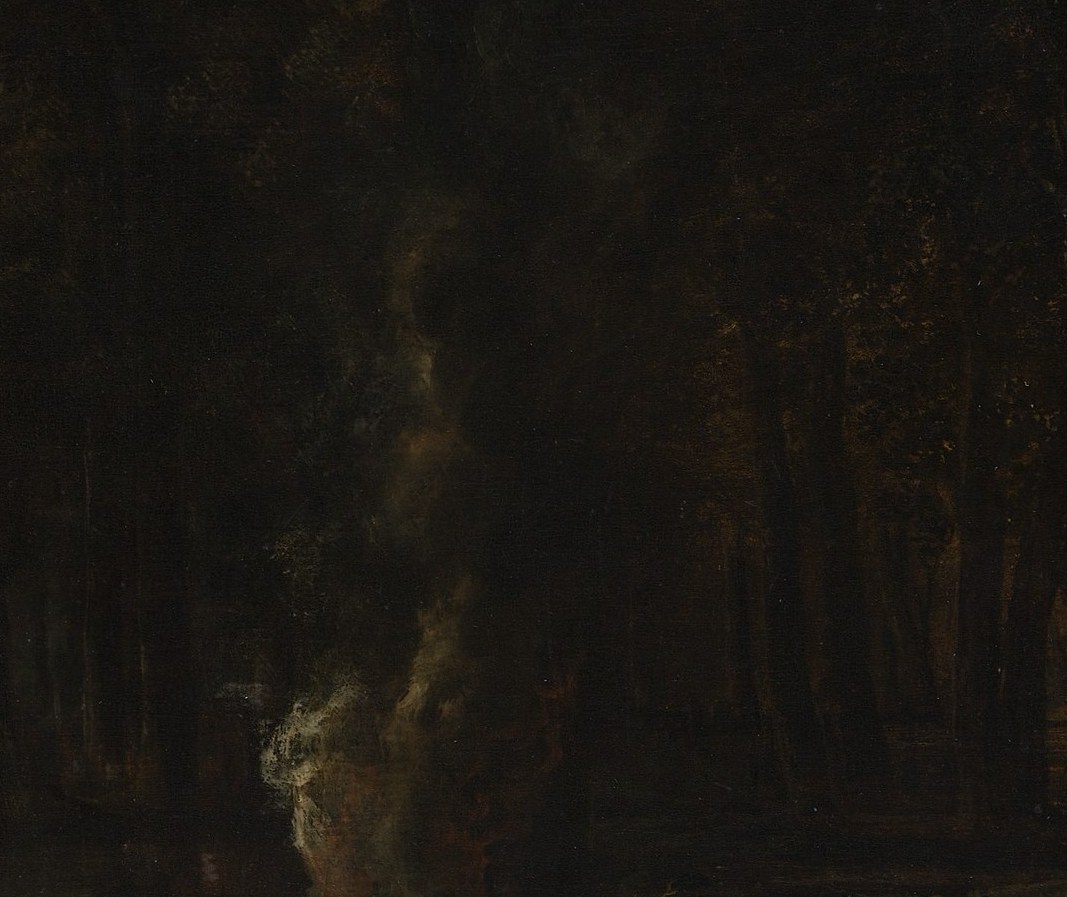
The third hidden element is the distant village. Let your eye travel past the tree mass and into the deep background mist. Faint structures appear: a church tower, low houses. This is not wilderness. It is an inhabited rural road, and the farrier's fire is a real stop on a real journey.
Van der Neer's obscurity lasted centuries. He ran a wine business to survive, went bankrupt, and was largely forgotten until the 19th century. A painting like this one asks very little: just that you stop and look into the dark long enough to see what he left there.
Details
Transcript
You are looking at a painting almost no one has seen. Aert van der Neer died in obscurity in 1677. His specialty: painting near-total darkness. A single forge fire lights the whole scene. Now find the second light source. Moonlight, breaking through the cloud. And deep in the background: a distant village. He painted a world inside the dark.