An October Day in the White Mountains by John Frederick Kensett
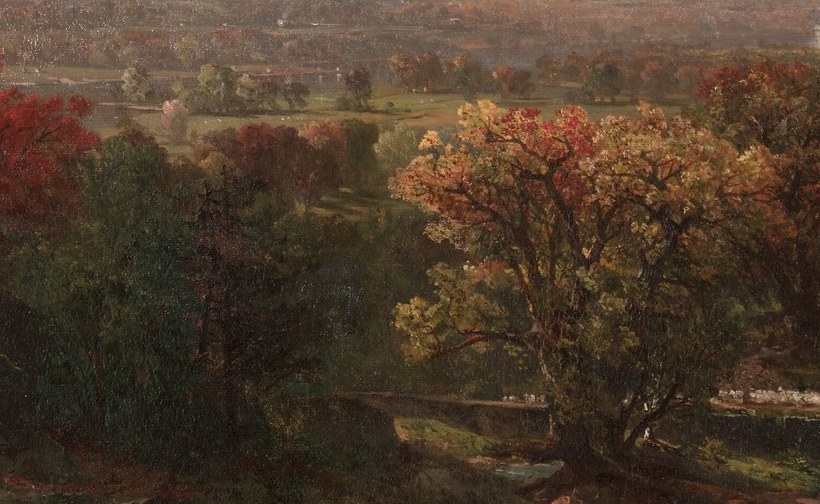
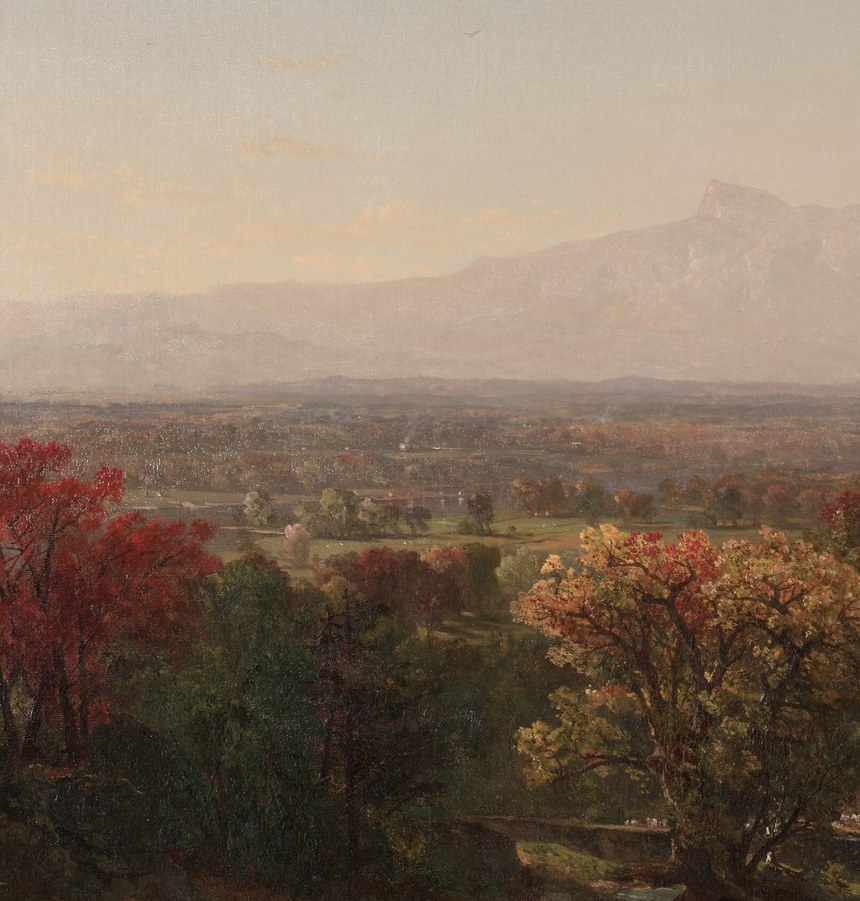
An October Day in the White Mountains was painted by John Frederick Kensett in 1854, and it does something clever: it hides its true subject in plain sight. The foreground trees are so brilliant with autumn color that most viewers never notice the tiny rider on horseback traveling through the grove, or the faint scatter of farm buildings in the distant valley.
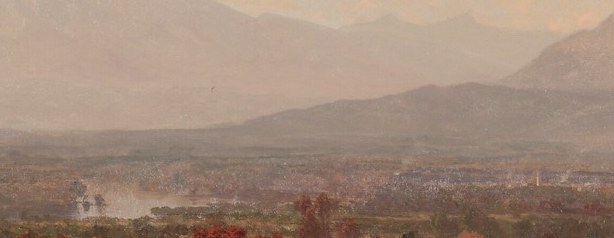
Find the earthen path winding through the trees near center-right. The rider sits there, a speck of a figure, placed deliberately to give the landscape its overwhelming scale. Then let your eye travel into the valley beyond the haze, there, small white and pale structures mark a settled village. Kensett frames wilderness as a place people already inhabit.
Kensett was a second-generation Hudson River School painter and a founder of the Metropolitan Museum of Art. By 1854, his style had moved toward Luminism: a suffused, sourceless light that dissolves distant forms into tone rather than detail. The blue-gray band of haze between the valley and the White Mountains is his most refined technique here, the land literally becomes atmosphere before it reaches the peaks.
That band of warm light just above the ridgeline tells you it is late afternoon on an October day. The rider and the settlement are both easy to miss. But once you see them, the painting stops being a postcard and becomes a portrait of America imagining itself.
Details

Transcript
Red and orange trees catch your eye first. But look past the color, onto the path. A solitary rider travels through the grove. He is tiny against the valley. Now scan the distant valley floor. A small settlement is tucked into the landscape. Kensett painted this in 1854, when America saw its wilderness as both sublime and ready for settlement. The haze between valley and peak dissolves distance into pure atmosphere.