Cypress and Poppies by Elihu Vedder
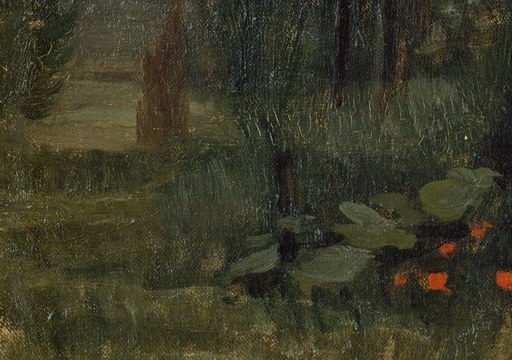
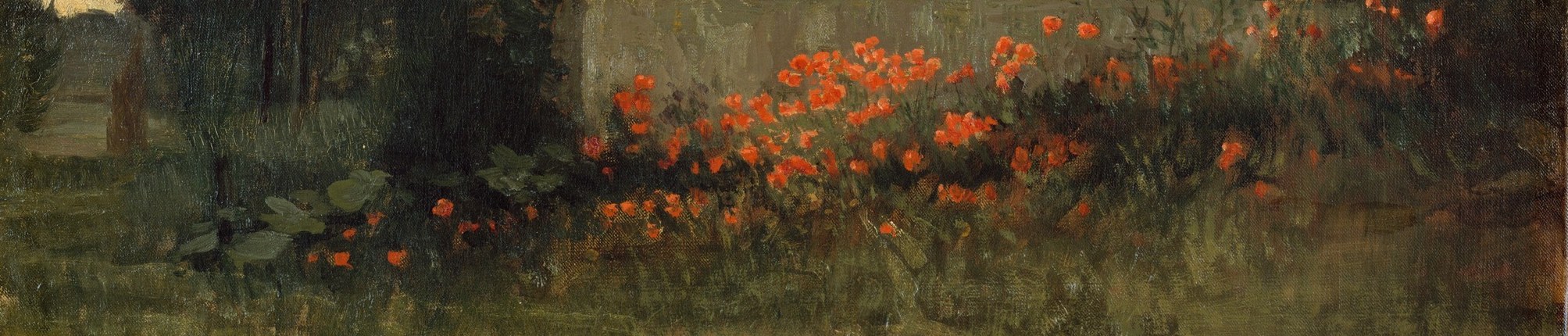
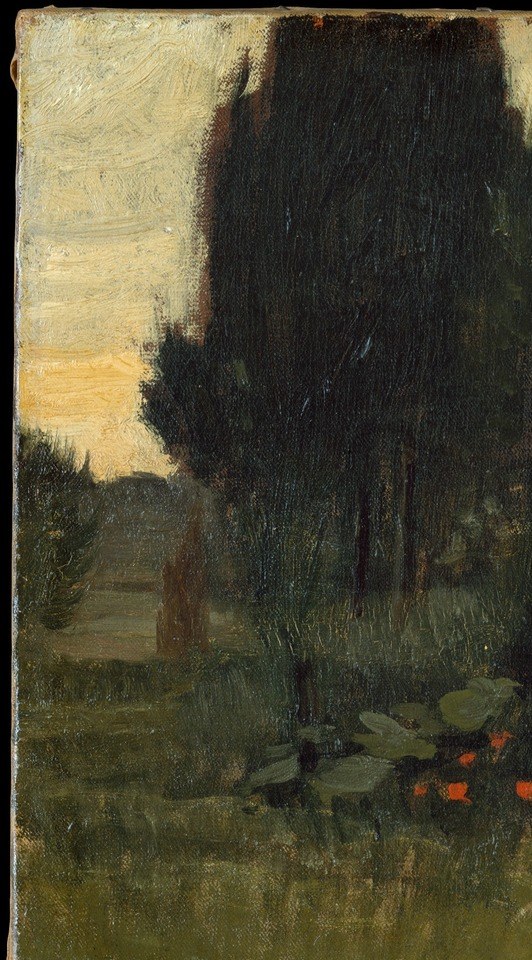
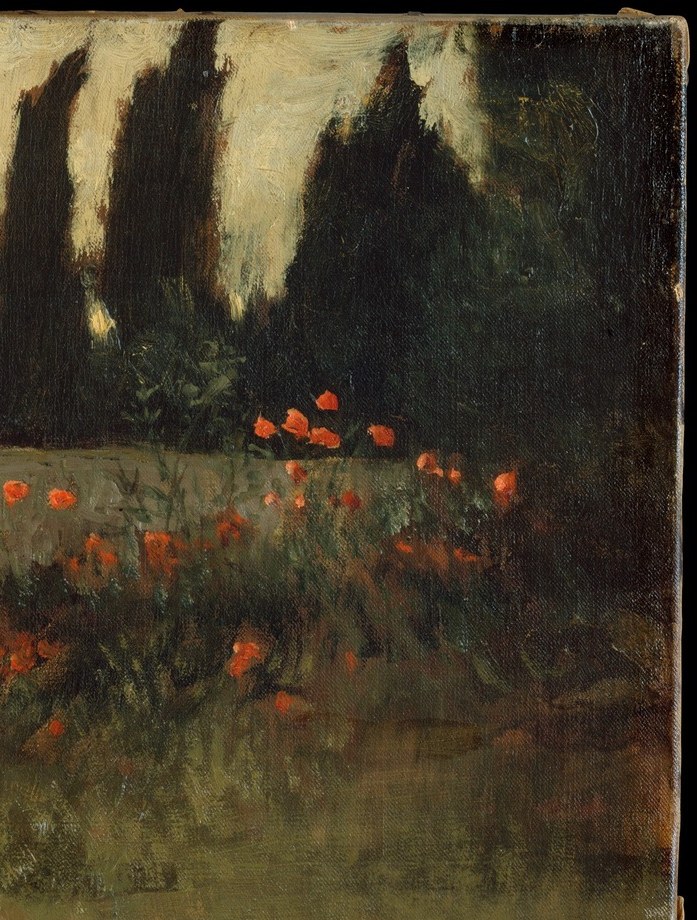
Elihu Vedder's 'Cypress and Poppies' (1890) is a study in how value contrast creates light. The entire composition is a three-zone machine: an almost-black canopy of cypress, a pale gap of sky, and a sweeping field of red poppies. It is in the collection of the Metropolitan Museum of Art.
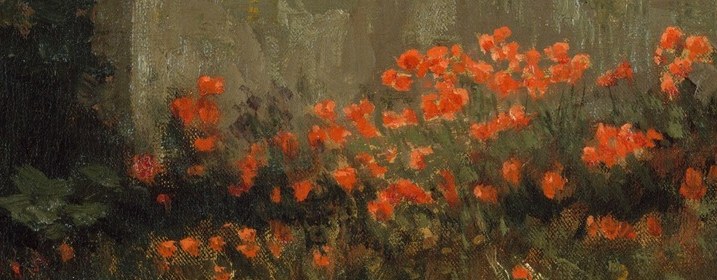
Look at the poppies in shadow beneath the left cypress mass. They are the same red pigment as the brightest blooms in the center, but they appear to glow from within. Vedder did not change the color; he deepened the surrounding darkness. The eye reads the red as luminous because its neighbors are near-black.
Vedder was an American symbolist painter and illustrator, best known for his work on the Rubaiyat of Omar Khayyam. He understood that a color is never seen in isolation. The entire mood of this painting, that heavy funereal stillness, is carried not by the poppies themselves but by the dark values pressing in on them from above and below.
The trick is hiding in plain sight. The red isn't bright. It's just placed perfectly in the dark.
Details
Transcript
This landscape is built like a machine of light. Three tones: near-black cypress, pale sky, and a field of red. The poppies are the same red everywhere. But they don't look it. Here, under the shadow of the trees, they seem to glow from within. The secret is in the surrounding darkness. Vedder knew that a color's brightness is relative, not absolute. Dark-value neighbors push red forward into the eye.