View of Vétheuil by Claude Monet
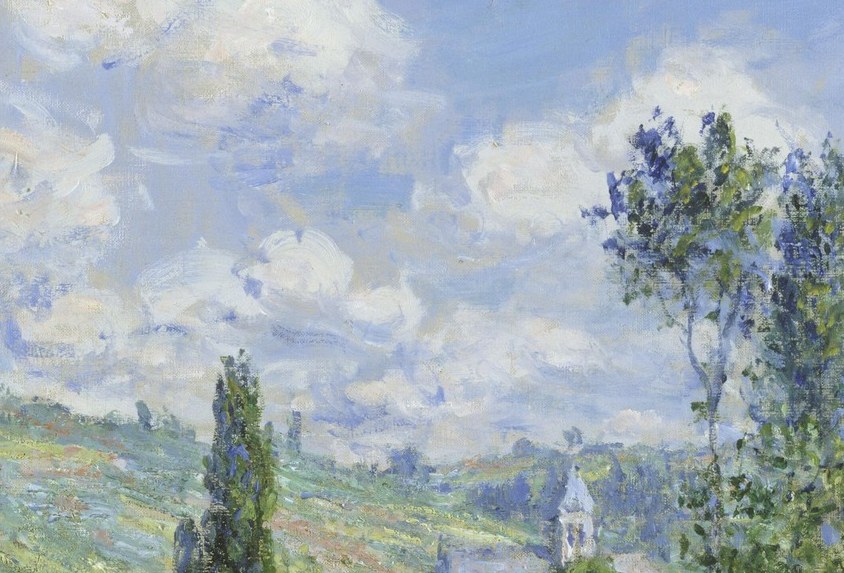
Claude Monet painted View of Vétheuil in 1880, during one of the most desperate periods of his life, and then sold it for 20 francs just to feed his family.
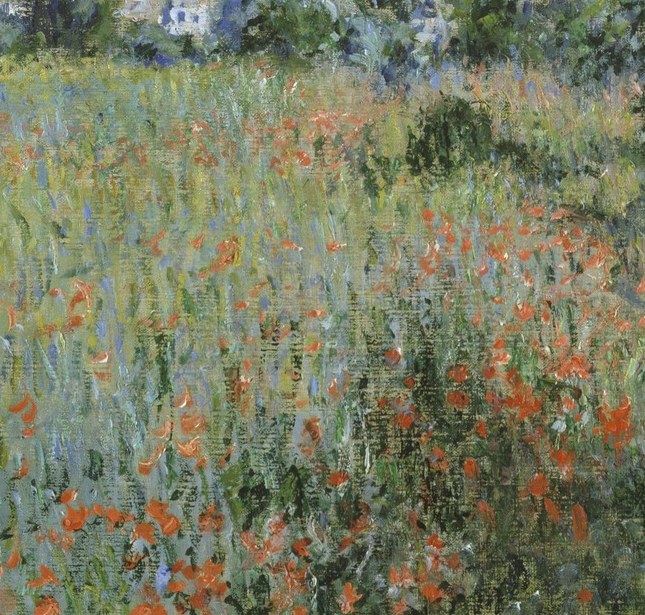
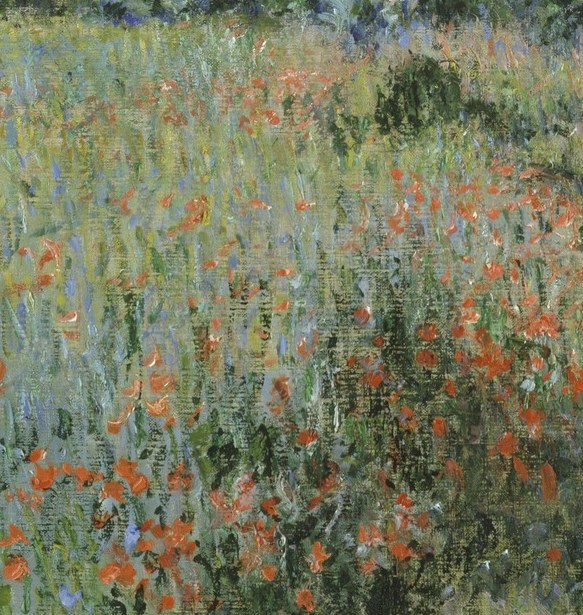
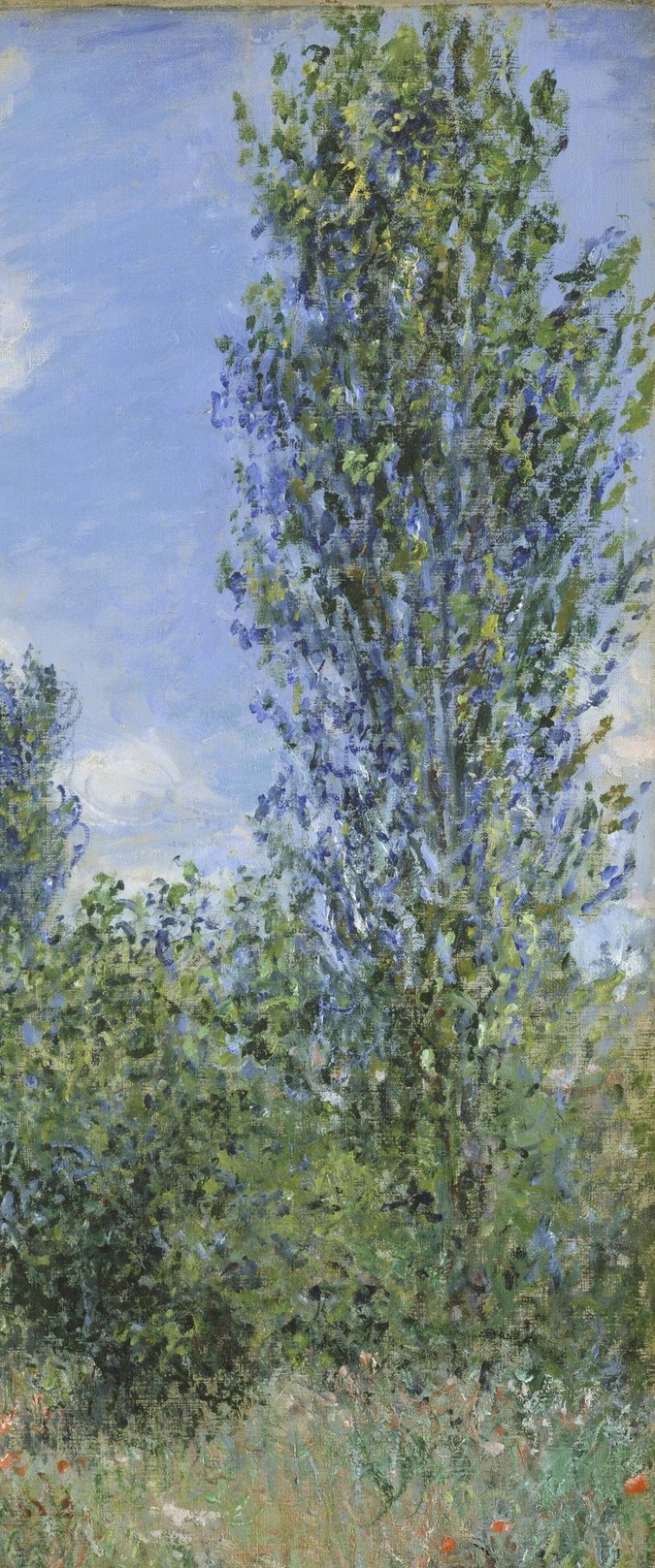
Look at the foreground poppies. The paint is applied in thick, distinct dabs of pure red and orange, a technique called impasto. None of the colors are blended on the canvas. Your eye does the mixing from a distance. This optical effect is the core of Impressionism, but the urgency of these particular brushstrokes comes from a place deeper than theory.
Monet moved to Vétheuil in 1878 with his wife Camille, who was dying, and their two young sons. He was chronically unable to sell his work. Shopkeepers refused him credit. In letters he describes painting furiously all day, then walking canvases into town hoping to trade them for a loaf of bread. Twenty francs was a low price even in 1880.
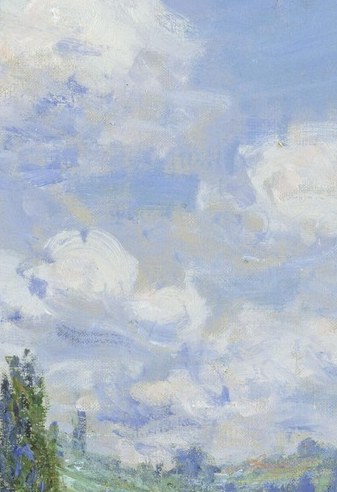
The blue sky and the quiet village hide the desperation. But the thickness of the red, the speed of the marks, is the real record of that year.
Details
Transcript
You are looking at a field of red poppies. In 1880, Claude Monet was broke. His wife was dying. He moved his family here, to the village of Vétheuil. This view was painted fast, in thick, urgent strokes. He sold it for 20 francs just to buy bread. Today it is priceless. But the hunger in the paint is real.