Untitled by Bhadrabahu
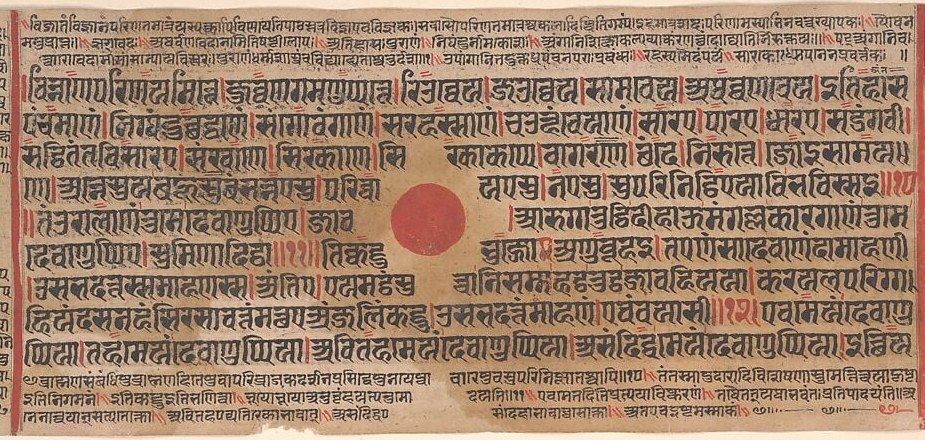
This Untitled work by Bhadrabahu, created in 1449, is a beautiful example of a religious watercolor painting, housed in a private collection. It's more than just a page of text; it's a meticulously crafted sacred object.
Notice the delicate gold leaf integrated into the script. This precious material wasn't just decorative; it was intended to symbolize the unblemished nature and profound truth of the teachings within. The strategic use of red ink for emphasis and the three distinct red circles act as visual anchors, guiding the viewer through key passages and sections.
During the 15th century, Gujarat, India, was a significant center for Jain monastic travel and artistic patronage. This environment fostered a distinctive painting style, where artists frequently incorporated brilliant colors and gold to elevate sacred narratives. Such choices enhanced the visual impact and conveyed the deep reverence for religious subjects within the community.
Every element in this artwork serves to transmit knowledge and spiritual significance.
Details
Transcript
This 15th-century manuscript is more than just text. Look closely at the script, accented with gold leaf. The gold symbolizes the purity and truth of its teachings. Now see these three red circles, precisely placed. They are visual anchors, marking key passages within the text. Each element guides the reader through a sacred narrative.