Watermelon on a Plate by American 19th Century
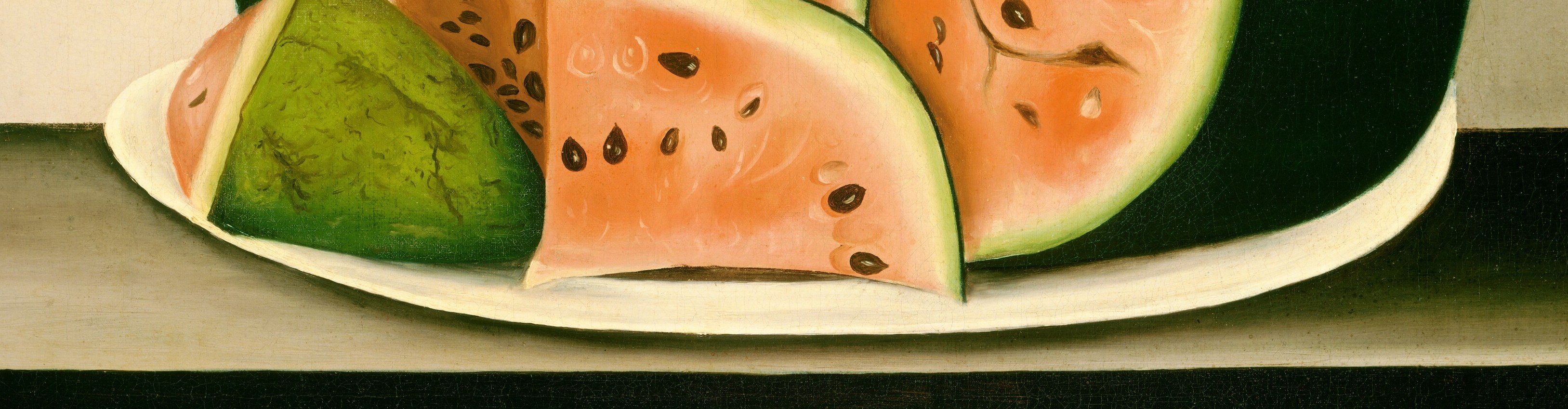
Watermelon on a Plate by an unknown American artist from the mid-19th century is an oil on canvas that appears simple but holds layers of meaning. The artist chose to depict only fruit, stripping away narrative to focus on sensory experience.
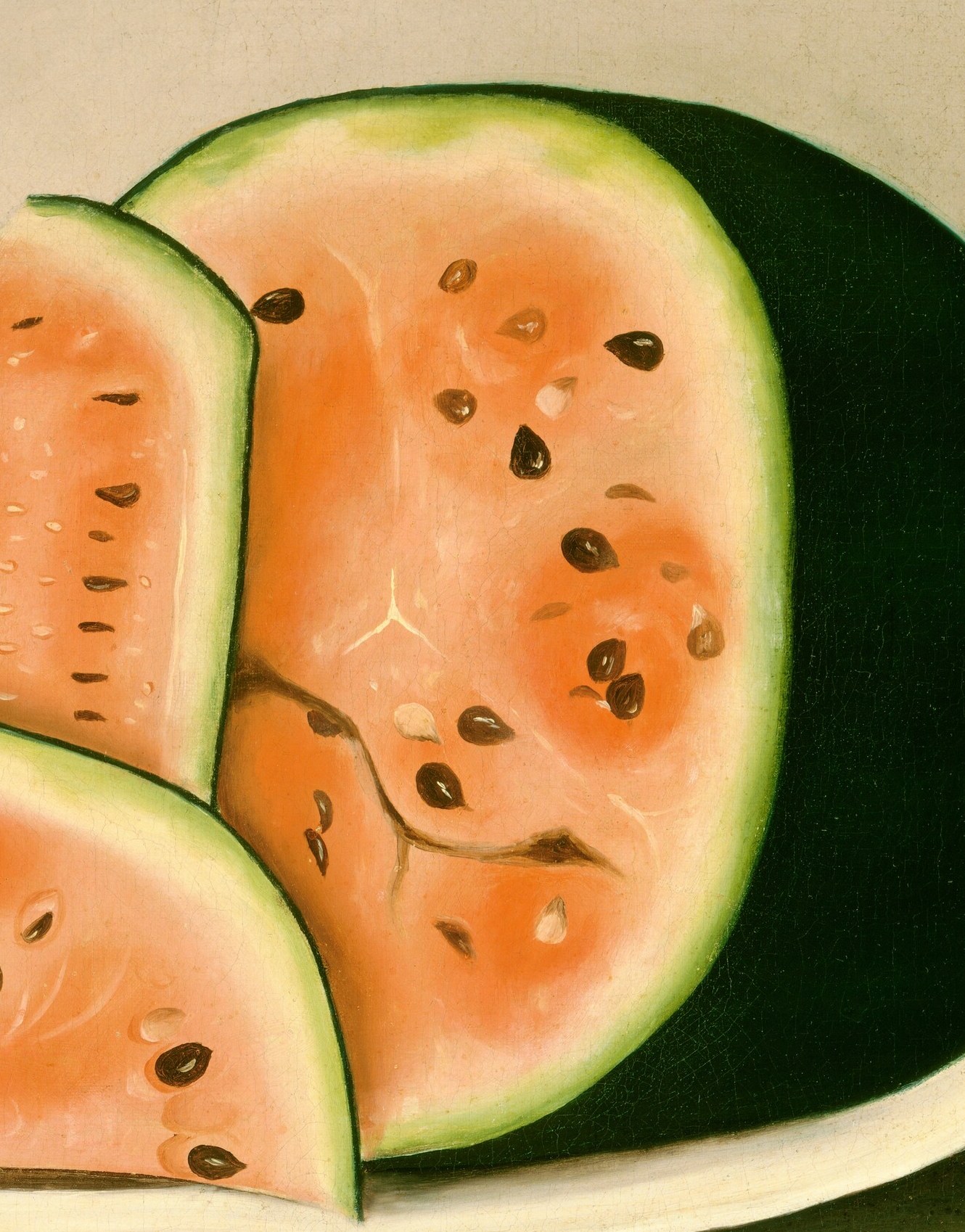
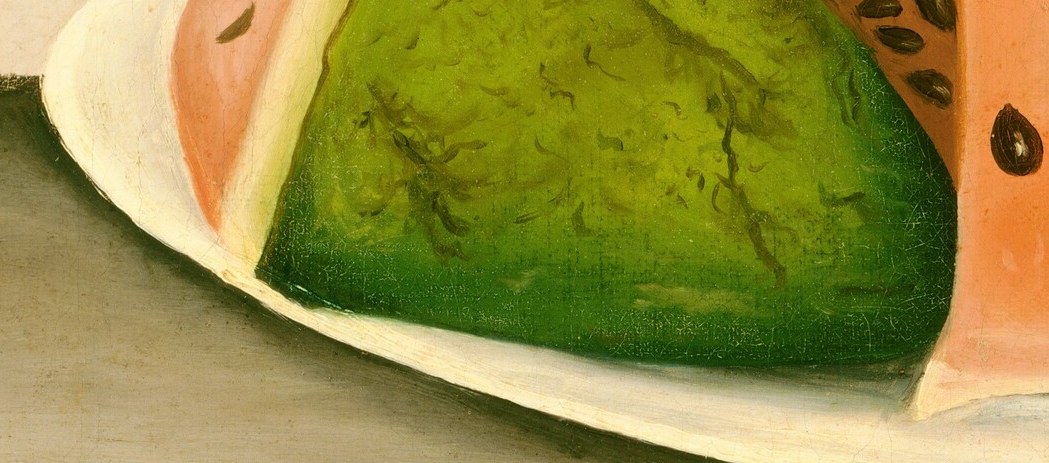
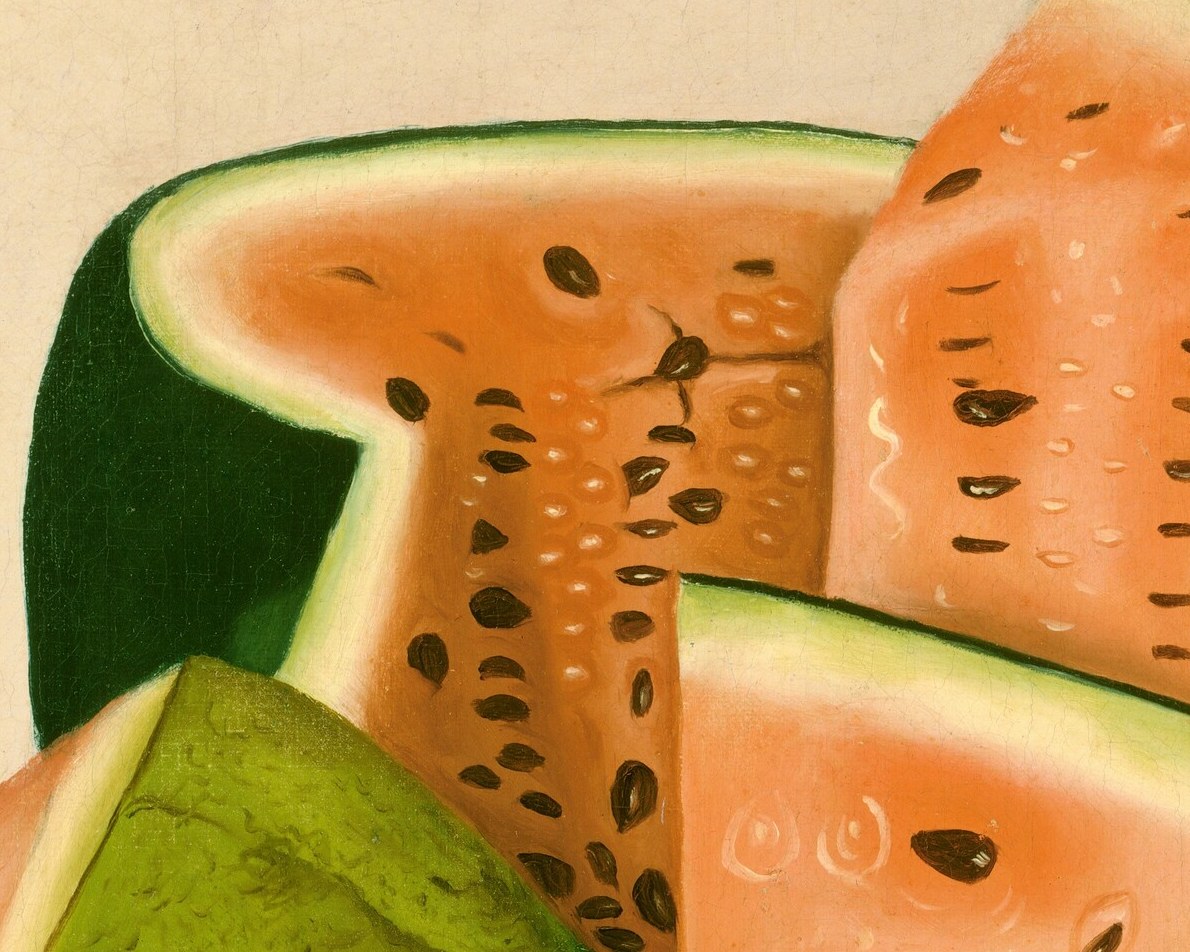
The work presents a single white plate with several slices of watermelon. Notice the vibrant pink flesh with its characteristic black seeds, and the visible green rind. The artist uses smooth, controlled brushwork to emphasize the glossy surface of the fruit and the matte quality of the plate. The minimalist background further isolates the subject.
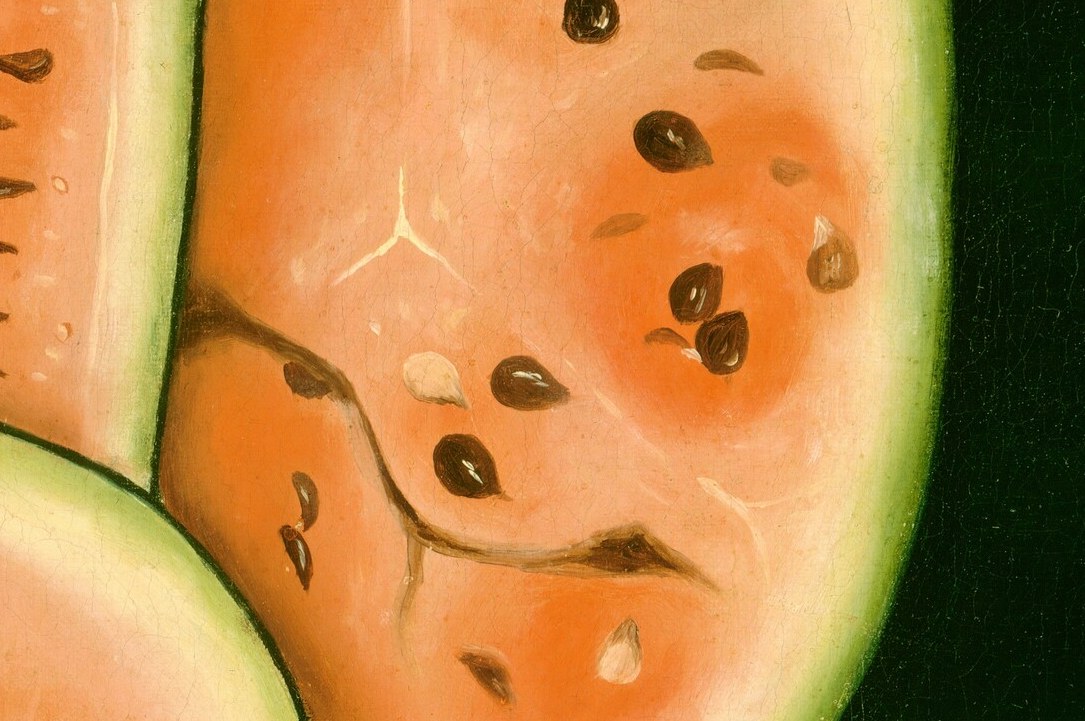
While seemingly a straightforward still life, the composition can be interpreted as a coded message. The black seeds, often associated with death, are placed intentionally. The pale inner rind, separating the dark exterior from the fleshy interior, hints at a sacred object. Together, these elements transform the everyday fruit into a symbol within a ritualistic presentation.
This painting invites us to decode the artist's deliberate choices, finding deeper meaning in the seemingly simple act of serving fruit.
Details
Transcript
This slice of watermelon is just fruit. But the painter wanted you to see more. Look at these dark, scattered seeds. They are a sign of death. And this pale inner rind. It suggests a sacred object. The whole plate is a ritual.