The Death of Harmonia by Jean-Baptiste Marie Pierre
Jean-Baptiste Marie Pierre's “The Death of Harmonia” (1740) at the Metropolitan Museum of Art captures a dramatic moment from ancient history. It depicts the tragic demise of Harmonia of Syracuse, a narrative of sacrifice and mistaken identity that first debuted at the Salon of 1751 in Paris.
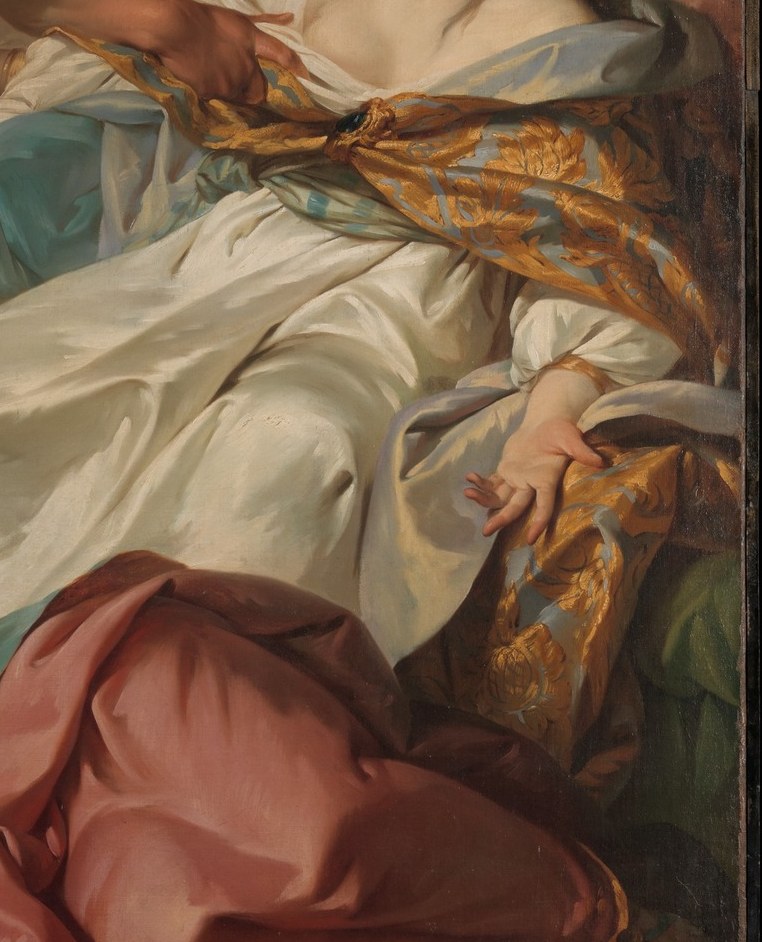
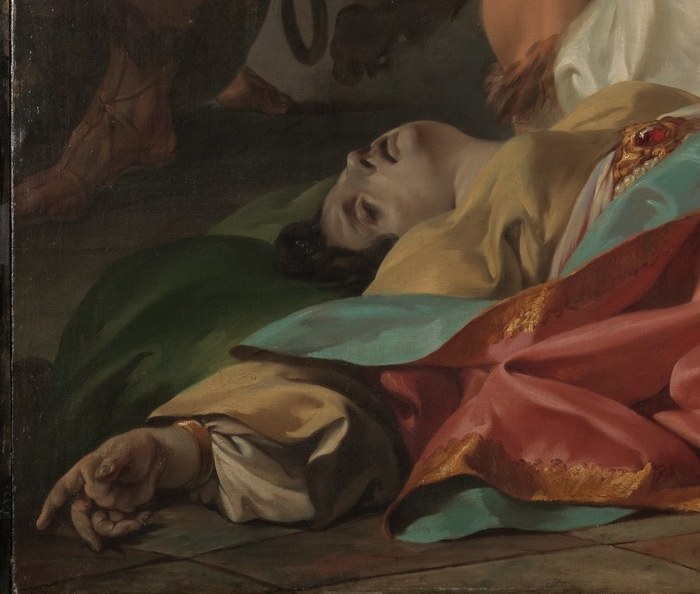
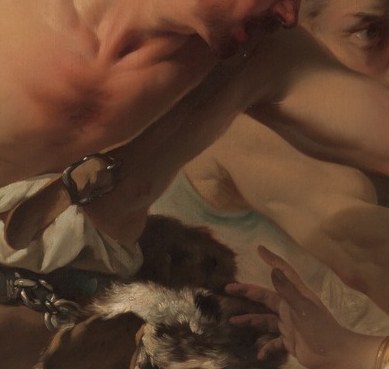
Look at the rich fabrics draped over Harmonia, contrasting sharply with the lifeless form of the slave girl. The painting highlights the dramatic tension through the assailant's raised knife and the subtle despair in Harmonia's face.
The painting illustrates a poignant tale: in 214 B.C., Harmonia's governess dressed a slave girl in Harmonia's attire to protect the princess from conspirators. The slave was mistakenly murdered. Overwhelmed by guilt, Harmonia then revealed her true identity and was subsequently killed.
This artwork reminds us of the profound human cost of political intrigue and the weight of moral choices.
Details
Transcript
This painting tells a tale of sacrifice and mistaken identity. Harmonia, a princess, was meant to be murdered by conspirators. Her governess dressed a slave girl in Harmonia's rich clothes. The slave girl, in princess's attire, was murdered by mistake. Overcome by guilt, Harmonia then revealed her true identity. She, too, was killed.