The Crucifixion by Benvenuto di Giovanni
The Crucifixion, painted by Benvenuto di Giovanni around 1491, is a tempera-on-panel work from the Sienese school. It sits at the center of a quiet art-historical intrigue involving the artist's own son.
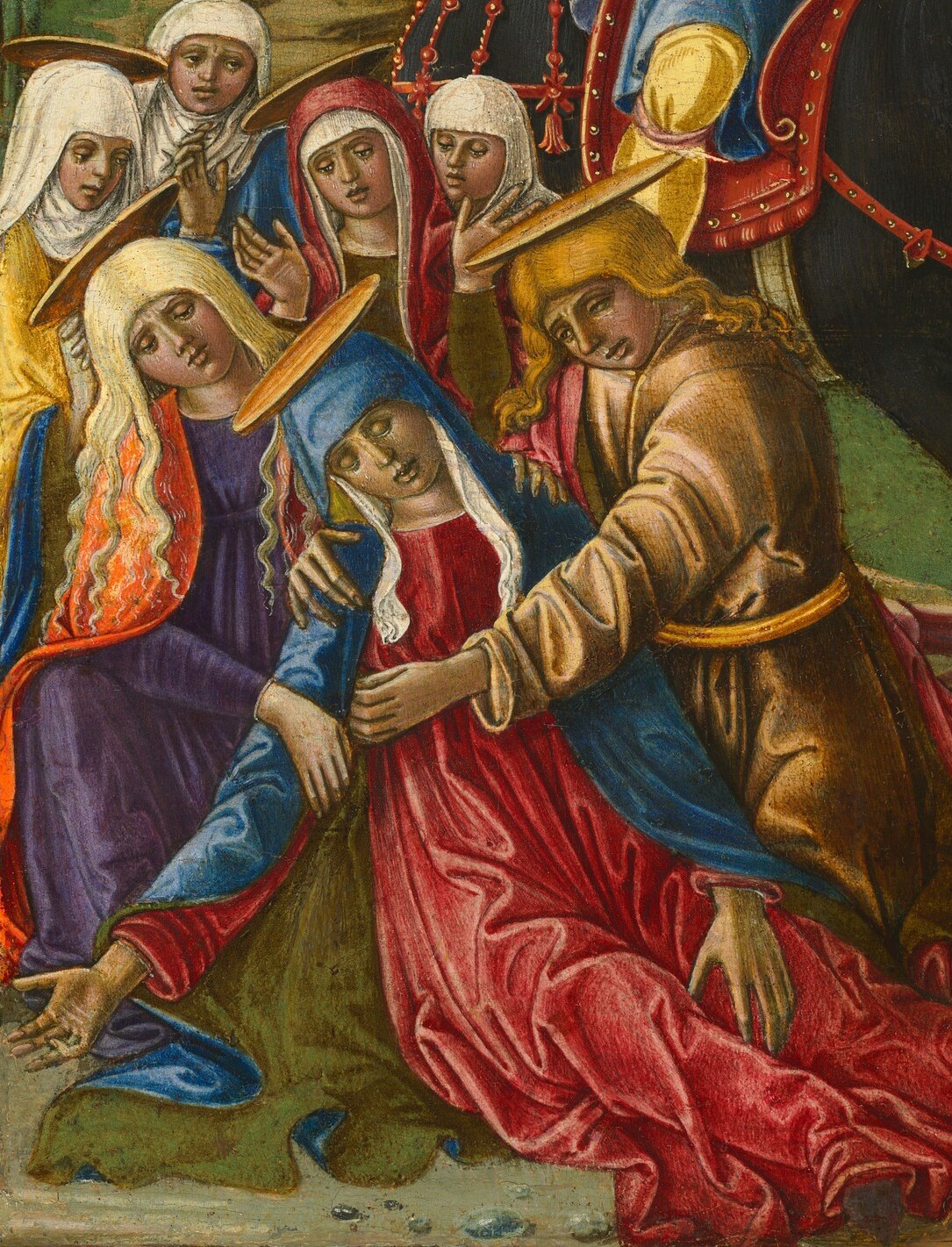
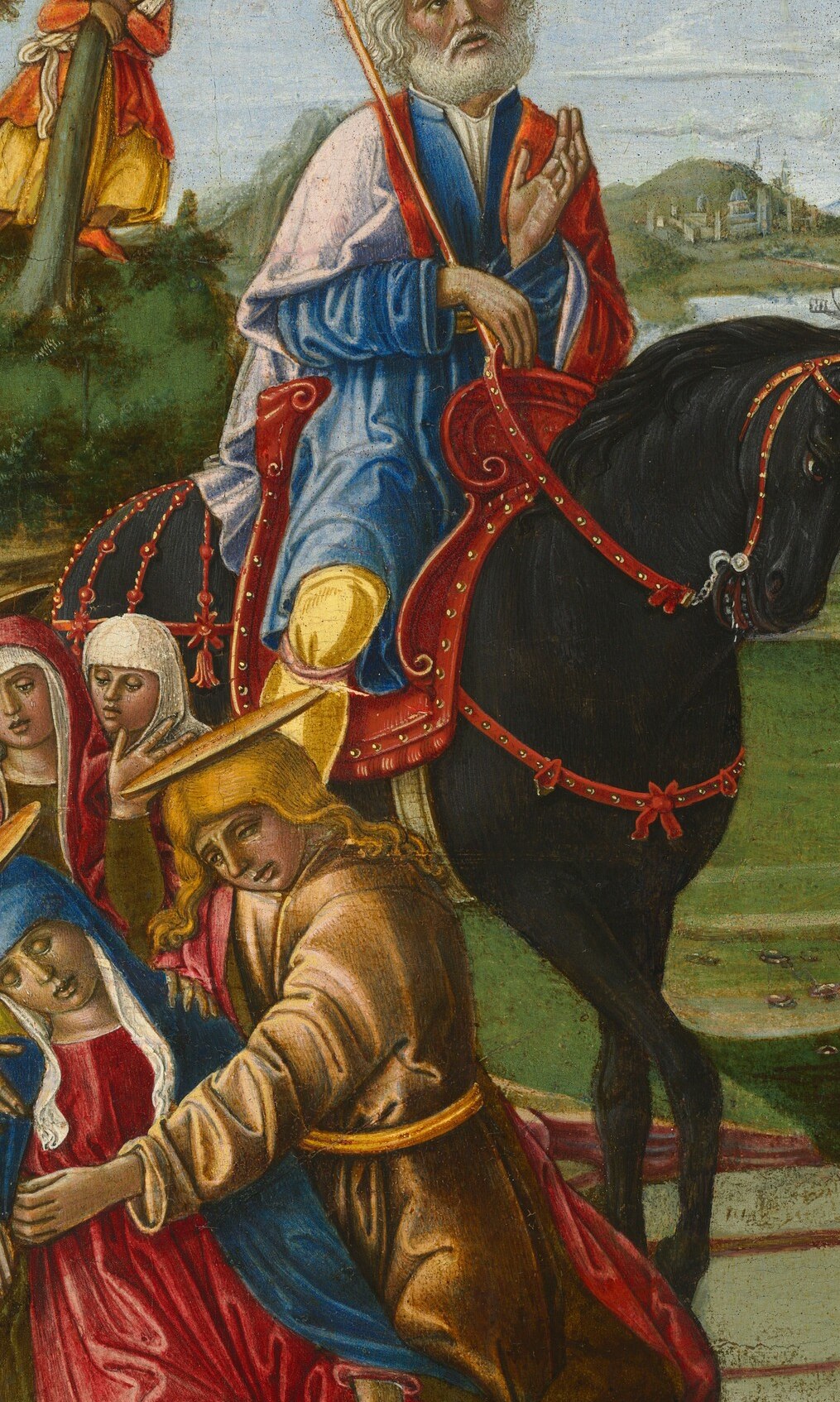
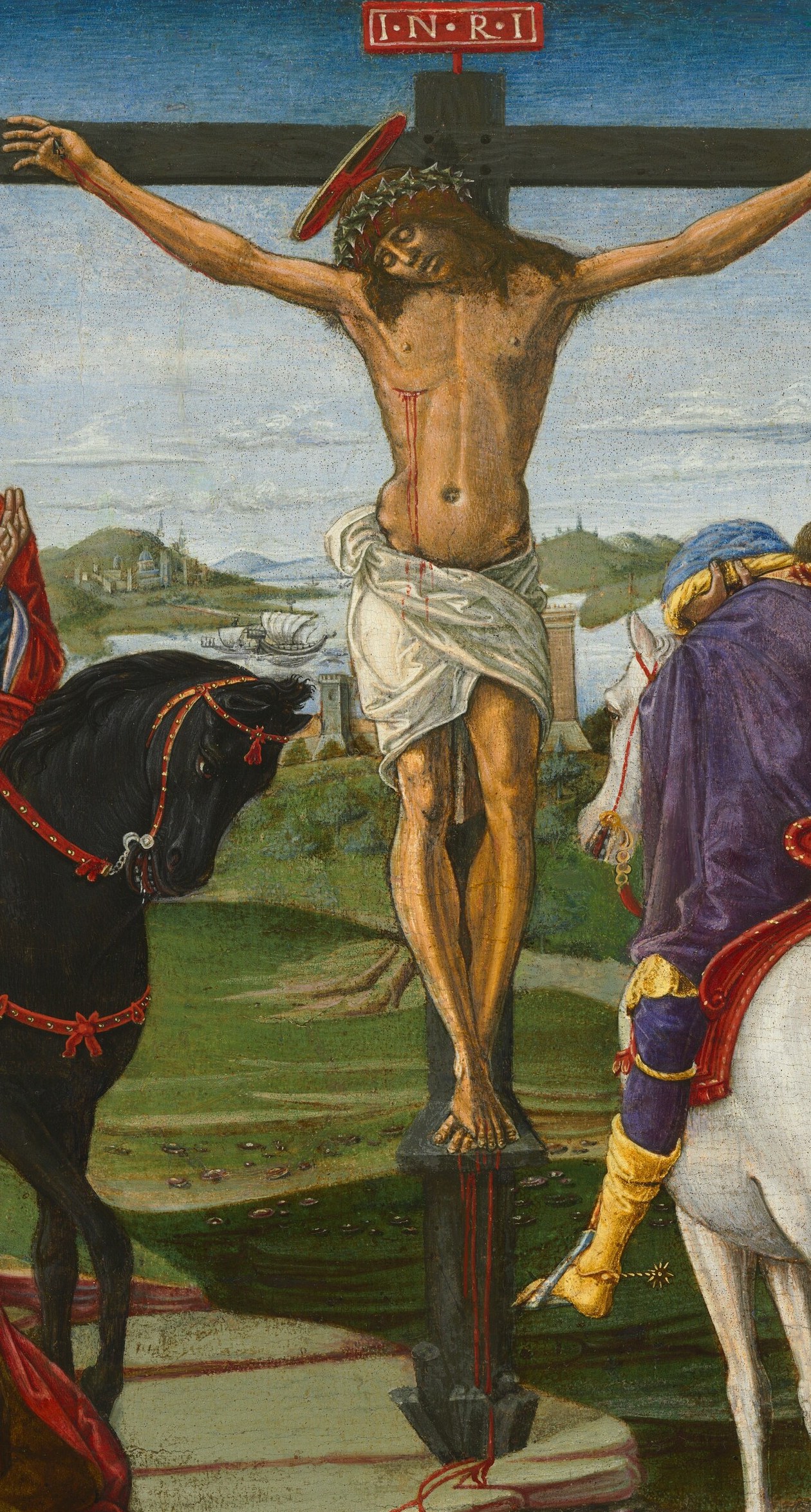
Watch Christ's face. The downcast head and the crown of thorns are the devotional heart of the painting, rendered with a stillness that concentrates its emotional weight. Below, the Virgin Mary and holy women collapse in grief, their crimson robes the most intense passage of color against the gold ground. A white horse on the right offers a stark compositional counterbalance.
Benvenuto di Giovanni worked in Siena from at least 1453 until around 1518. His son Girolamo followed him into the profession, and their hands were so similar that for centuries their works were confused. In one remarkable chapter, Girolamo was formally accused of forging his father's paintings. The charge blurs the line between a son continuing a workshop tradition and outright deception and it complicates every unsigned panel from the family.
Next time you stand before a work with a debated attribution, the story behind the brush might be stranger than a simple signature suggests.
Details
Transcript
For centuries, this Crucifixion was firmly attributed to the Sienese painter Benvenuto di Giovanni. Look closely at Christ's face. The downcast tilt and the crown of thorns carry the entire emotional weight of the panel. But the identity of the hand that held the brush became the real mystery. The artist had a son, Girolamo, who also became a painter. Their styles were so close that experts began to suspect something. Authorities eventually accused Girolamo of forging his own father's work.