After Sunset by Laurits Andersen Ring
Laurits Andersen Ring's 'After Sunset,' painted in 1900, captures a serene Danish landscape as daylight fades. This oil on canvas, housed at the Statens Museum for Kunst, showcases the artist's masterful use of light and mood.
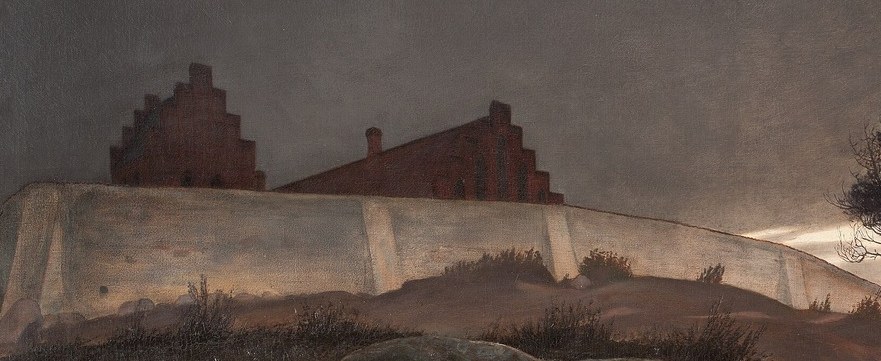
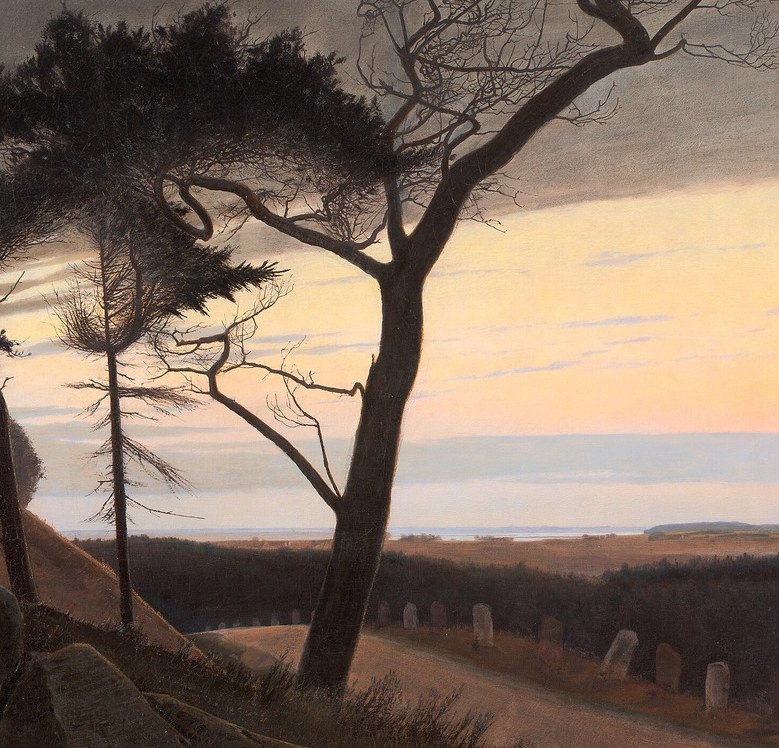
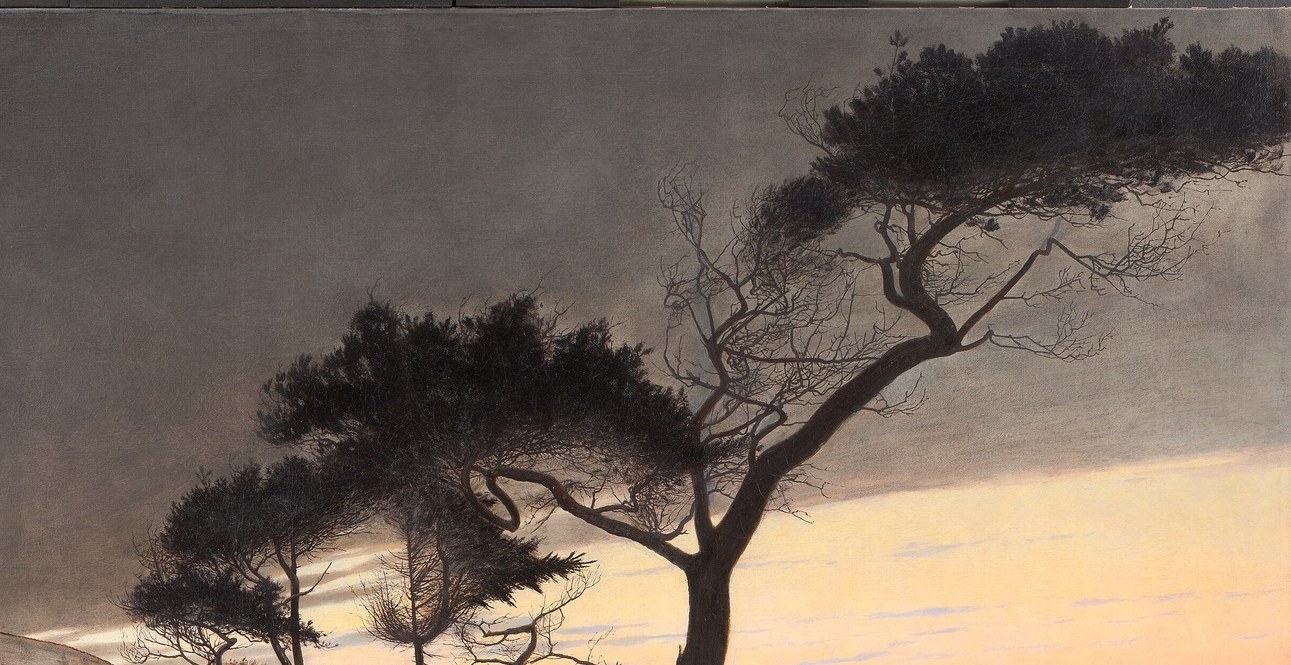
Notice the soft glow illuminating the church building and the stark silhouette of the lone tree against the dusk sky. But the true symbolic heart of the painting lies in the moth hovering near the church.
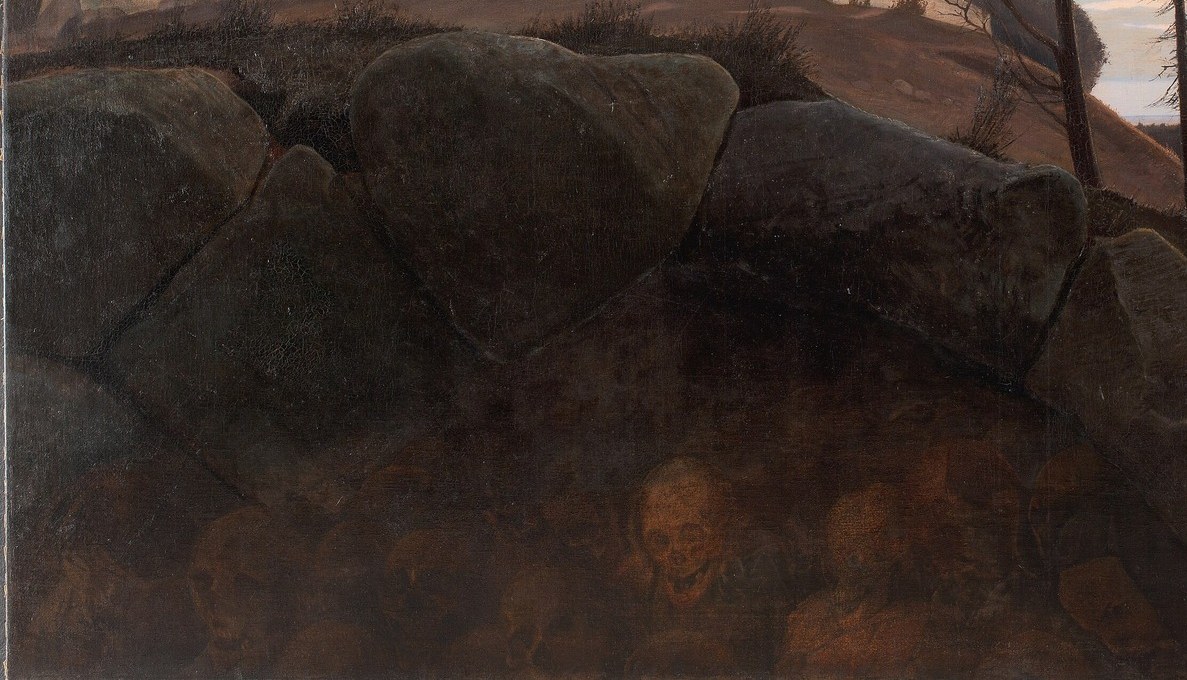
This isn't just any moth; it's *Acherontia atropos*, the Death's-head Hawkmoth. Ring, a significant figure in Danish symbolism and social realism, often imbued his landscapes with deeper meaning, using everyday scenes to reflect on profound themes like life, death, and transformation. The moth serves as a poignant reminder of these ephemeral aspects of existence at the turn of the century.
What feelings does this quiet, symbolic landscape evoke in you?
Details
Transcript
This is a quiet Danish landscape, just after sunset. The painter was a pioneer of Danish symbolism and realism. He captures the final light on this old church building. In the deepening twilight, a specific moth takes flight. It is *Acherontia atropos*, known as the Death's-head Hawkmoth. A symbol of transformation and the fleeting nature of life.