Women Preparing Food, Tomb of Djari by Nina M. Davies
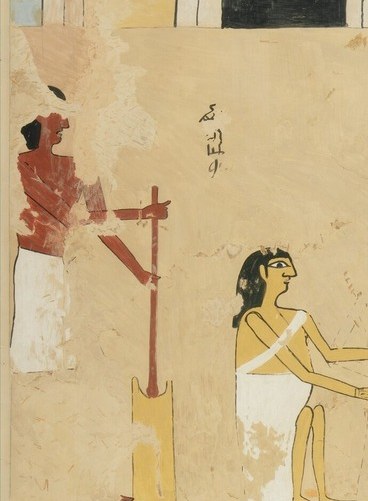
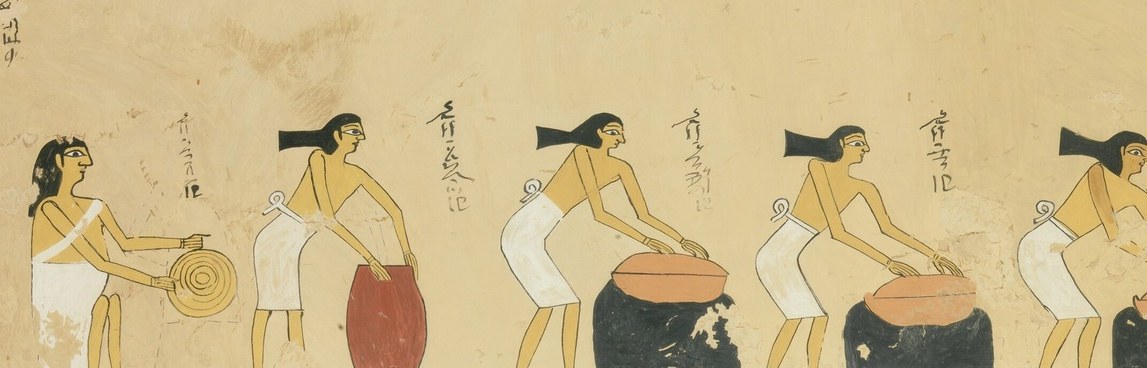
This is "Women Preparing Food, Tomb of Djari," a 20th-century illustration by Nina M. Davies that meticulously copies a scene from an Egyptian tomb wall dating to around 2059 BCE. The original painting decorated the tomb of an official named Djari, and it shows the household kitchen he hoped to take with him into the afterlife.
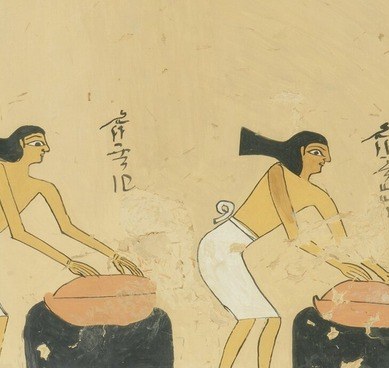
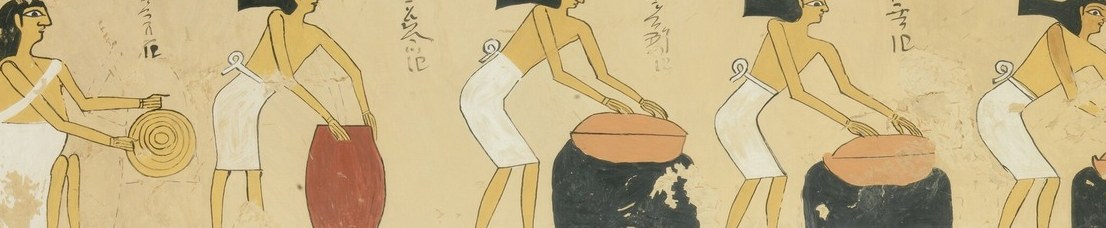
Look at the way the figures are arranged in a strict horizontal line. A man on the left drives a long pole into a grinding vessel. Five women knead dough on low round tables, their black bobbed wigs creating a visual rhythm. On the right, cattle and an attendant complete the food-production sequence. The moment you notice the hieroglyphic columns interspersed between the figures, the scene shifts from a simple picture into a document.
Those hieroglyphs identify the workers by name or title. The tomb owner didn't just want anonymous servants; he wanted his actual household staff to accompany him, preserved in paint. The one woman at the far right who turns her head toward the overseer breaks the mechanical repetition and gives a faint glimpse of individual awareness.
Nina M. Davies and her husband Norman de Garis Davies spent decades in the early 1900s recording tomb paintings across Egypt, many of which were already crumbling. This copy is now at The Metropolitan Museum of Art. What do you think the woman who looked back was thinking?
Details

Transcript
Around 2059 BCE, in the tomb of a man named Djari. A whole household kitchen, painted to feed him in the afterlife. A man plunges a long pole, grinding grain into flour. Five women knead dough in unison. Their wigs match. Their work is communal. Hieroglyphs above them name each worker. This is a payroll as much as a prayer. At the far right, one woman turns her head. The overseer is watching. This illustration was made in the 20th century, copying a fragile tomb wall before it faded.