Two McLaughlin Pears by Hardy, Jeremiah Pearson
Jeremiah Pearson Hardy, a prominent 19th-century portraitist from Bangor, Maine, is best known for his likenesses. Yet, in *Two McLaughlin Pears*, created in 1844, he turned his meticulous eye to a still life, revealing his mastery of realism.
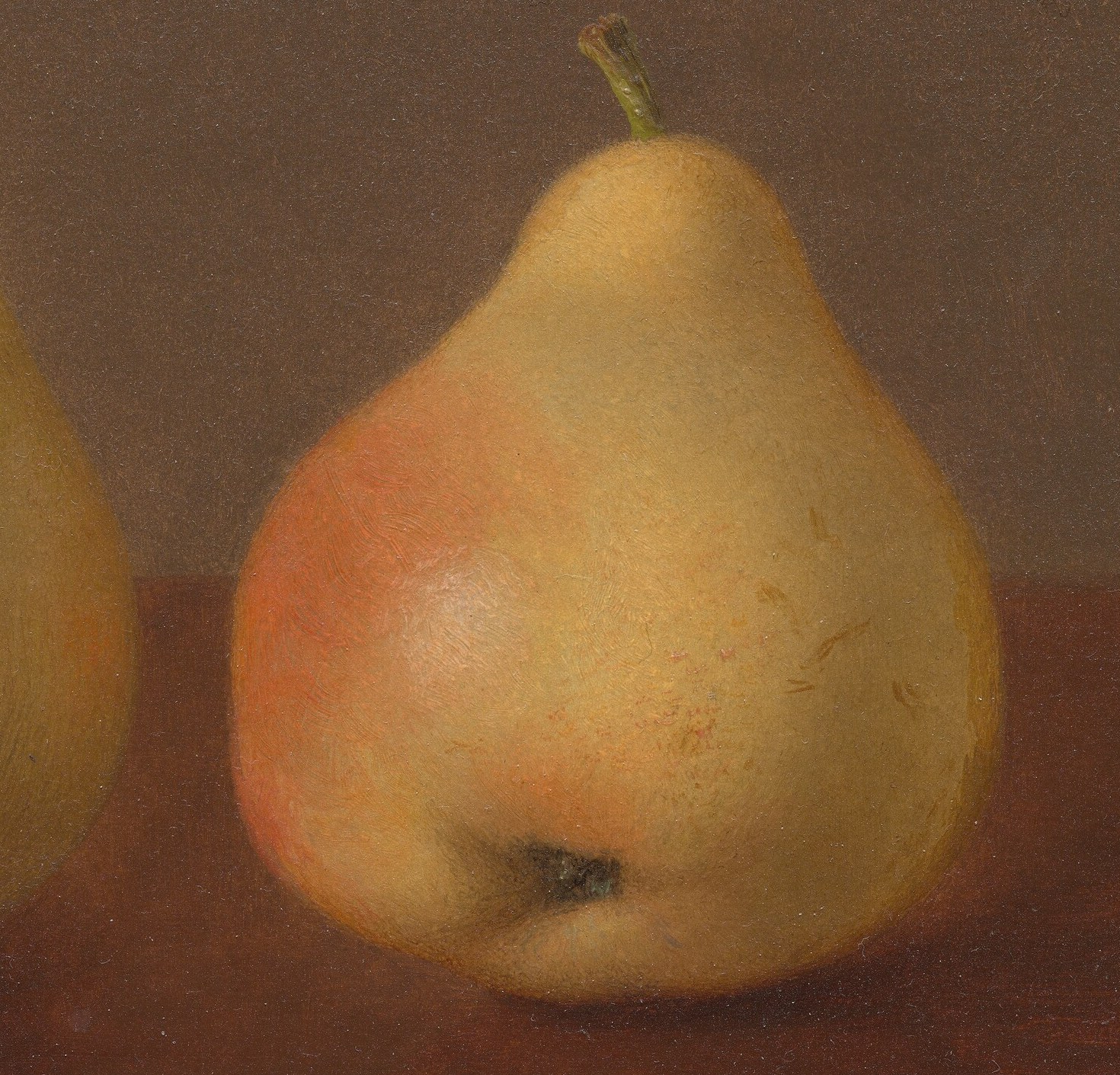
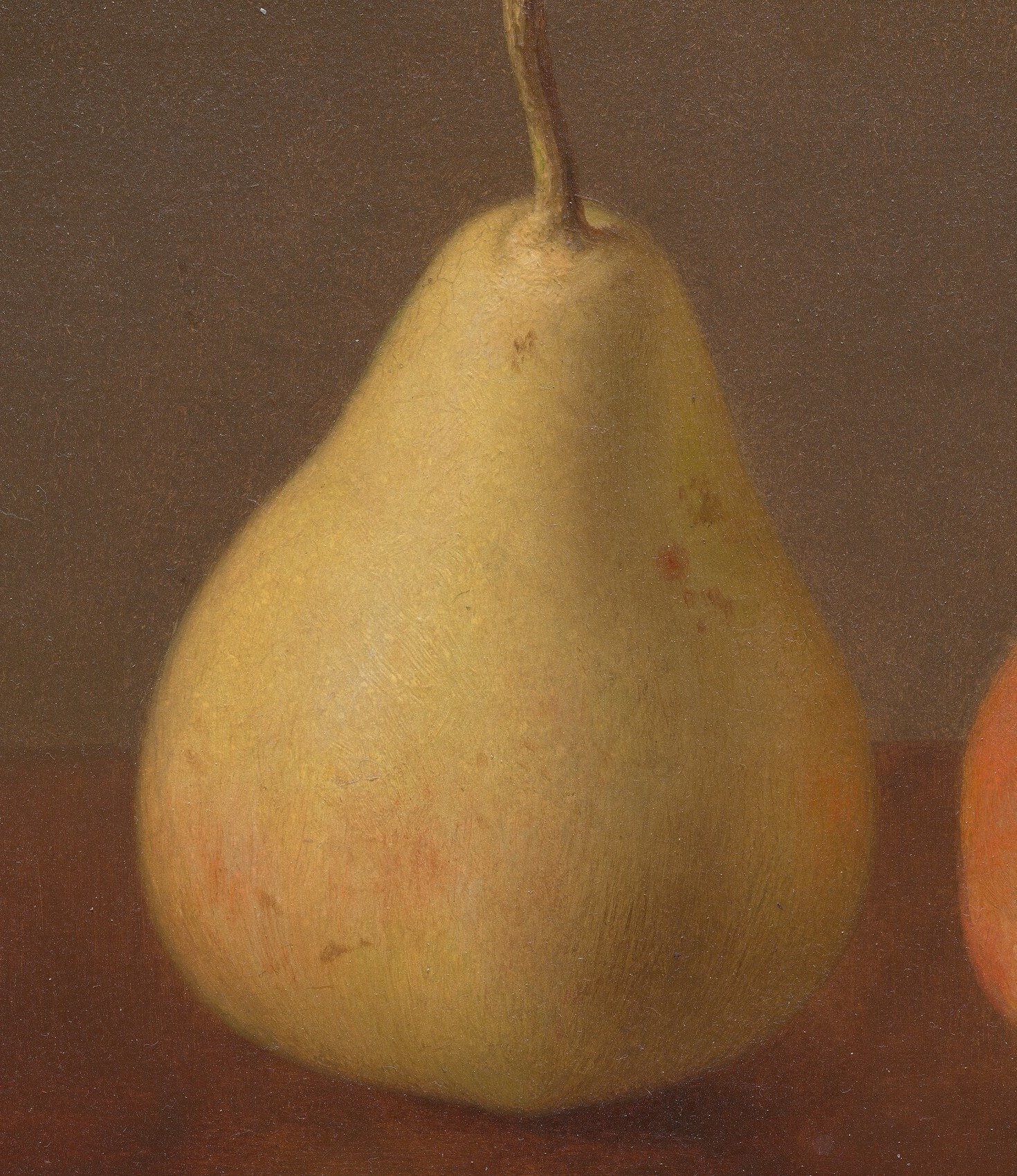
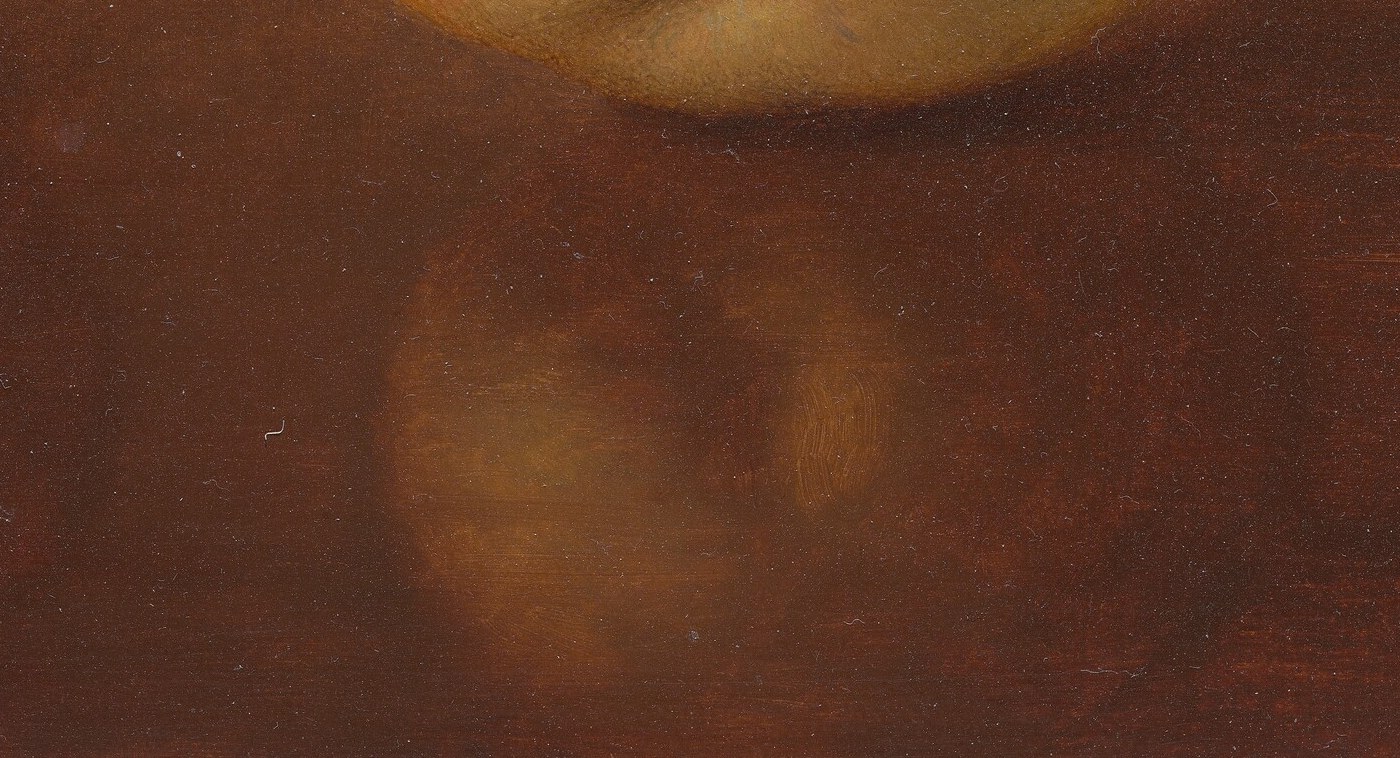
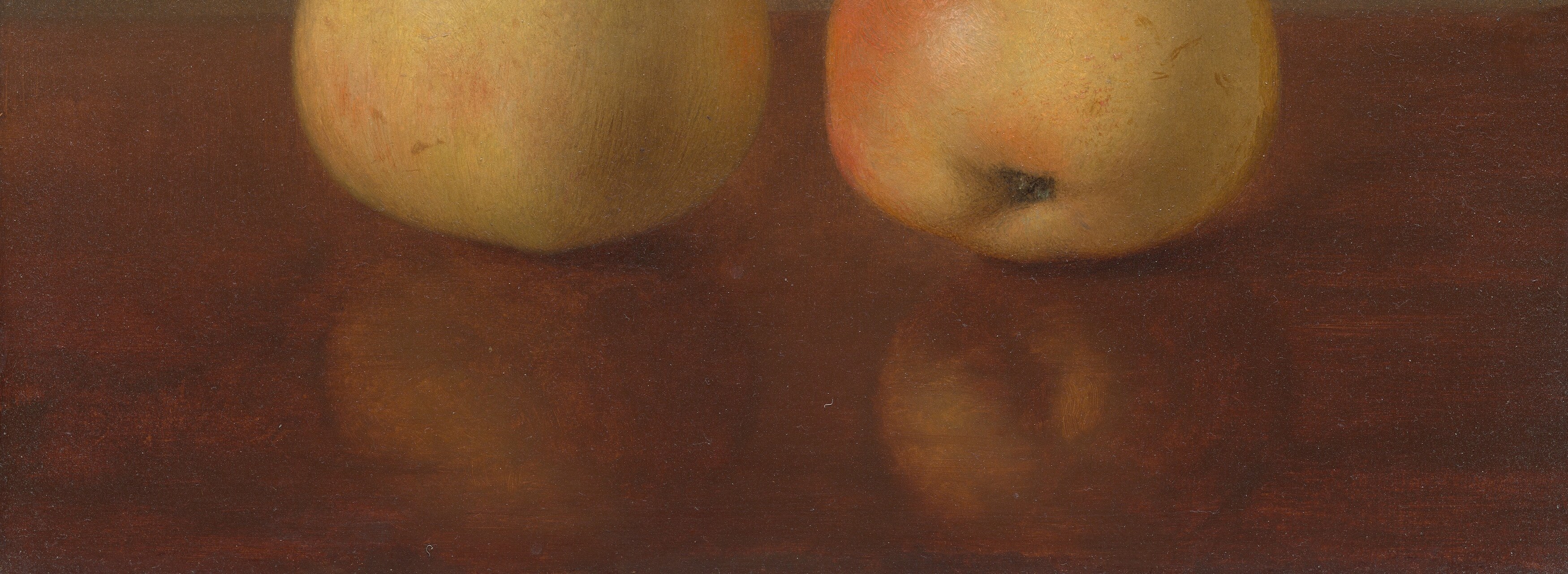
Observe the careful rendering of each pear: the subtle blush on the right, the tiny blemish on the left. Hardy's precision captures the texture and natural variation of the fruit, even showing reflections on the dark surface beneath.
Hardy was a central figure in Bangor's artistic community, working alongside his family and pupils. Interestingly, he also studied under Samuel F.B. Morse, the inventor of the telegraph. The painting's title references the McLaughlin family, likely its original patrons.
This quiet painting reflects a broader American artistic trend of the time: bringing the same serious attention to domestic subjects that was once reserved for grander themes. What everyday object would you paint?
Details
Transcript
This painter was a master of faces in booming 19th-century Maine. But he also painted quiet moments, like these simple pears. He captures every detail, even this subtle red mark. The title, *Two McLaughlin Pears*, references his patrons. He was Samuel Morse's student, inventor of the telegraph. His precise realism was a hallmark of his time.