Self-portrait by Frederick William MacMonnies
This is a self-portrait by Frederick William MacMonnies, painted around 1904. At the time he made this, MacMonnies was arguably the most famous American sculptor working in the Beaux-Arts tradition, celebrated on both sides of the Atlantic for works like his Bacchante. He had everything to lose by presenting himself as a painter, yet that is precisely what he chose to do.
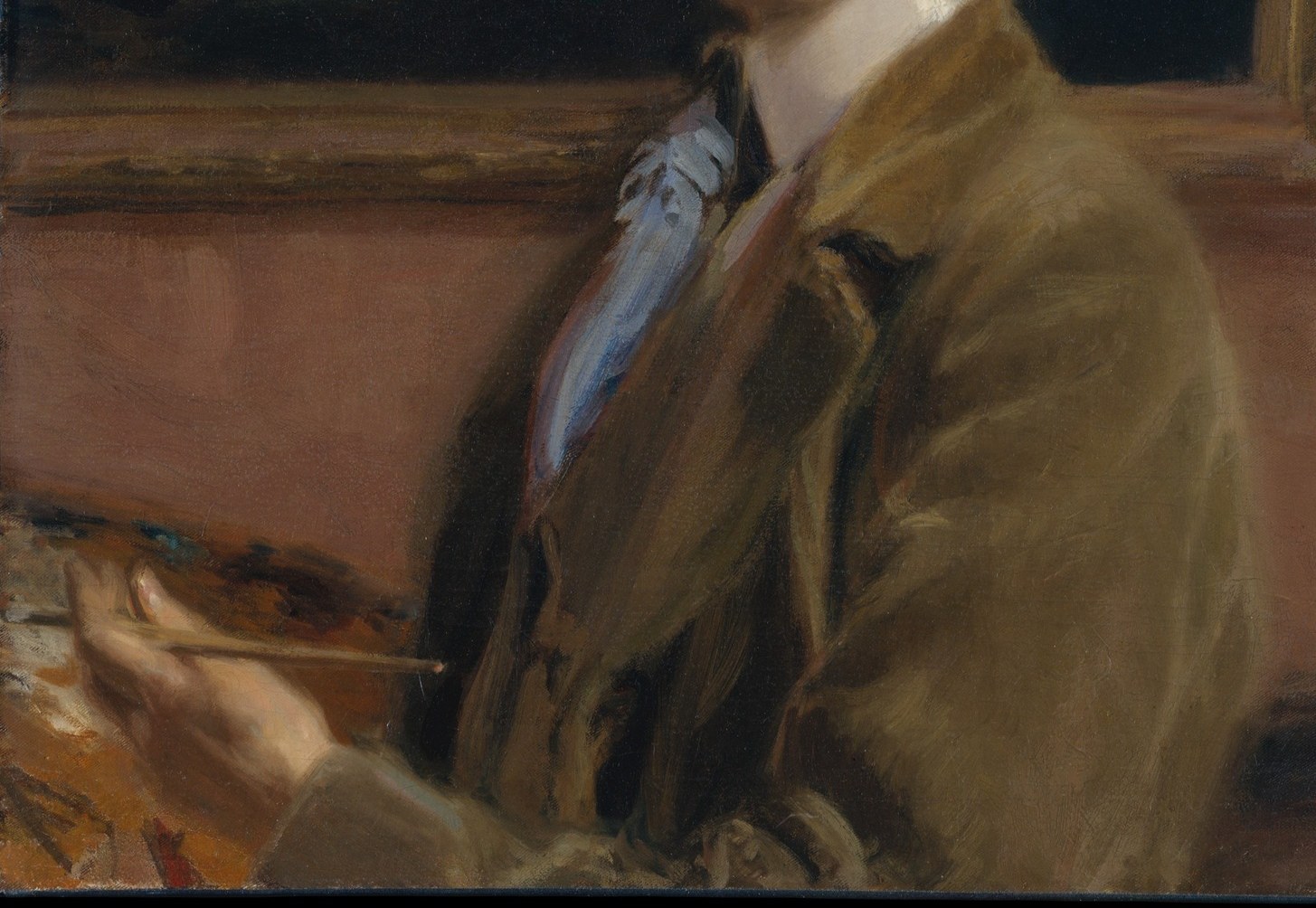
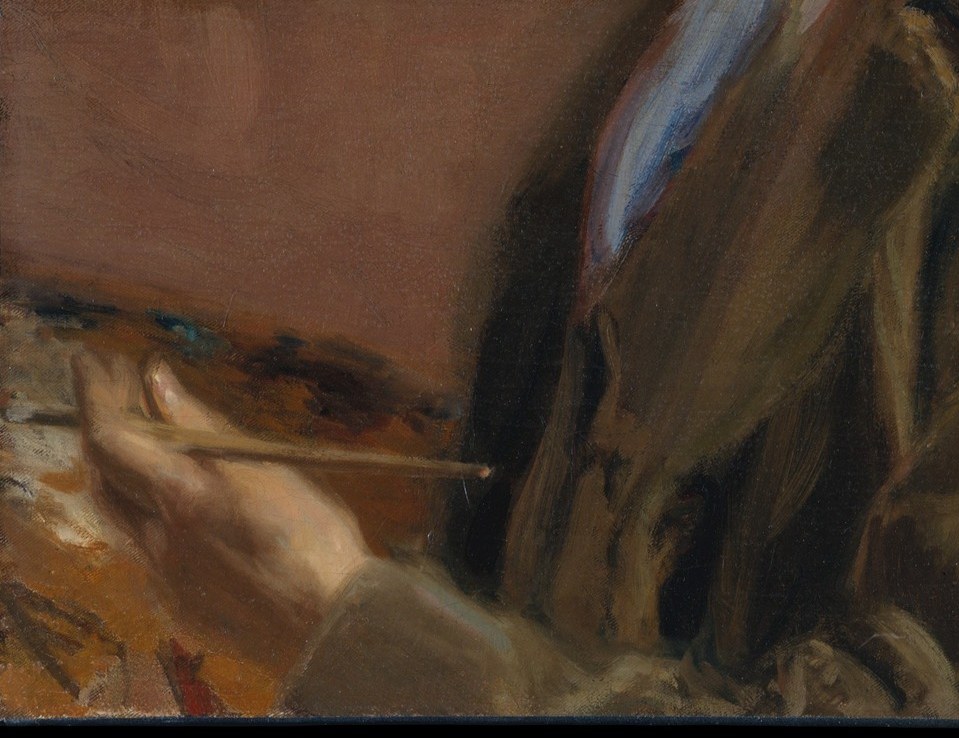
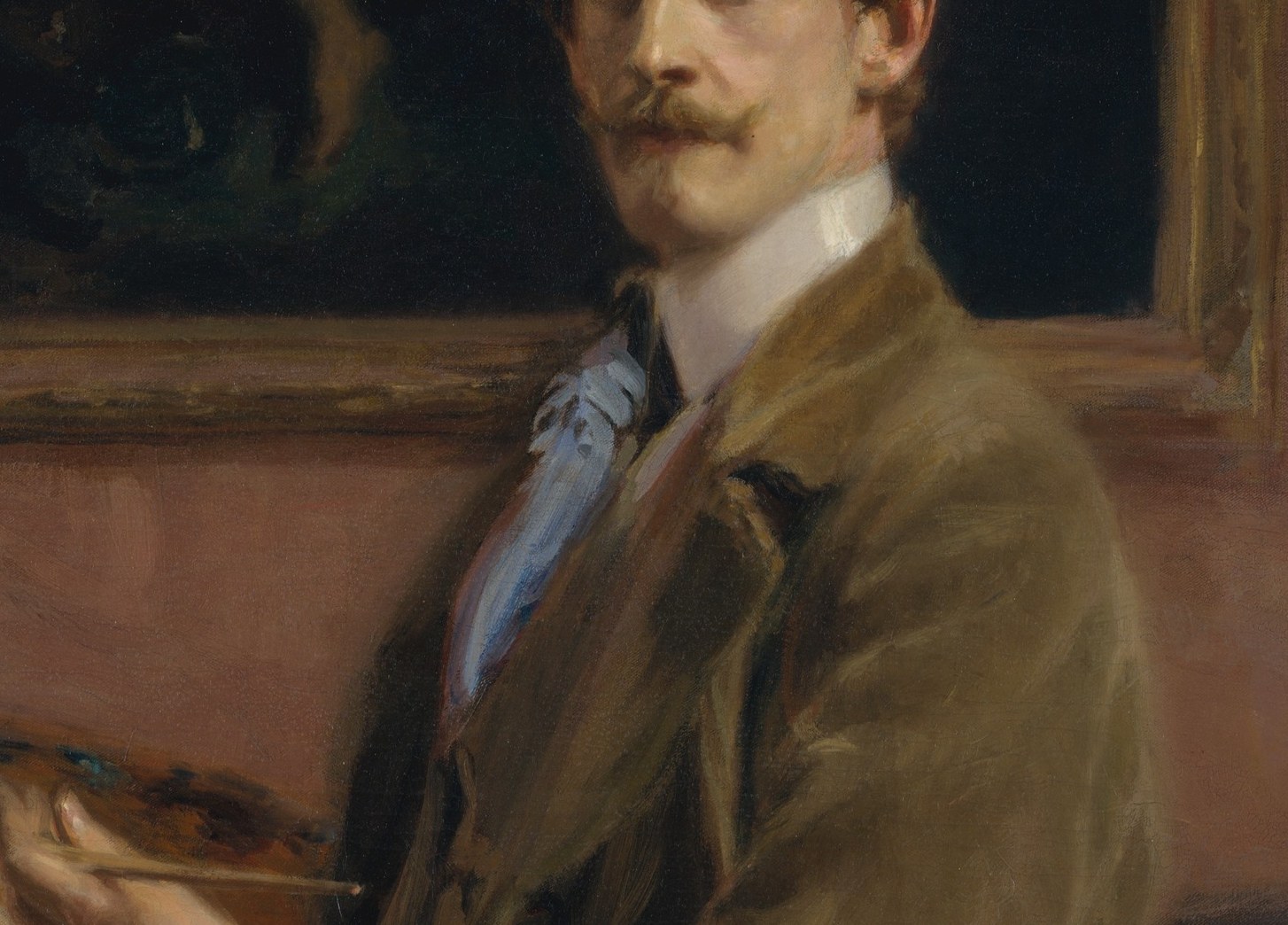
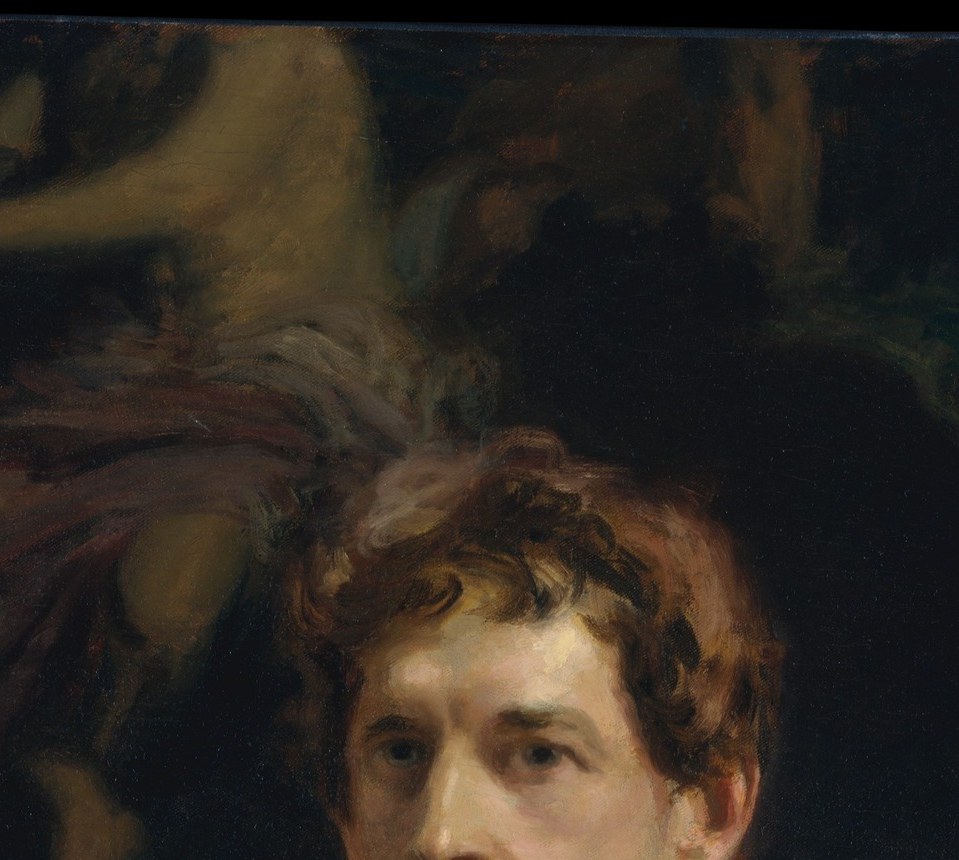
He shows himself not among marble or bronze, but holding a palette and brush. The loose brown studio jacket and blue cravat are working clothes. The tools in his hands crowd the bottom of the frame, making his identity as a painter inseparable from the image itself. A dark-framed painting looms on the wall behind him, a quiet hint at a shadow body of work he was building away from the public eye and the sculptural commissions that made his name.
MacMonnies was born in Brooklyn in 1863 and trained in Paris, where he absorbed the rigorous academic methods of the École des Beaux-Arts. While his public monuments secured his fortune and reputation, painting was a private devotion he pursued across his whole career. This canvas is now in the collection of a private owner, a rare direct view of the artist insisting on his own terms.
It is an image of quiet defiance. With a steady gaze, he asks us not to see the famous sculptor, but the painter he always wanted to be.
Details
Transcript
He was one of the most famous American sculptors alive. But for this portrait, he refuses to touch clay. He holds the tools of a painter instead. He dresses for the studio, not for a sitting room. Now look at his face. He stares back without a trace of apology. Behind him, a dark canvas hints at the work he would rather be judged by.