Still Life with Silver by Alexandre-François Desportes
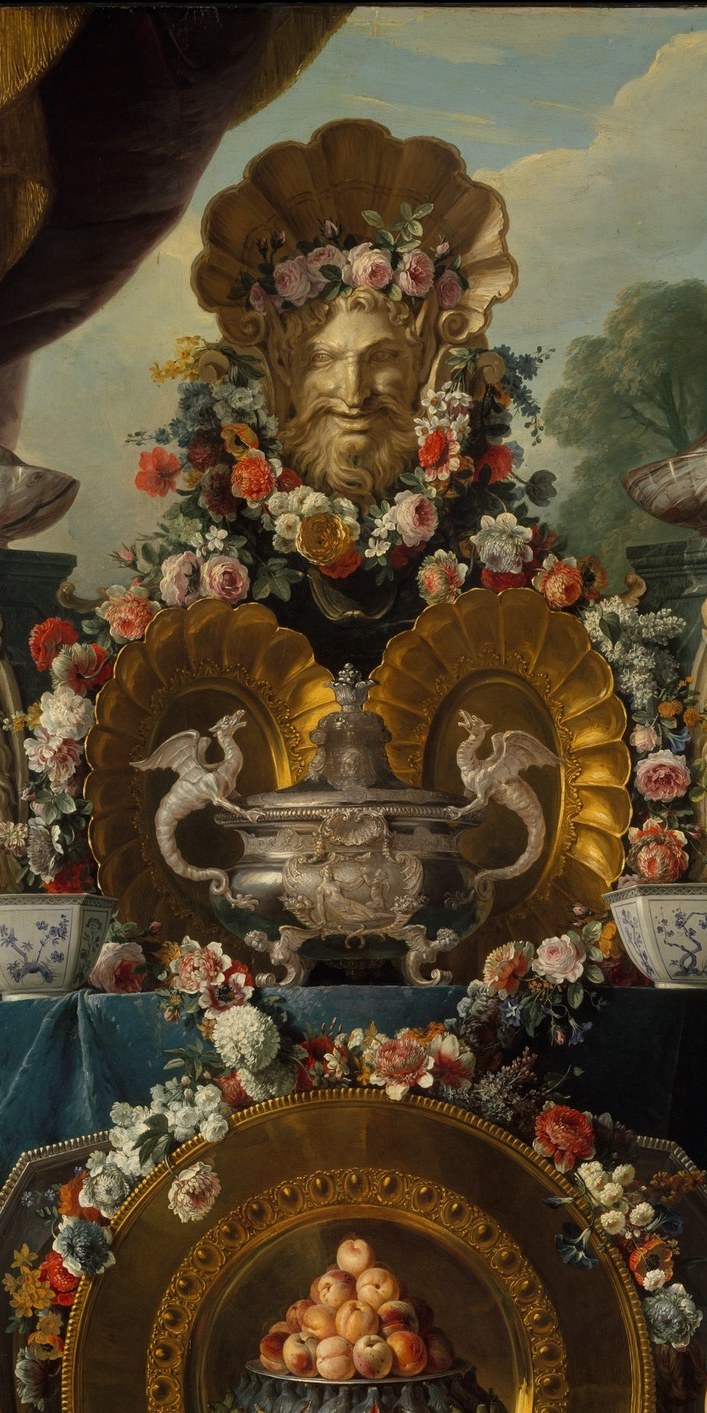
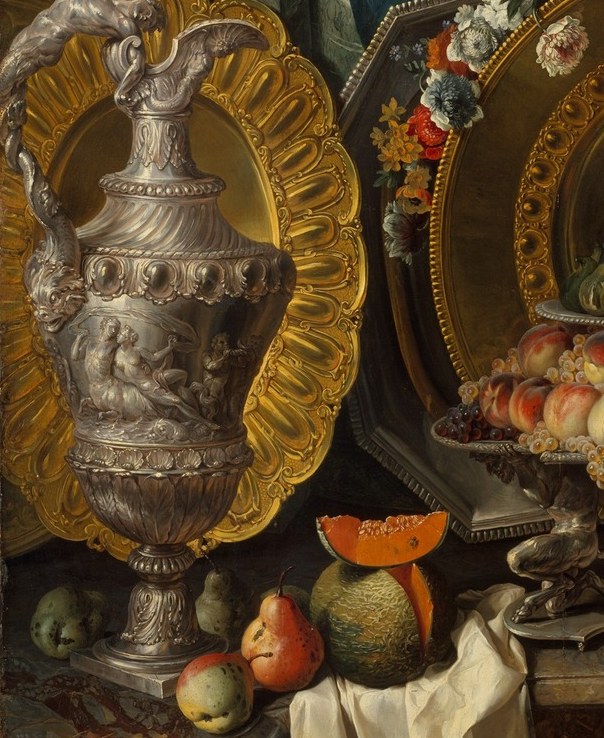
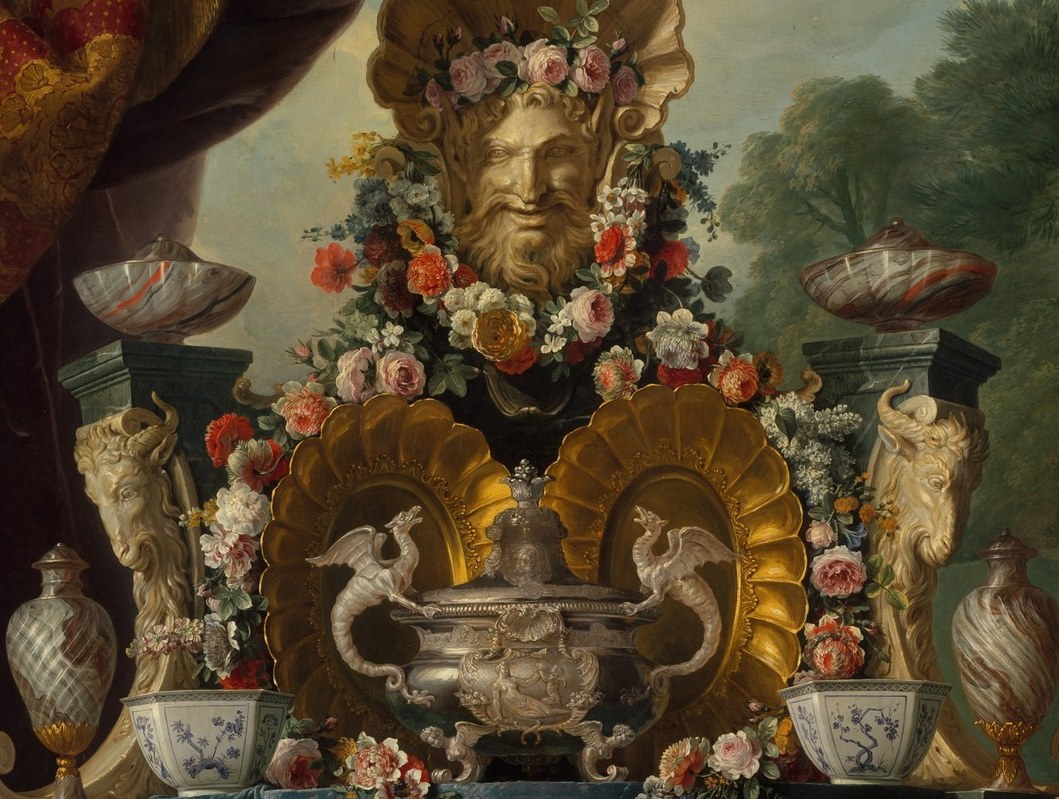
This is Alexandre-François Desportes's *Still Life with Silver*, painted in 1720 and held at The Metropolitan Museum of Art. Desportes began his career as a portraitist in Poland, painting the king and his courtiers, but after returning to Paris he swore off faces entirely and spent the rest of his life painting animals, flowers, and opulent silver like this.
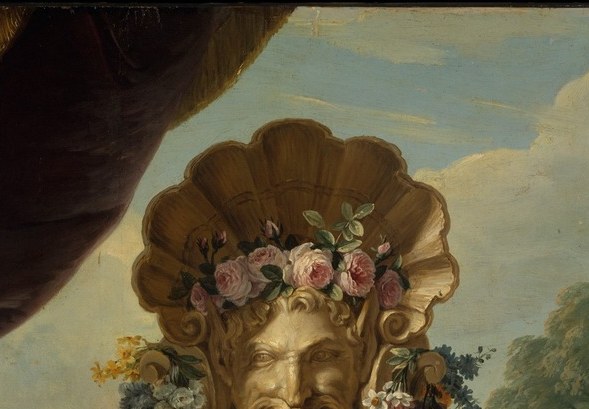
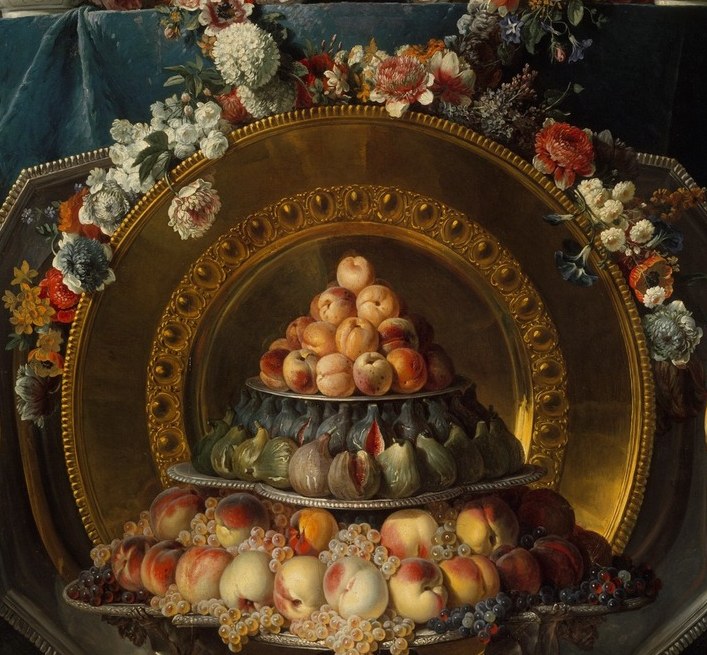
The painting is a towering vertical arrangement of fruit, flowers, and Louis XIV-era silverware crowned by a large scallop shell, an ancient symbol of Venus and luxury. But the detail most people scroll past is the wide silver charger lying flat on the table. Look closely and it becomes a convex mirror, catching distorted reflections of the window, the sky, and the room behind the viewer.
Desportes was the official painter of the royal hunt for both Louis XIV and Louis XV. He would follow the hunt with a pocket notebook, sketching the day's kill so the king could choose which game to have immortalized in paint. That same documentary impulse, the need to capture what was really there, shows up here in the mirrored dish.
The whole painting is a quiet flex: a demonstration that silver, fruit, and a single reflected room can be as monumental as any history painting. What else do you see caught in that small curved mirror?
Details
Transcript
A monument to silver and fruit, built for a king's eye. Desportes painted this in 1720, after he quit portraiture forever. The whole arrangement climbs toward a single shell, sacred to Venus. But the real trick sits flat on the table, easy to scroll past. Now look into the silver charger. It's a mirror. Inside: the window, the sky, the whole room behind you. Desportes painted a world you can't see, reflected in a dish.