Still life with chinese porcelain, berries, and artichokes by Osias Beert
View the artwork: Still life with chinese porcelain, berries, and artichokes →
A table set in Antwerp, around 1612, is a document of a new global age. Osias Beert's "Still Life with Chinese Porcelain, Berries, and Artichokes" is not just a display of Flemish painting skill. It is an inventory of the world's first truly global trade network.
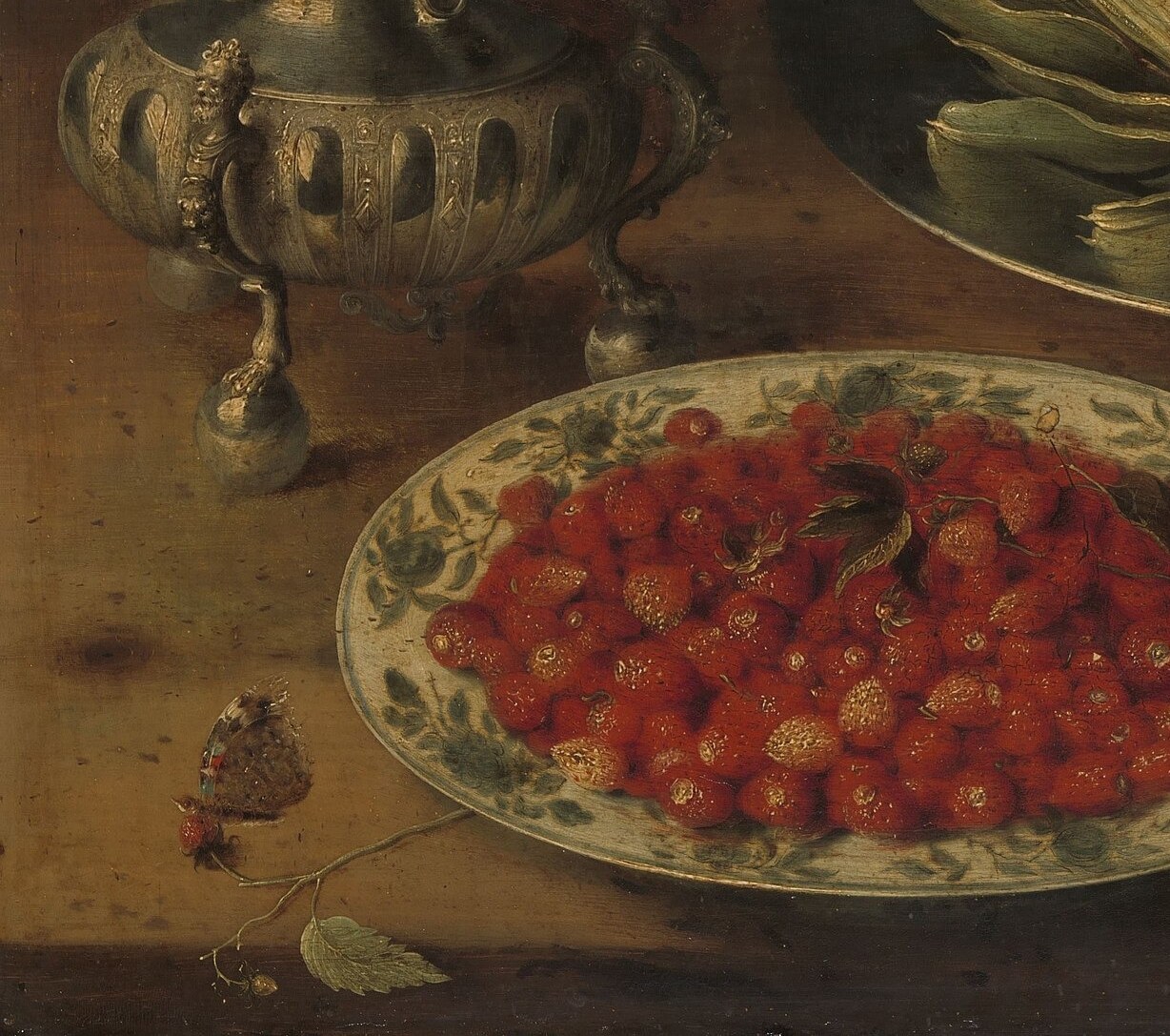
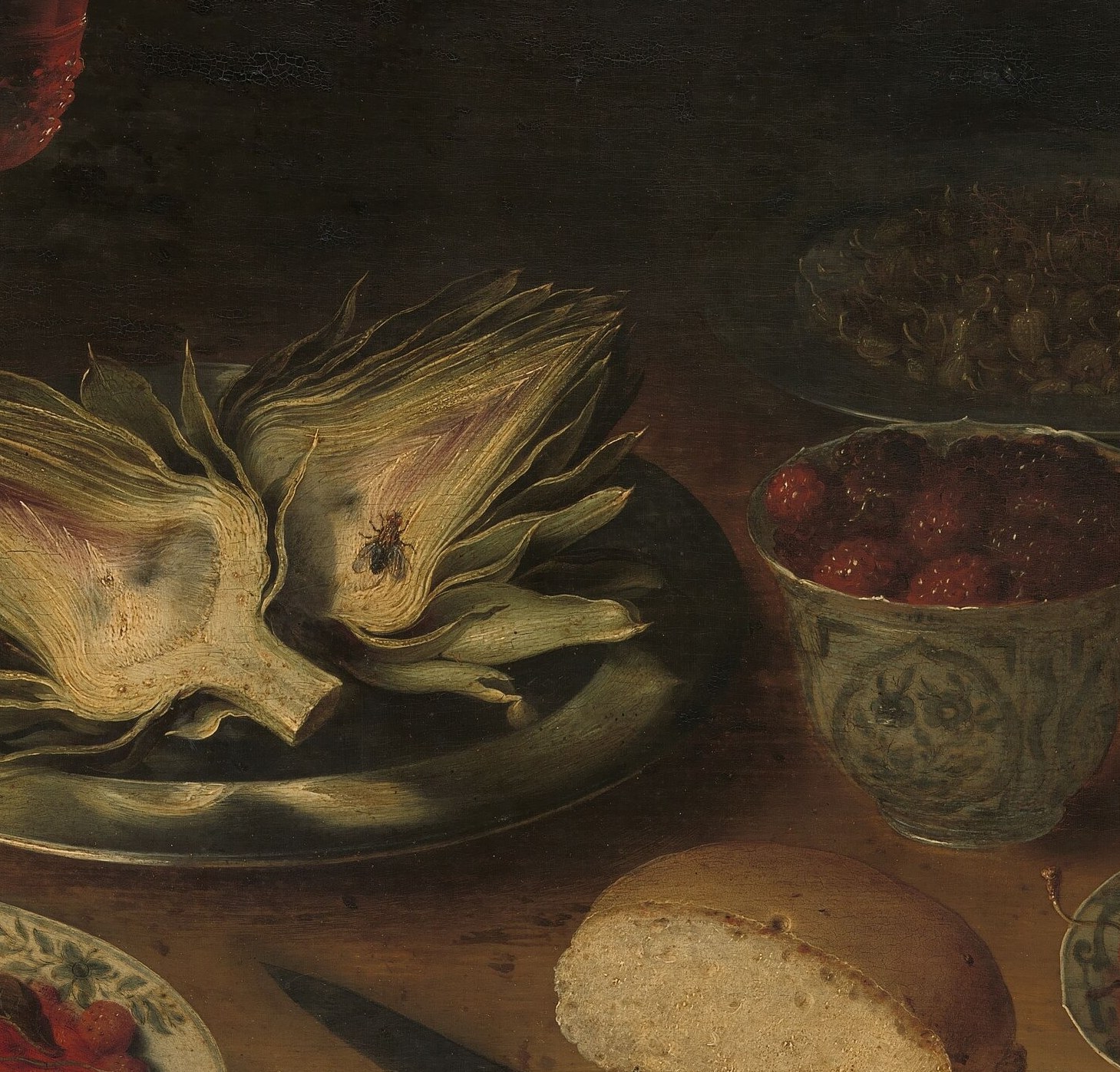
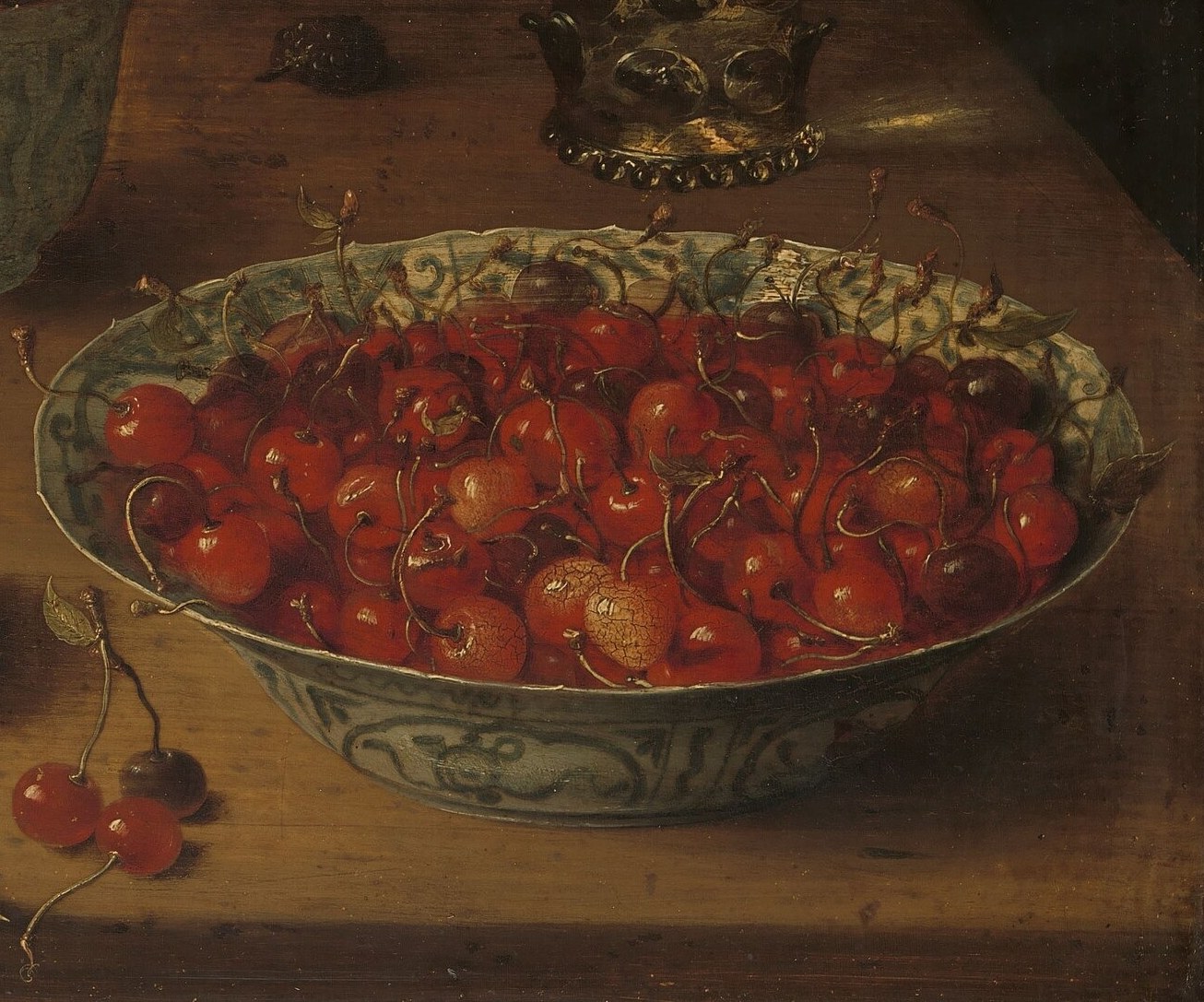
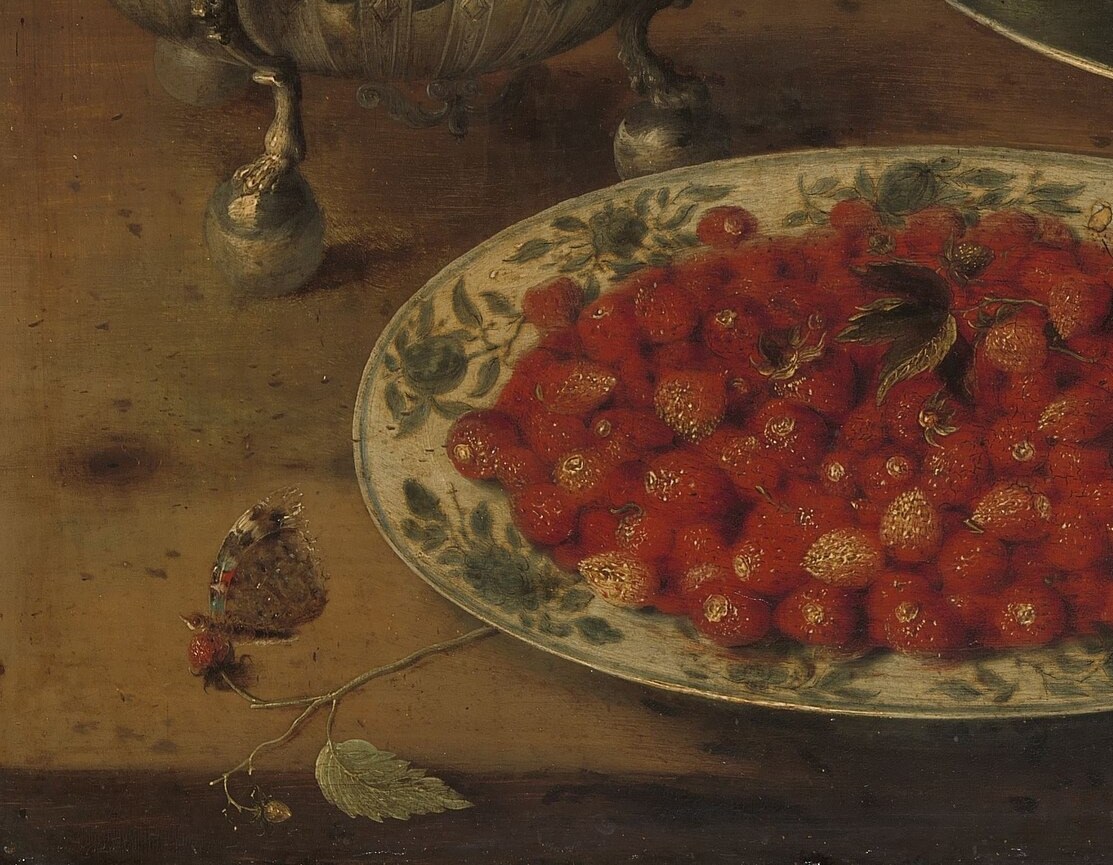
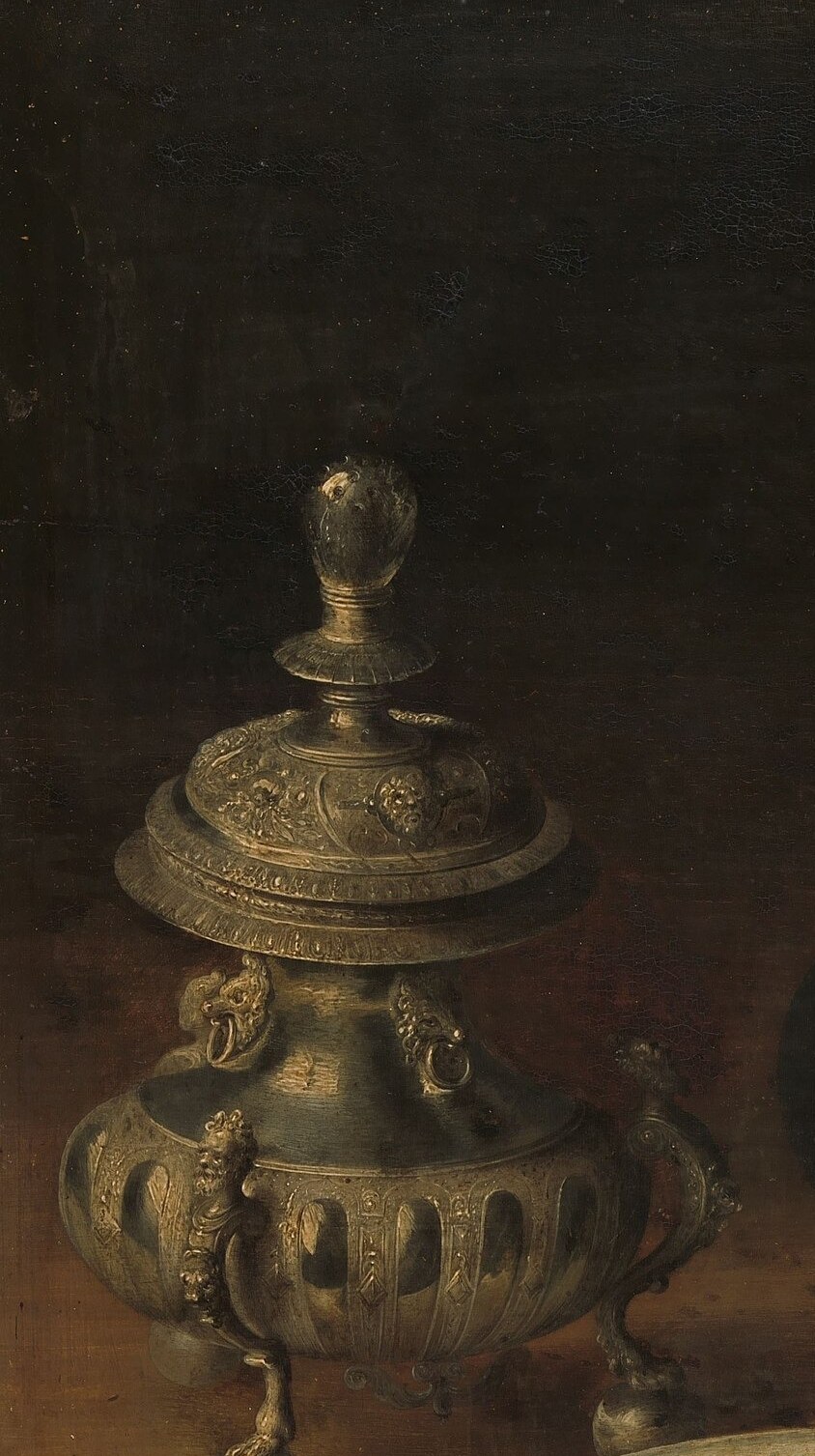
Look at the two white bowls filled with red berries. They are Chinese Kraak porcelain, shipped halfway around the world by the Dutch East India Company. The berries themselves likely came by barge from local countryside farms. The silver sugar bowl on the left held a substance then so rare and expensive it was sold by the ounce, like a spice. The artichokes in the center were a Mediterranean luxury vegetable, now a status symbol on a northern European table.
Osias Beert was one of the pioneers of this type of painting, the showpiece still life. He worked in Antwerp, which in his lifetime was the richest and most active port in Europe. Ships arrived daily with cargoes from Asia, the Americas, and the Levant. His paintings quietly catalogued this new material reality for his merchant patrons.
The painting testifies. A single meal here connects a farmer outside Delft, a silversmith in Frankfurt, a porcelain maker in Jingdezhen, and a Mediterranean planter. The world, in 1612, was already intricately connected. What does your own table say about the routes that brought it together?
#arthistory #dutchgoldenage #stilllife
Details
Transcript
Antwerp, 1612. The world's richest port. Every object here came by ship. These White bowls crossed the globe: Chinese Kraak porcelain. The berries came by river barge from the Dutch countryside. A silver sugar bowl: sugar was worth its weight in silver. Artichokes, a Mediterranean luxury, now on a Flemish table. Even the wine: likely a Rhenish white, arrived by Rhine barge. A long, still life, but a true witness. Antwerp was the center of the world.