Artwork
Still life with chinese porcelain, berries, and artichokes
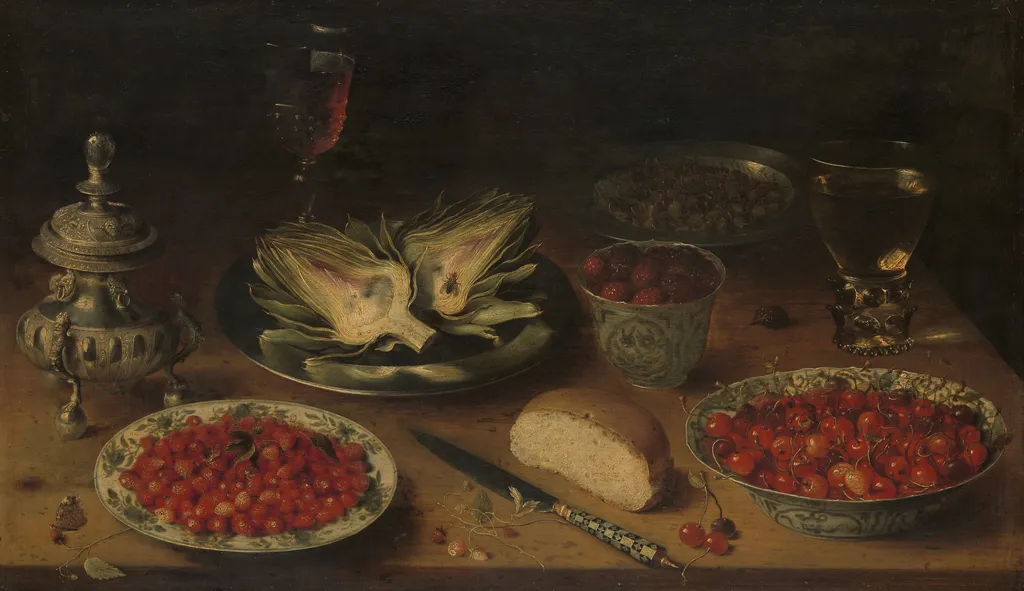
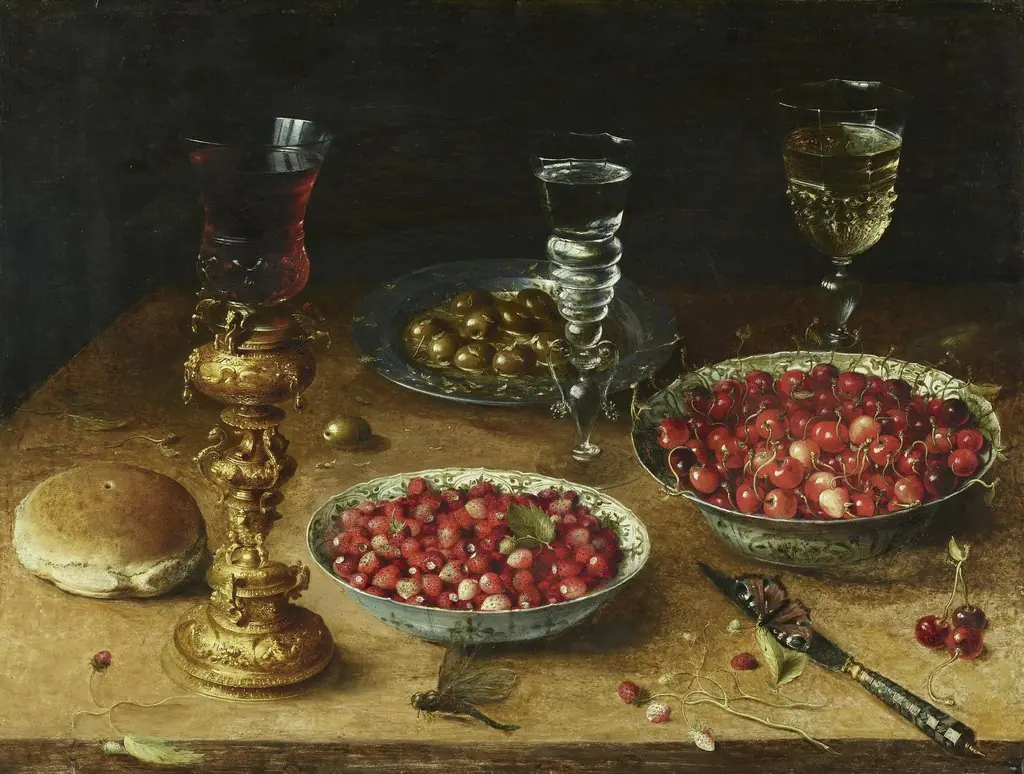
Still life with chinese porcelain, berries, and artichokes is an oil painting by the Flemish Baroque painting artist Osias Beert. It dates from 1612 and is held in the collection of the Rijksmuseum.
About this work
Subject & Meaning
Small insects, a fly and a Lepidoptera (butterfly or moth), are also visible among the fare.
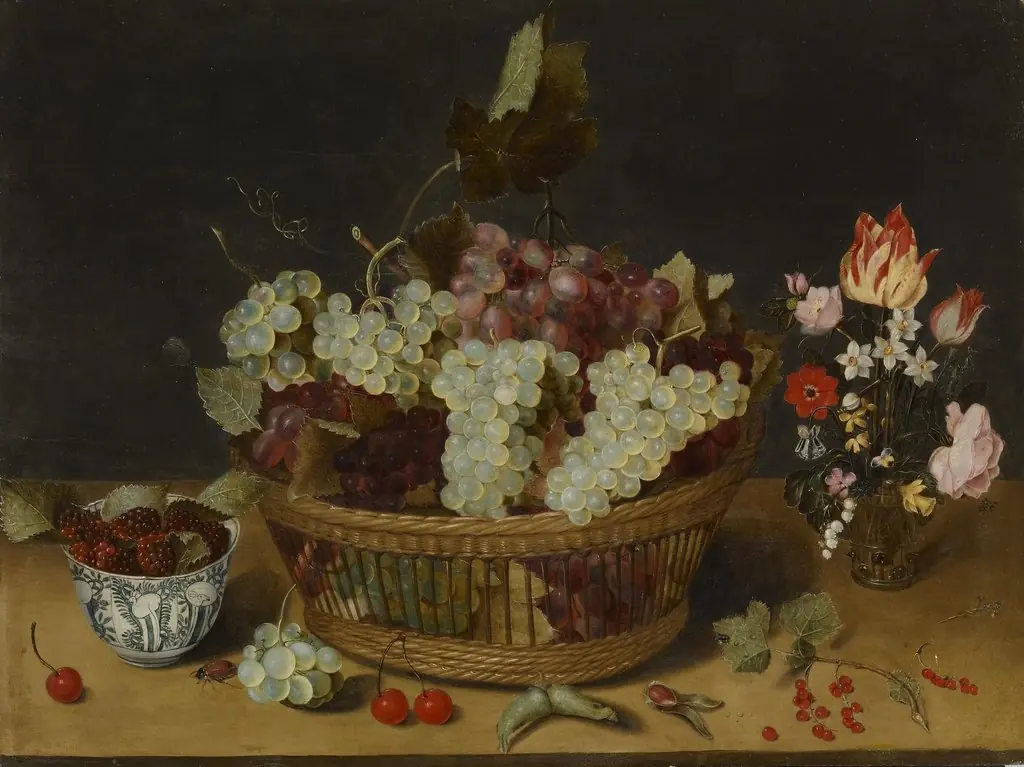
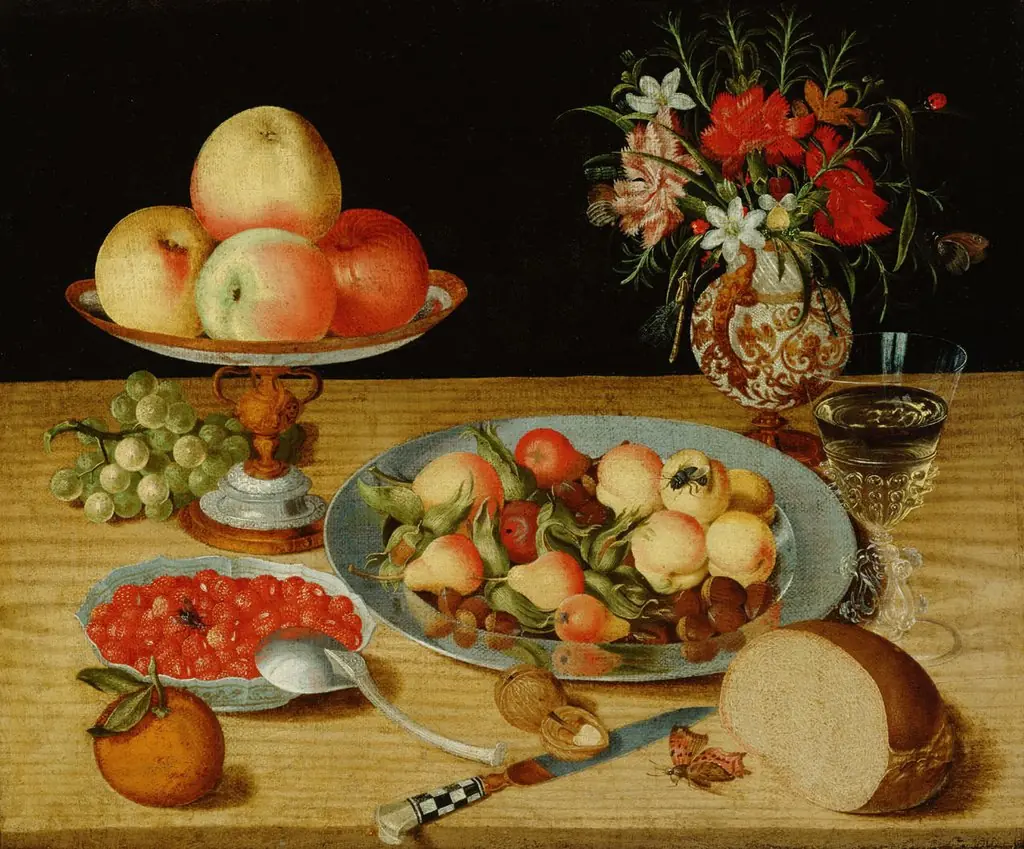
The painting presents a banquet-like arrangement on a table covered with Chinese porcelain, a berkemeyer, plates, bowls, bread, a knife, a glass, a sugar bowl, and assorted foods including cherries, strawberries, blackberries, and globe artichokes. Small insects, a fly and a Lepidoptera (butterfly or moth), are also visible among the fare. The inclusion of costly Asian porcelain highlights the era's expanding global trade and the owner's wealth, while the ripe fruit and vegetables signal seasonal abundance.
The presence of perishable produce and creeping insects introduces a subtle reminder of decay, a common motif in early seventeenth-century Flemish still lifes that juxtaposes luxury with the transience of life.
Technique & Style
The work is executed in oil paint on a panel support, a common choice among early Netherlandish still-life painters for its stability and fine detail. Handling is precise, with careful layering to build the translucency of glass and the delicate skin of berries, while the matte surfaces of bread and porcelain are rendered with smoother, opaque strokes. The composition employs a high-angle viewpoint, arranging objects in a shallow space to emphasize surface textures and reflective qualities.
Warm tonalities dominate, punctuated by cool highlights on the porcelain and glass, while minute details such as the sheen on the knife blade and the surface of the artichoke leaves underscore the artist's technical control.
History & Provenance
The painting Still life with Chinese porcelain, berries, and artichokes is dated to 1612 and was produced in Antwerp by Osias Beert. Its earliest documented owner was Cornelis Hoogendijk; the work subsequently entered the collection of the Rijksmuseum, where it remains today. It is executed in oil paint on panel, consistent with Beert's typical medium. No information about a specific commission survives in the available sources.
Overview
Created in 1612, Osias Beert the Elder's 'Still Life with Chinese Porcelain, Berries, and Artichokes' is a seminal example of early Flemish breakfast piece painting. The composition features a wooden table laden with an array of luxury items and foodstuffs, including shiny metal vessels, imported Chinese porcelain, bright red berries in bowls, a loaf of bread, and two prominent artichokes. A glass containing red liquid sits adjacent to an ornate silver sugar bowl, while minute flies are depicted near the food, a motif common in the genre to symbolize the transience of earthly pleasures.
Beert executes the work with meticulous attention to the varied textures and reflections of the materials, from the glossy glaze of the porcelain to the metallic sheen of the silver and the organic surfaces of the fruit and vegetables. This painting exemplifies Beert's role in establishing the independent still life genre in Antwerp, characterized by its balanced arrangement and precise rendering of light. The inclusion of Chinese porcelain highlights the significance of global trade in early 17th-century Flanders, while the careful depiction of the flies adds a layer of vanitas symbolism, reminding viewers of the fleeting nature of life and material wealth.
Artist & collection
Artist
Osias Beert or Osias Beert the Elder (c. 1580 – 1623) was a Flemish painter active in Antwerp who played an important role in the early development of flower and "breakfast"-type still lifes as independent genres in…