Doña Joanna the Mad by Francisco Pradilla y Ortiz
Francisco Pradilla y Ortiz's "Doña Joanna the Mad," painted in 1877, captures the intense grief and obsession of Queen Joanna of Castile, on display at the Museo del Prado in Madrid.
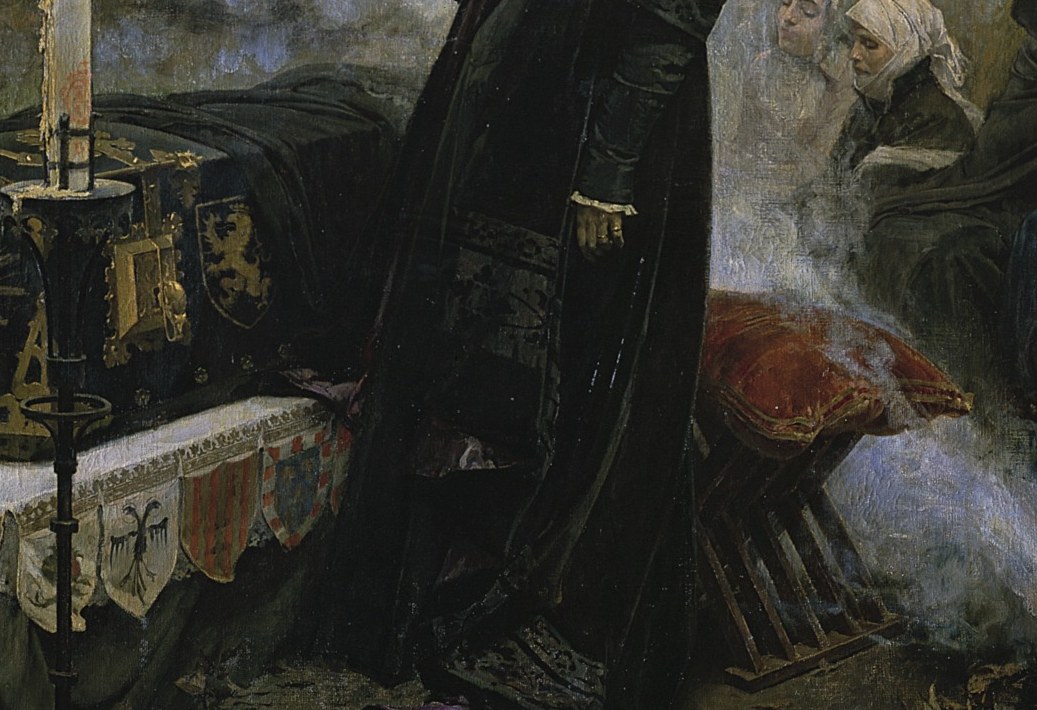
The painting centers on Joanna, whose gaunt face and clenched hands reveal her profound sorrow. She is shown watching over the casket of her deceased husband, Philip I, a scene historically depicted as her belief that he would one day awaken.
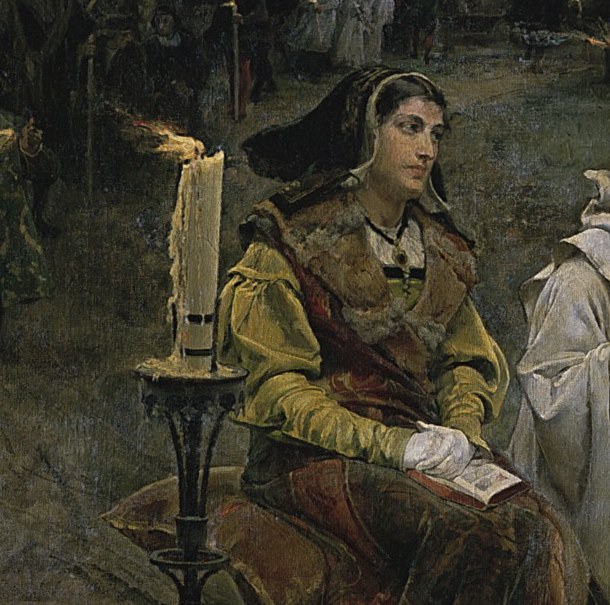
After Philip I's sudden death in 1506, Joanna, known as Joanna the Mad, carried his coffin with her for years. This ritual underscored her deep personal tragedy and political isolation, as the courtiers around her grew fatigued by her constant vigil. The painting earned a medal of honor at the National Exposition of Fine Arts in 1878.
The artist's focus on Joanna's emotional state, set against a dramatic, stormy sky, invites viewers to reflect on the enduring nature of grief and longing. What do you see in her expression?
Details
Transcript
This queen's husband died suddenly, in 1506. She would not let go of his body. For decades, she traveled with his coffin. Always waiting for him to wake up. Her hands show the raw agony of her obsession. The courtiers grew weary, but she never did.