The Willow by Geo Poggenbeek
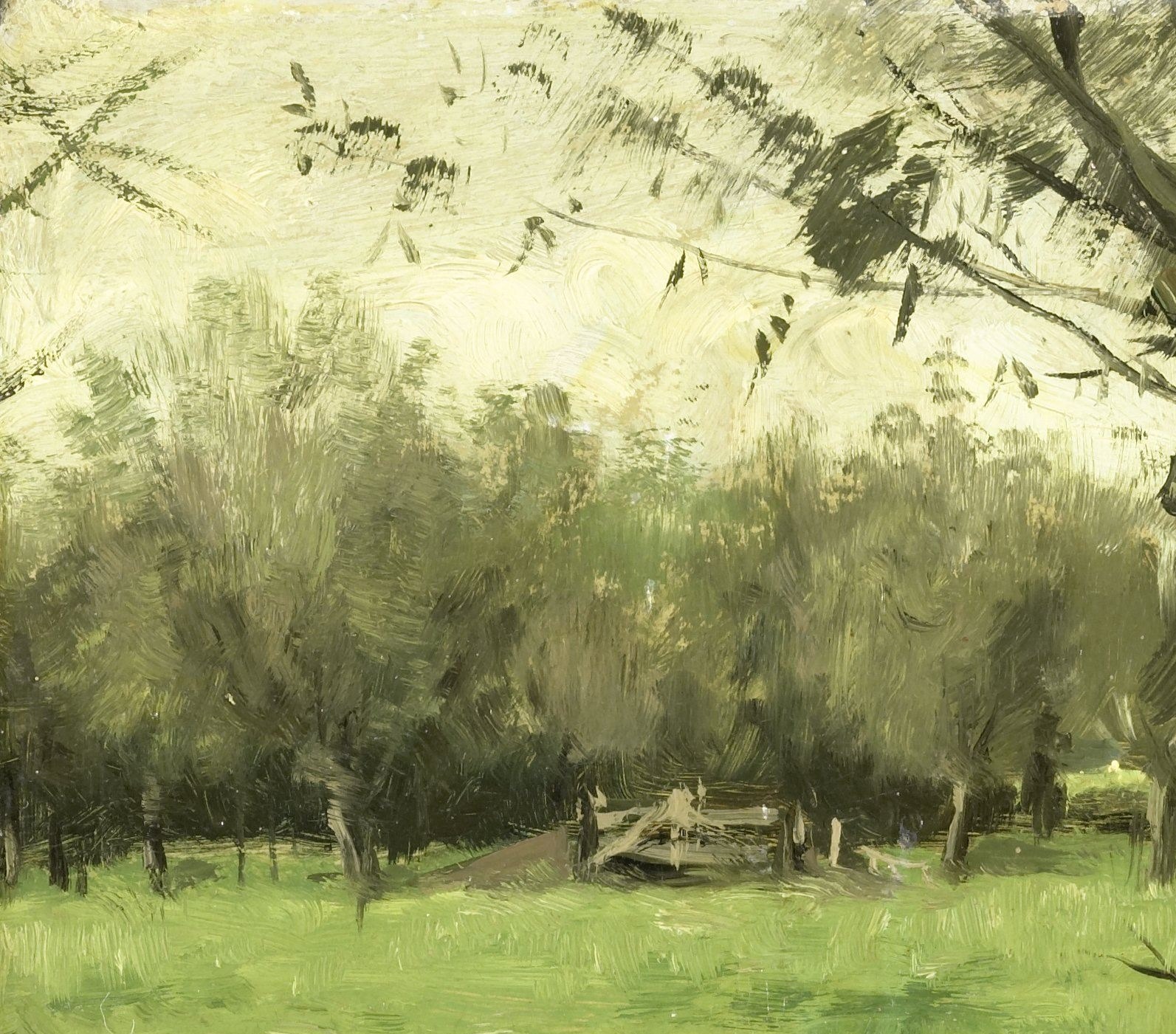
Geo Poggenbeek's "The Willow" (1894) is a quiet masterwork of the Hague School that sold for over six times its high estimate at a 2015 auction, and is now in the permanent collection of the Rijksmuseum in Amsterdam.
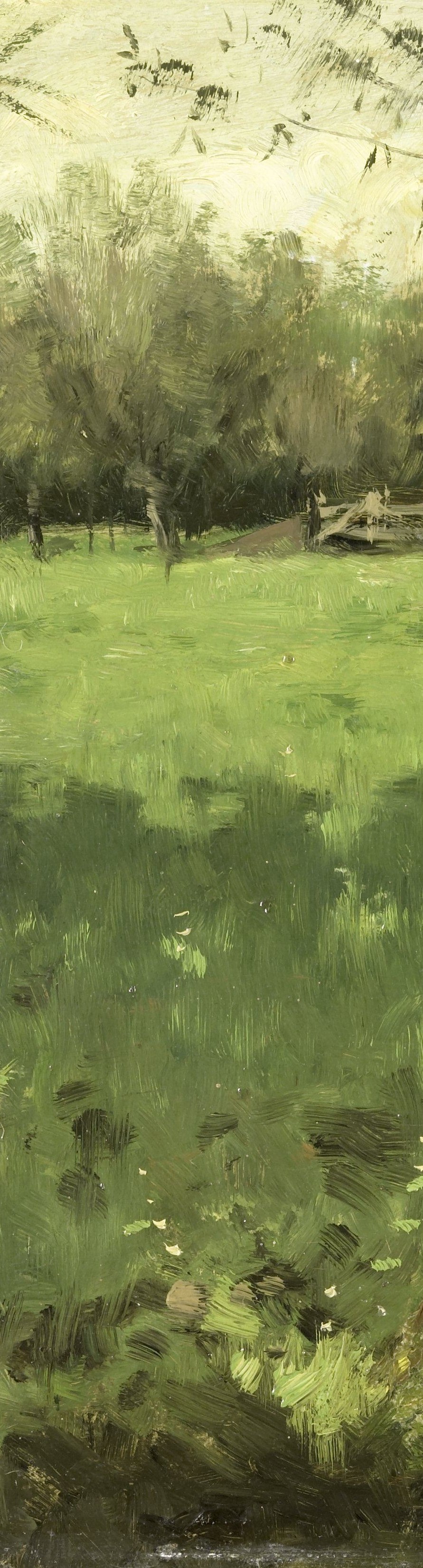
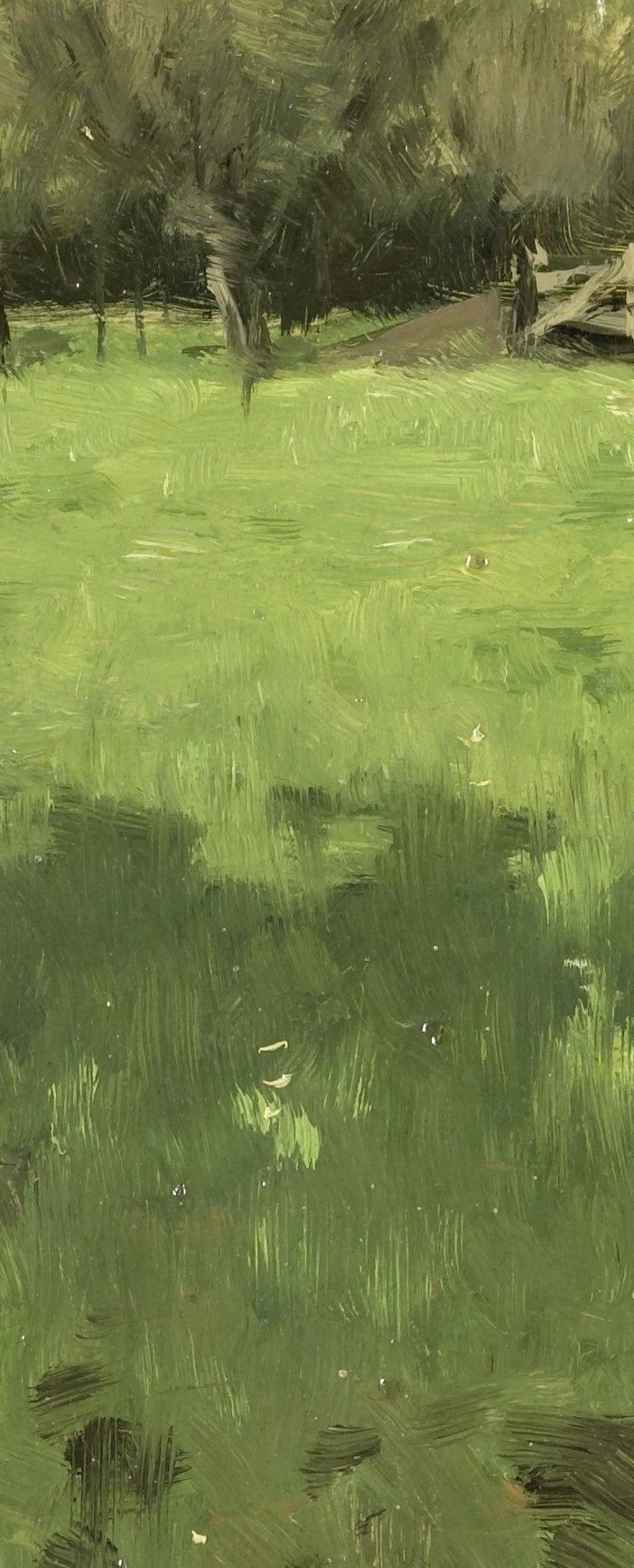
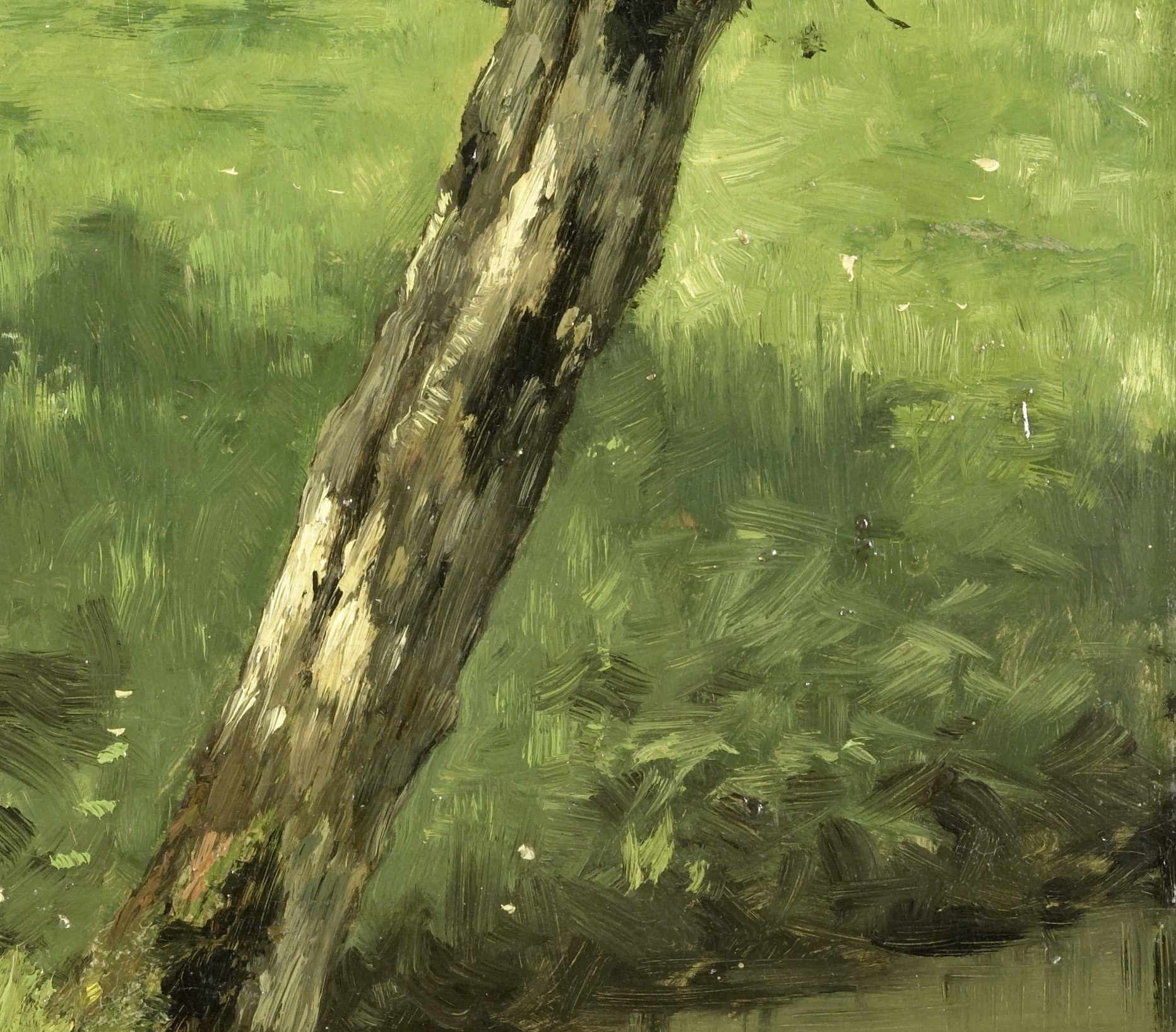
The undisputed protagonist is the pollard willow itself, leaning in the foreground. Look at the blunt stubs at its crown, those are not natural breaks. They are the evidence of a tree cut back repeatedly for decades, likely for basket-willow harvesting. The pale, scarred bark is a virtuoso texture passage of impasto and silver-grey striations. Notice, too, the fence and gate structure barely visible in the mid-ground, confirming this is managed farmland, not wild nature.
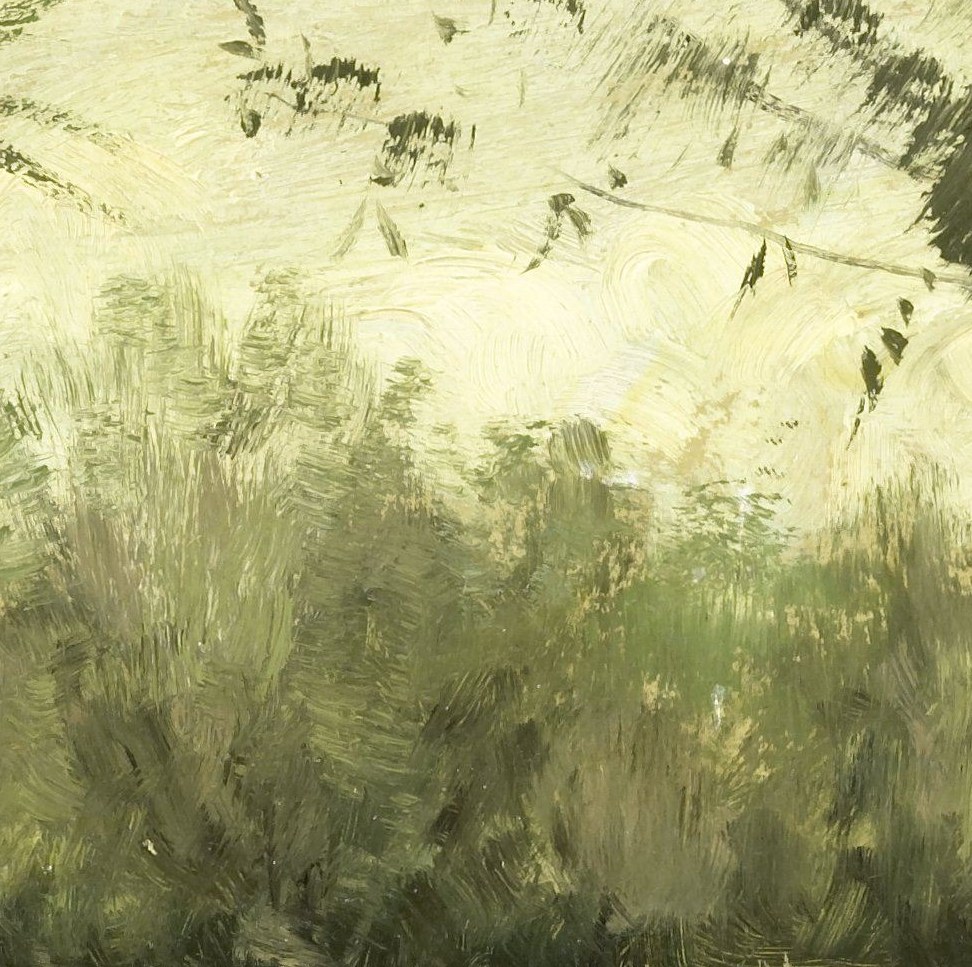
Poggenbeek was born in Amsterdam in 1853 and maintained close ties with the Hague School, a Dutch movement committed to painting the countryside with direct observation and attention to light and mood. He died at only 49, and for much of the twentieth century his name receded from the market. The resurgence of interest in the Hague School, combined with the painting's genuinely luminous handling of dappled light across the flat meadow, drove the bidding far past what any cataloguer predicted.
The willow is not a sentimental tree. It is a worker tree, painted by a worker painter who wanted you to see the bark the way he did.
Details
Transcript
In 1894, Geo Poggenbeek painted this willow. He was part of the Hague School, painting the Dutch countryside as it really was. This is a pollard tree. Cut back for basket willow, again and again, for decades. Look past it: the meadow, the tree line, the fence. All managed land. He painted the bark not as a symbol, but as a weathered surface he wanted you to see. Poggenbeek died at 49. For a century, his name quietly receded. Then, in 2015, this painting appeared at auction. The estimate was modest. It sold for over six times the high estimate. The Rijksmuseum now holds it.