Village by the River by American 19th Century
This is "Village by the River," painted in the fourth quarter of the 19th century by an anonymous American artist. It captures a moment of transition in rural American life, balancing the familiar rhythms of the past with the encroaching pulse of modernity.
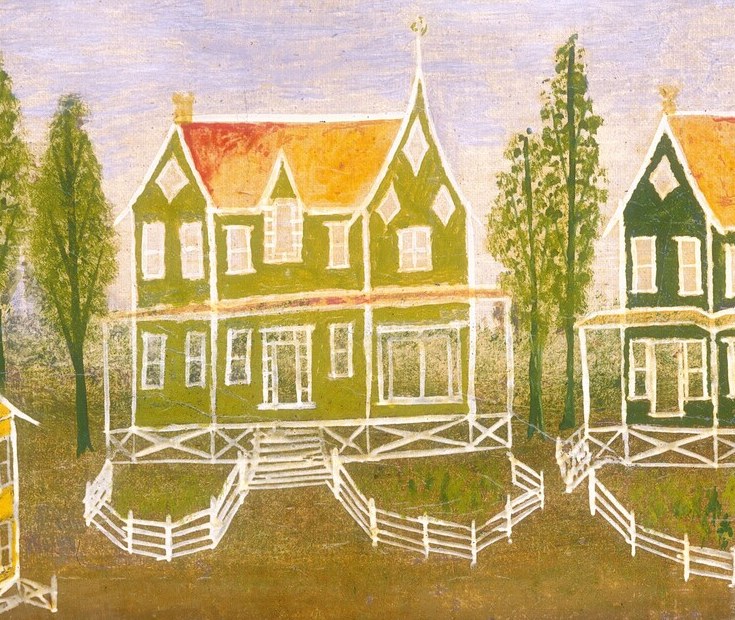
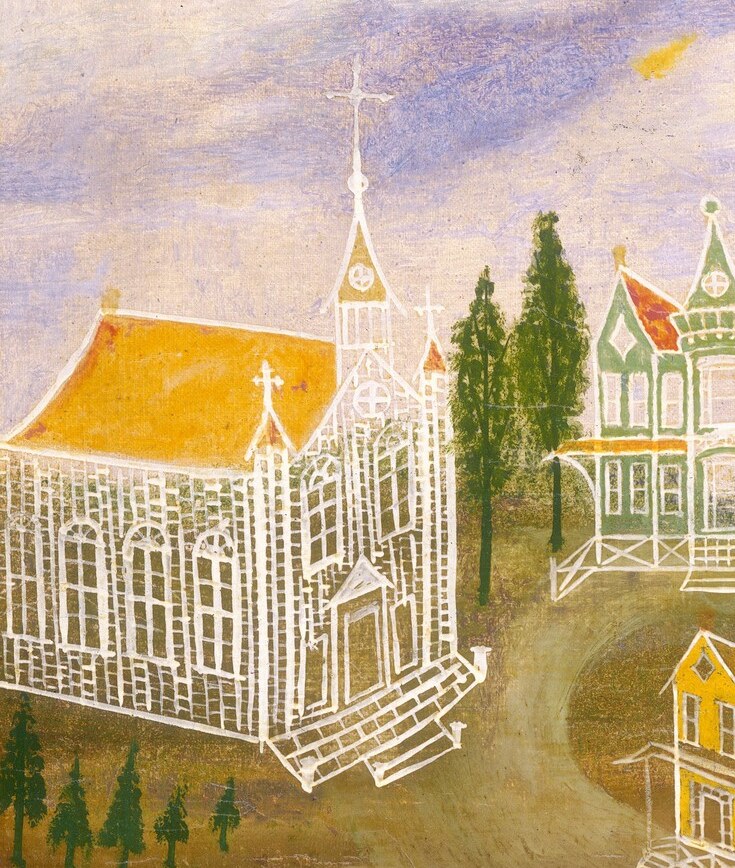
Notice the charming details: the crisp white fencing around the green houses, the bright yellow bridge arch, and the delicate outline of the church. The artist masterfully blends Impressionist light with Realist observation, using thin white lines to define forms and maintain a luminous quality throughout the scene.
The painting is a snapshot of a community at a crossroads. A horse-drawn carriage represents traditional transport, while the steamboat on the river heralds industrial progress. This juxtaposition speaks to the era's fascination with societal change and its impact on everyday settings.
The viewer is invited to consider the perspective of the small, solitary figure on the far shore. What do they see? What do they feel as this new world arrives?
Details
Transcript
The village rests between river and trees. A horse-drawn carriage still moves on the road. But a steamboat signals a new era arriving. The artist used thin white lines for detail. A lone figure stands on the far shore. Watching this world change at the water's edge.