Horsewoman by Théodore Géricault (French, 1791–1824)
Théodore Géricault's 'Horsewoman,' painted in 1822 and housed at the Metropolitan Museum of Art, is a portrait of quiet self-possession. The sitter, whose identity is no longer known for certain, commissioned the work herself at a time when an equestrian portrait was a deliberate claim to authority and independence.
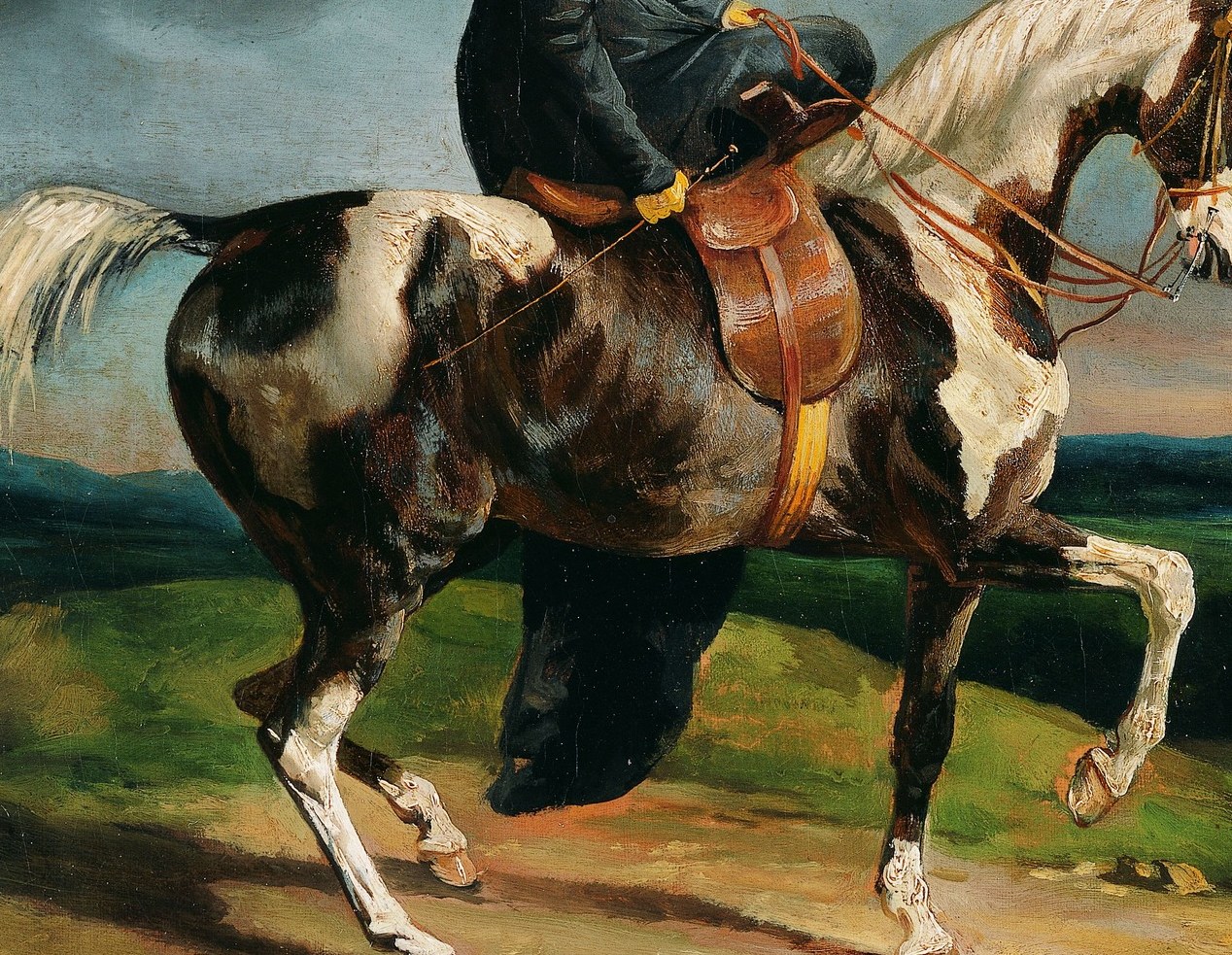
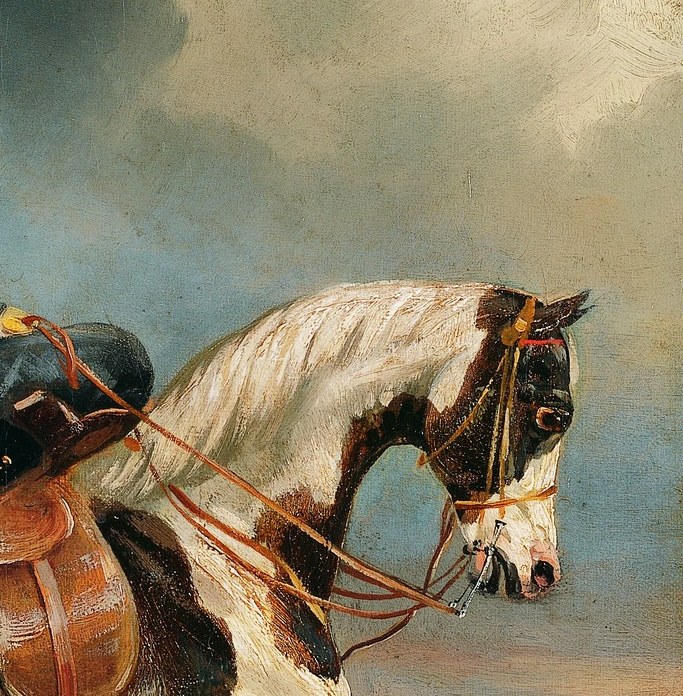
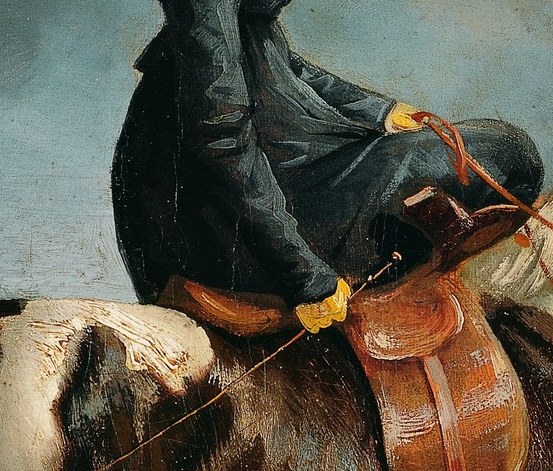
Her face is the anchor. Beneath the sharp green cap, her gaze is direct and composed, not a performer, but a person who knows she belongs exactly where she is. The horse is a dappled powerhouse, but her hands on the reins are light, almost casual. Géricault makes sure we see the difference between control and force.
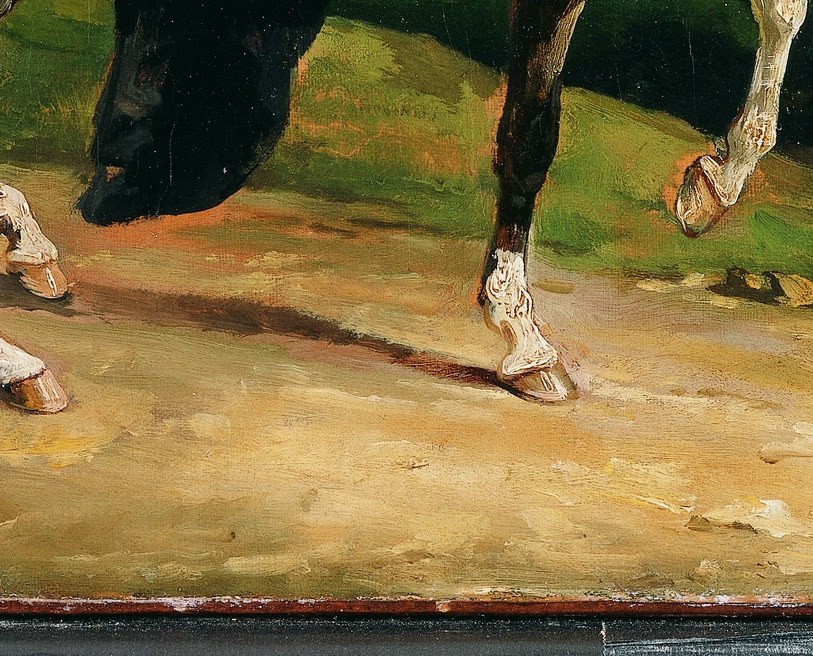
Géricault was a horseman himself, famously obsessed with equine anatomy. His notebooks are full of studies of bone and muscle, and the foreshortened front legs here show a precision that wouldn't be matched until stop-motion photography decades later. He painted this just two years before his death from spinal tuberculosis at age 32. He knew he was racing the clock.
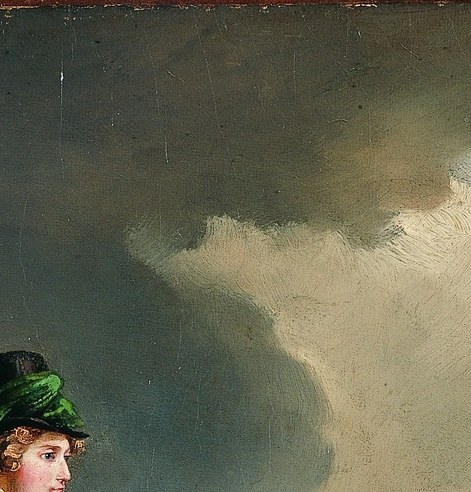
The storm clouds filling half the canvas are pure Romanticism, nature as something vast and indifferent, but the rider doesn't flinch. She and the horse move forward together, a single composed shape against the sky. What do you think she carried that day, beyond the reins in her hands?
Details
Transcript
She commissioned this portrait herself. In 1822, an equestrian portrait was a statement. A horse meant power, speed, the open road. Géricault was dying to paint this animal. He was obsessed with horses; they fill his sketchbooks. Look at her hands. A calm, light grip. She doesn't need to prove anything. He would be dead within two years, at 32.