Still Life with Roses and Fruit by Henri Fantin-Latour (French, 1836–1904)
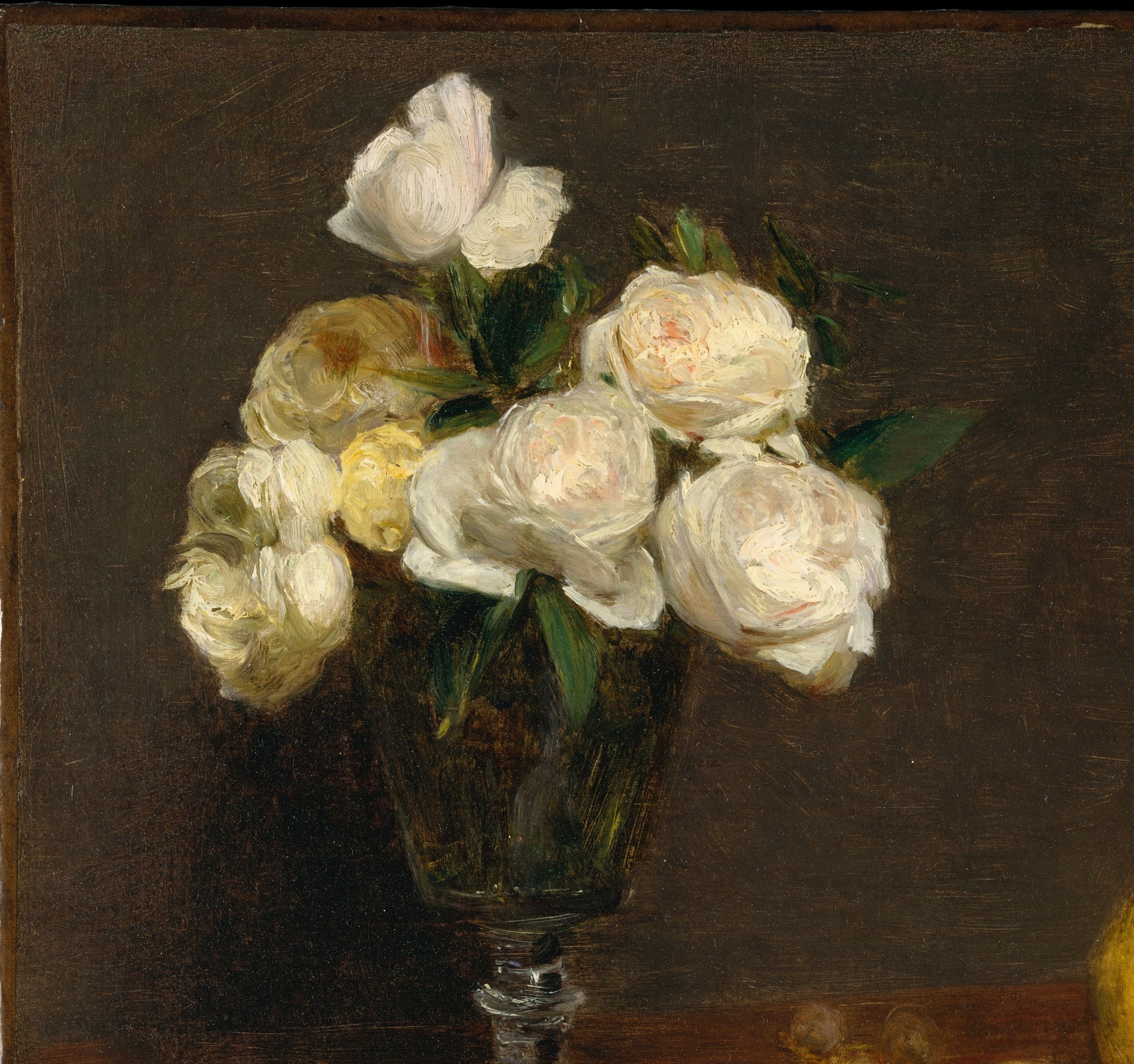
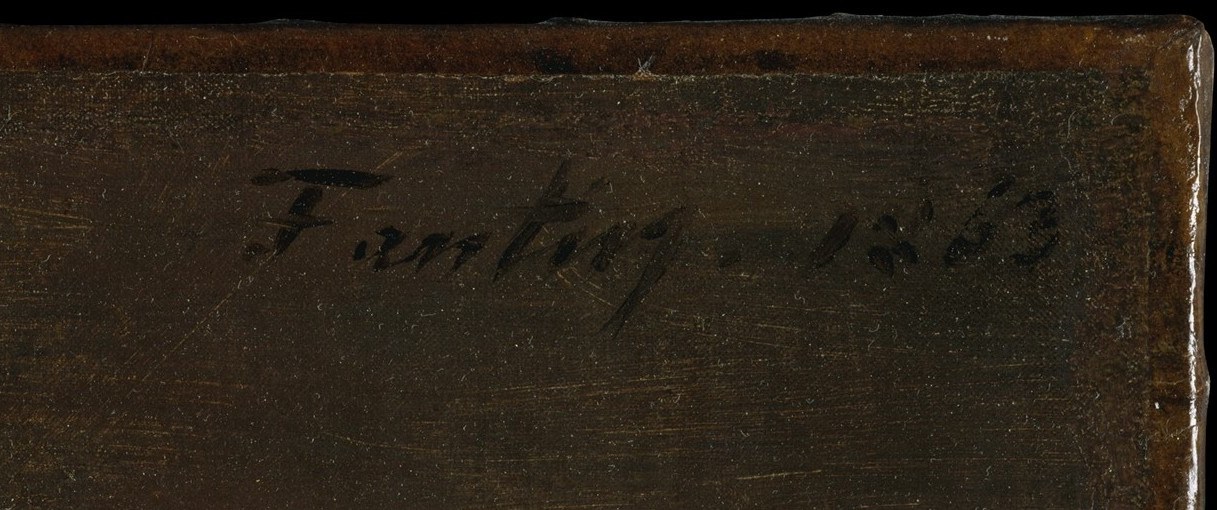
Henri Fantin-Latour painted "Still Life with Roses and Fruit" in 1863, and for more than three decades, it was missing from The Metropolitan Museum of Art.
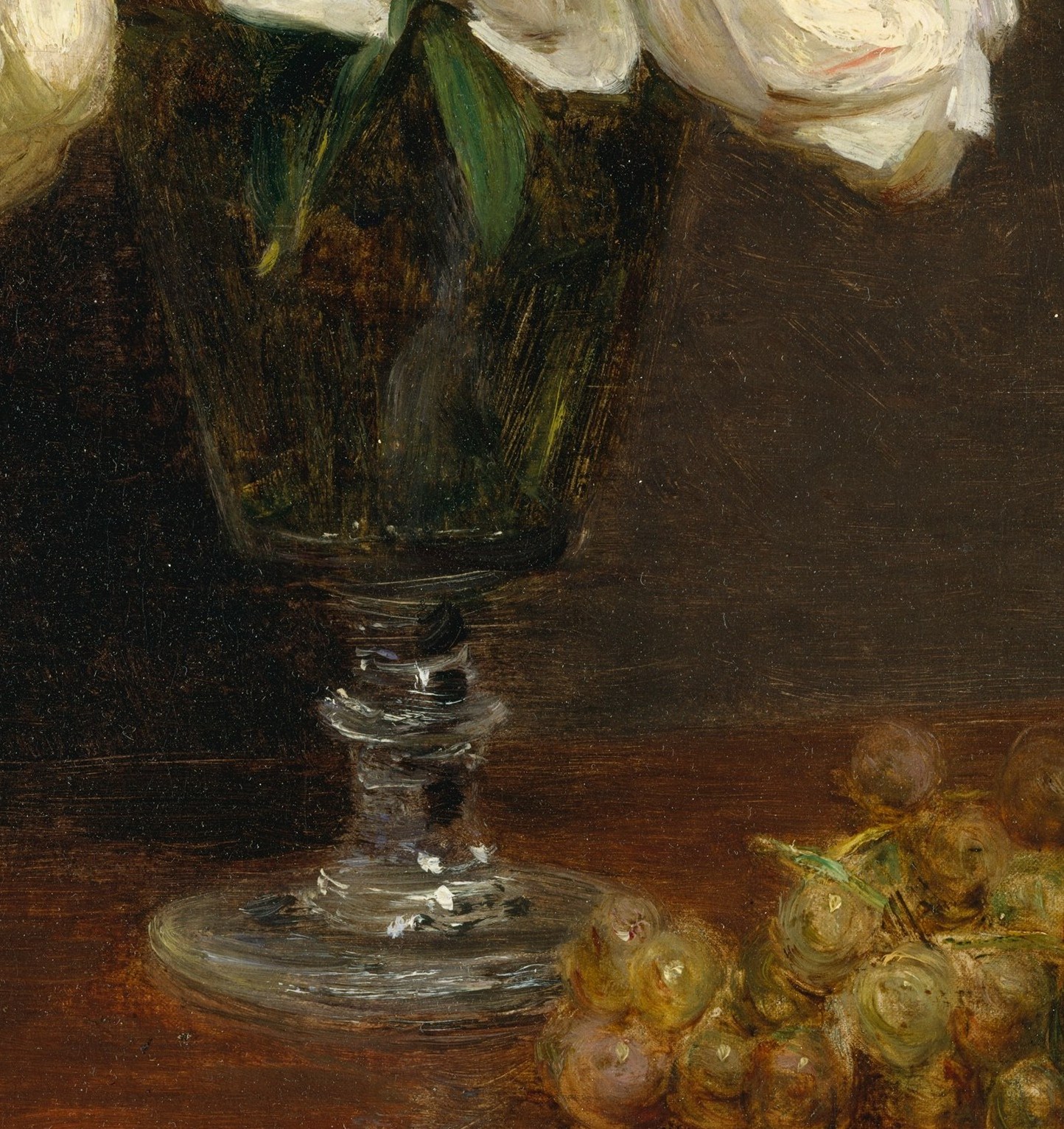
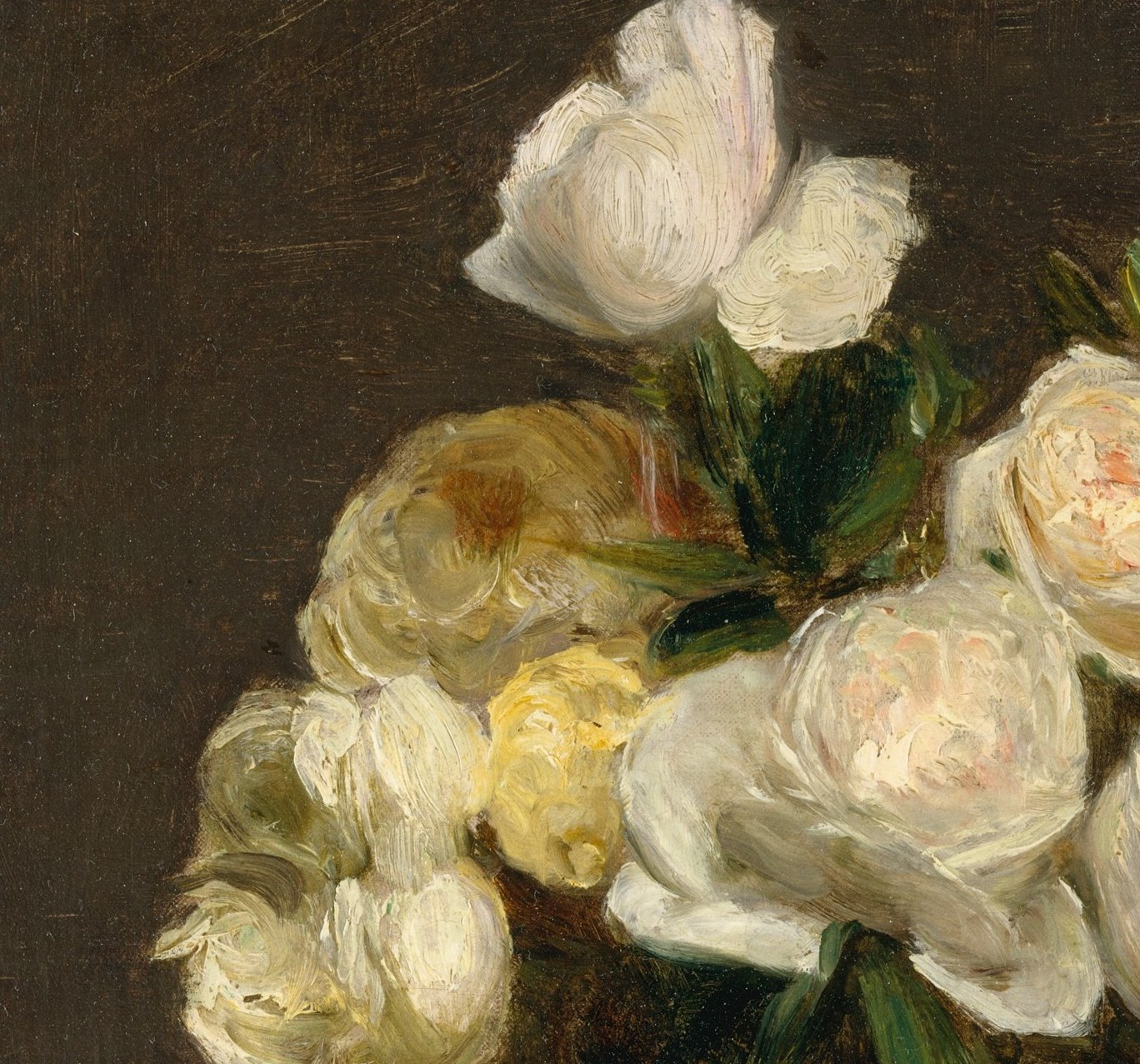
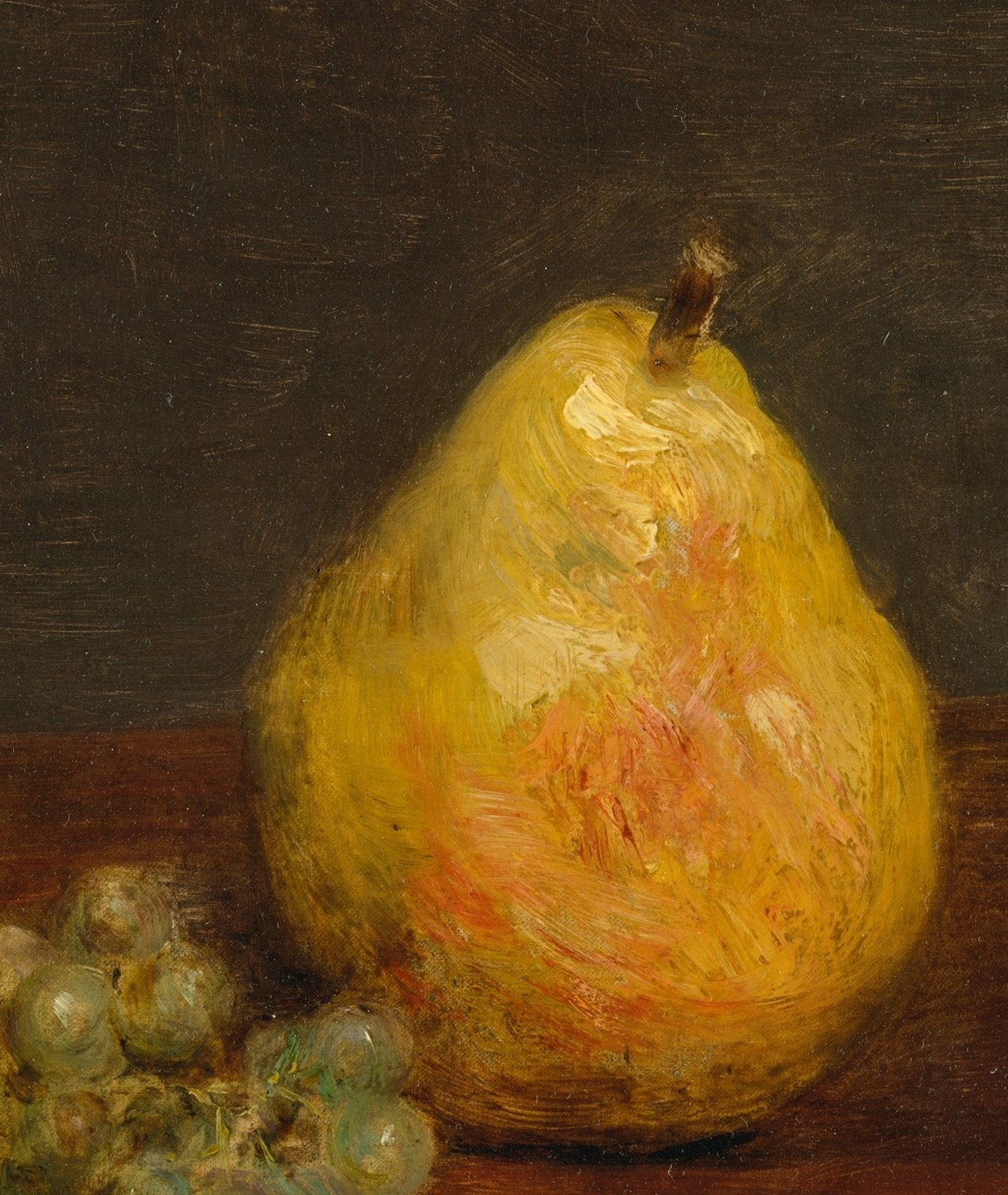
The painting itself is a study in quiet precision. The glass vase is a masterclass in light, built from layered glazes that make the crystal feel solid and transparent at once. The grapes carry tiny white highlights, each one a deliberate mark that gives the fruit its translucent, dusty-green skin. The fully open rose at center-left pulls you in with its soft, spiral bloom, a contrast to the tight bud still closed at the upper right.
Fantin-Latour was the great chronicler of Parisian artistic life, painting group portraits of Manet, Baudelaire, and the Impressionists. But he made his living on still lifes like this one, selling them to London collectors who couldn't get enough of his flowers.
The mystery remains intact. The work was in the Met's collection, then it wasn't, and more than thirty years later it reappeared with no record of a theft, a loan, or a police report. The museum has never publicly disclosed what happened during those missing decades.
Where do you think a painting goes when it falls through the cracks of an institution's memory?
Details
Transcript
For decades, this still life was a ghost. Painted in 1863 by a man famous for his flowers. Look at the crystal vase. He built the light in layers. The Met owned it. Then, one day, it was just gone. It vanished from their walls for over thirty years. No heist was reported. No one was ever charged. It simply resurfaced in the collection, as if it had never left. To this day, the museum has never explained what happened.