Saviour Made Without Hands. The reverse by http://www.wikidata.org/.well-known/genid/a1376fc9d9bc35e73979aa3a7b6fd02a
This intriguing tempera painting, "Saviour Made Without Hands. The reverse," dates back to around 1100 and presents a profound visual mystery. Its unusual title alludes to an ancient Christian tradition, suggesting a divine, rather than human, origin for the image of Christ.
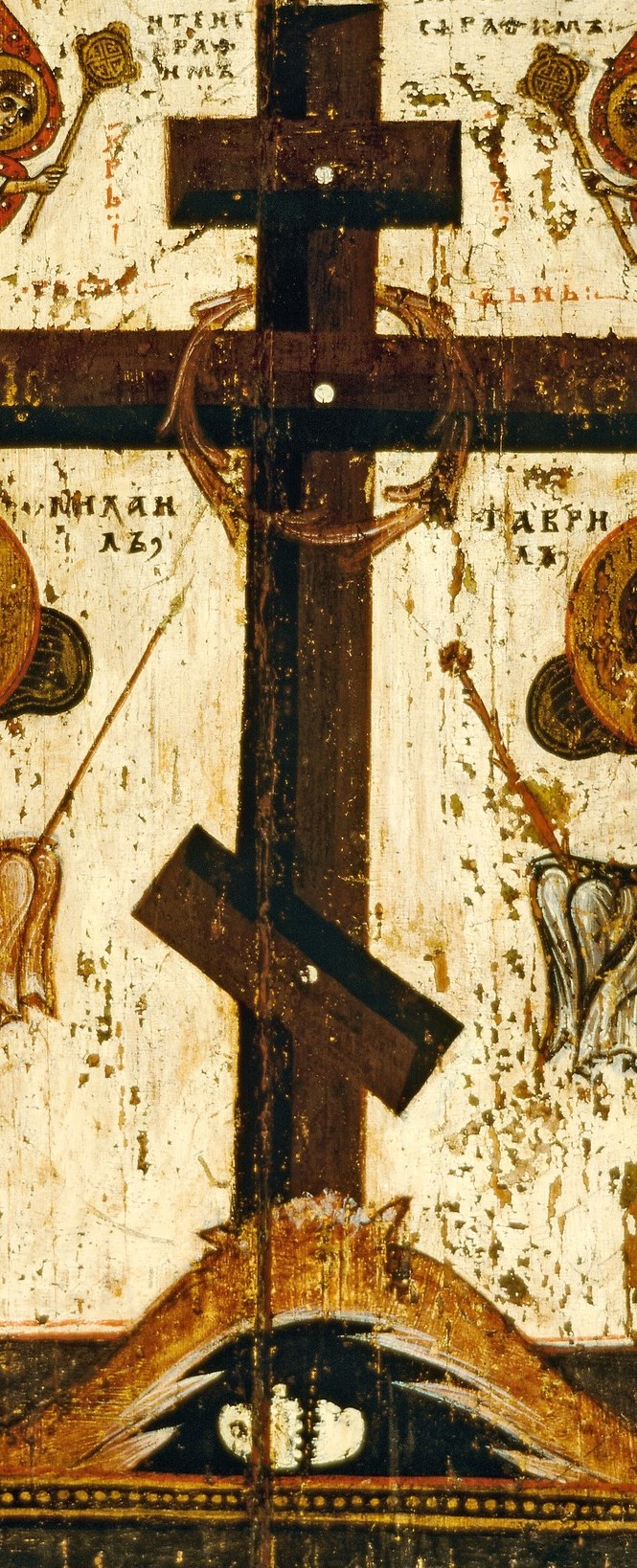
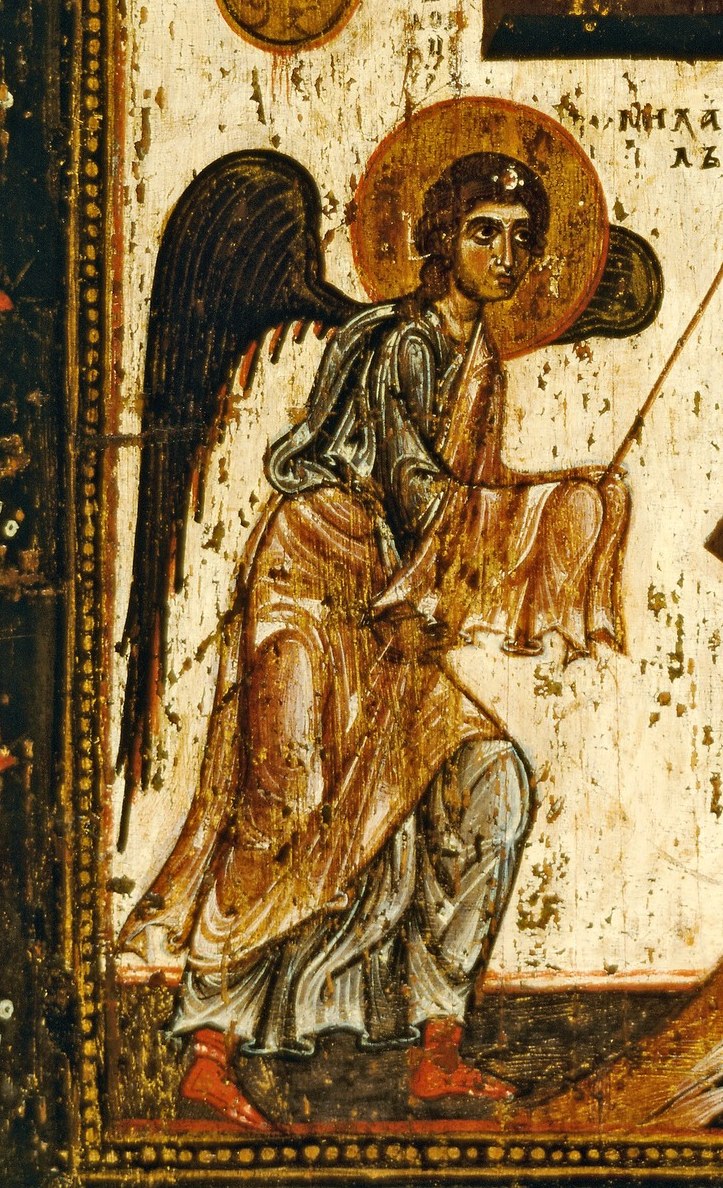
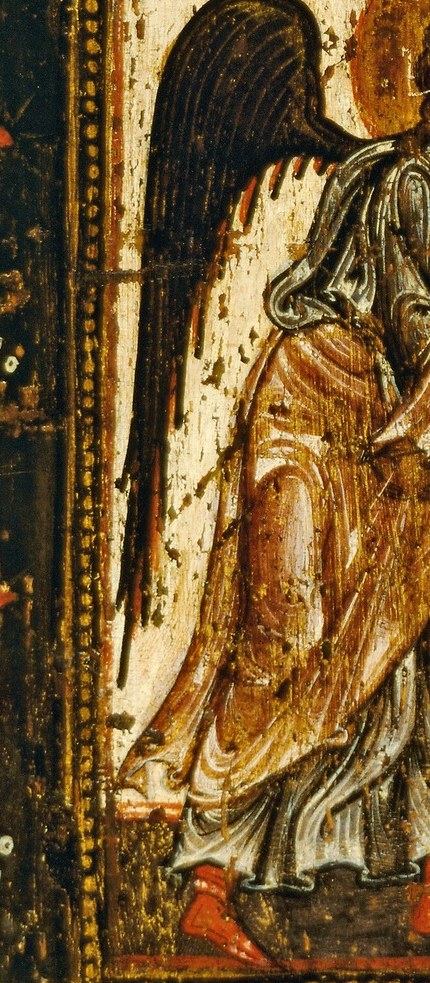
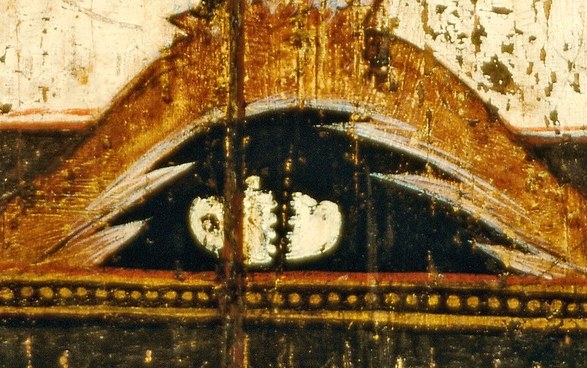
The artwork centers on a stark, dark cross, flanked by two large, solemn angels whose gazes are fixed upon it. Further details emerge upon closer inspection, like the textured wings and the smaller, darker angelic figures positioned in the upper corners, adding layers to its symbolic language.
While the artist remains unknown, the piece is a significant example of religious iconography, likely from the Eastern Orthodox tradition. The phrase "made without hands" (acheiropoieta) refers to relics or icons believed to have been miraculously created.
The reverse mentioned in the title suggests a hidden side or meaning, inviting us to ponder the painting's full narrative. What do you imagine lies on its unseen face?
Details
Transcript
This ancient painting carries a provocative title. It's called 'Saviour Made Without Hands. The reverse.' The central cross is the focus, dark and weathered. Two large angels frame the cross, in solemn reverence. Look closely at the textured details of their wings. Small, darker angels appear in the upper corners. This tempera work dates back to around 1100.