Richardson Stuart by Peale, Rembrandt
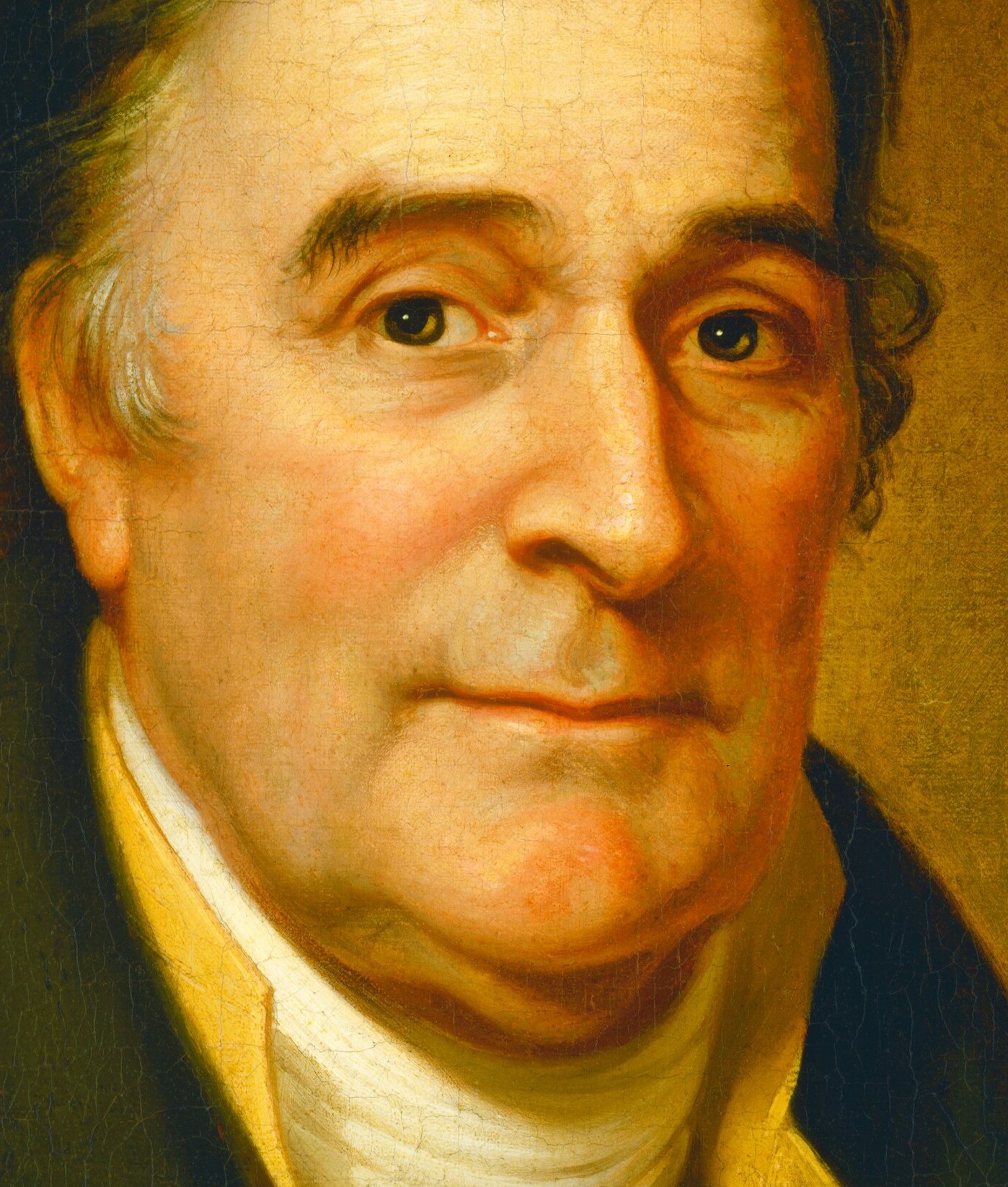
Rembrandt Peale's "Richardson Stuart," painted around 1815, offers a compelling portrait of a man whose quiet confidence seems to transcend time. The artist masterfully uses subtle gradations of tone and chiaroscuro to give the sitter's face a remarkable three-dimensional presence, drawing the viewer into an intimate connection.
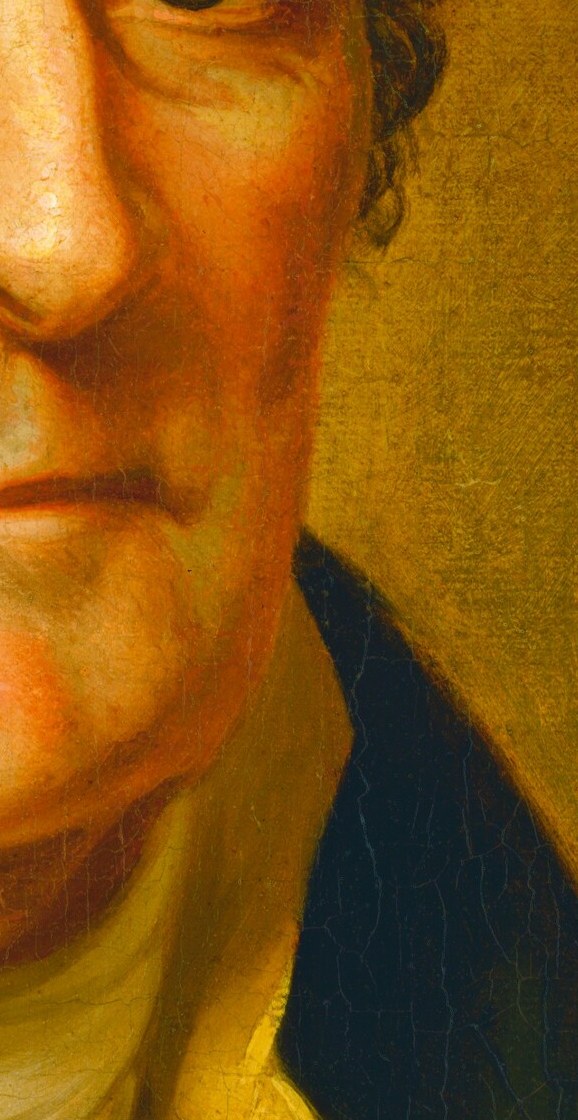
Look closely at the subtle blush on his left cheek and the highlights in his eyes; these details bring a lifelike vitality to the painting. The unadorned, dark background ensures that all attention remains on the sitter himself, emphasizing his inner qualities rather than external status symbols.
This work belongs to Peale’s later period, when he was creating portraits for American patrons. While its early ownership chain is limited, the painting's enduring presence in American collections speaks to its appreciation as a prime example of Peale's portraiture.
What do you see in his gaze?
Details
Transcript
This man looks out, directly at us, from 1815. His quiet confidence and inner peace are clear. The subtle blush on his left cheek adds to his vitality. This artist used light and shadow to model his face. Notice the subtle highlights in his left eye. A common technique for depth in early 19th-century portraits.