La Gloria by Titian
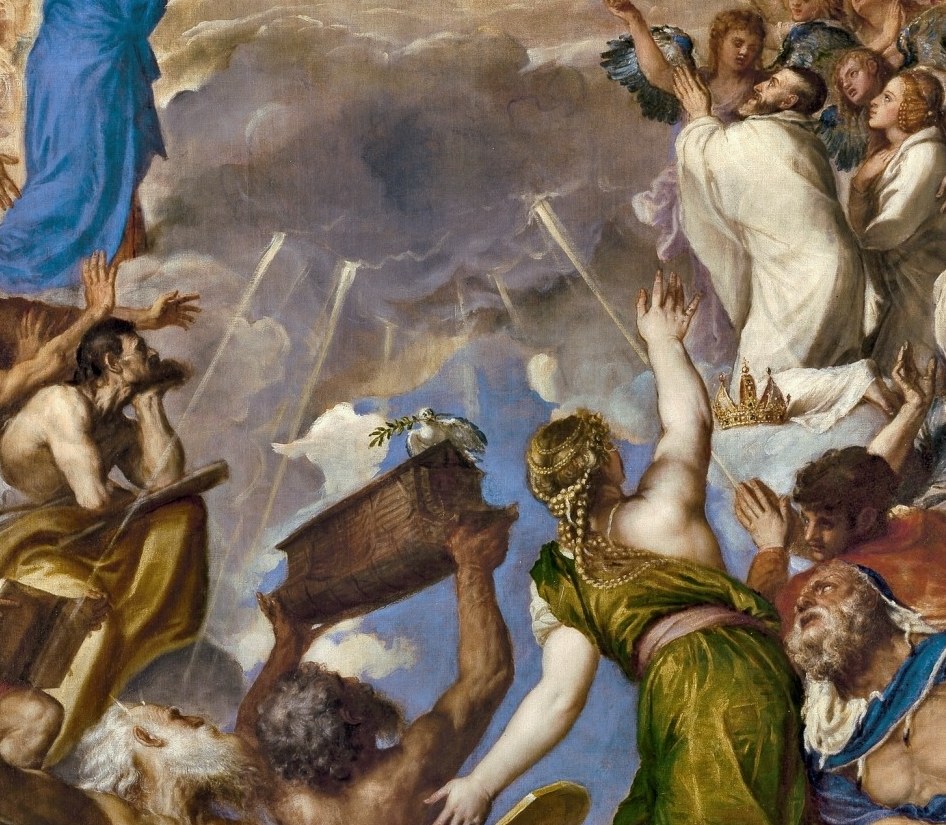
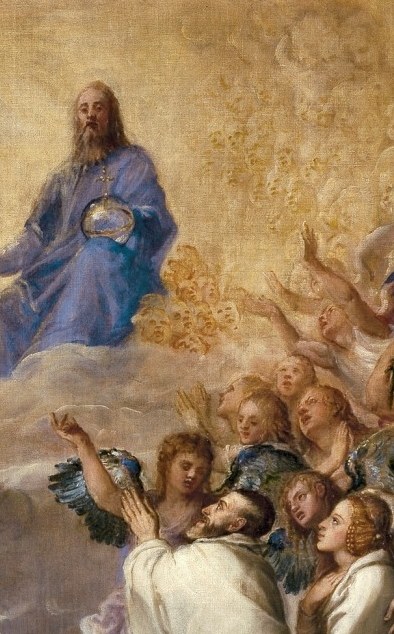
Titian's La Gloria (1554) shows Emperor Charles V, ruler of an empire on which the sun never set, kneeling in a white burial shroud. He commissioned the painting himself to hang in the monastery where he planned to retire, and eventually die.
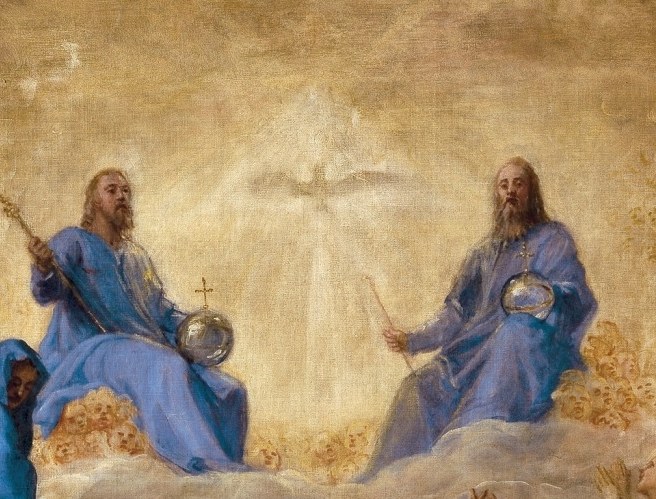
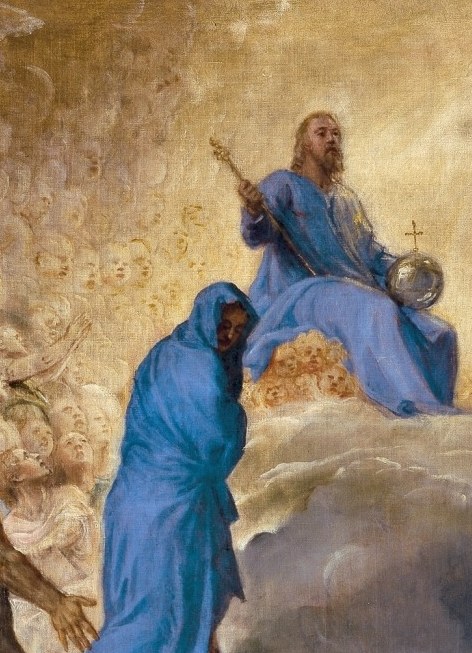
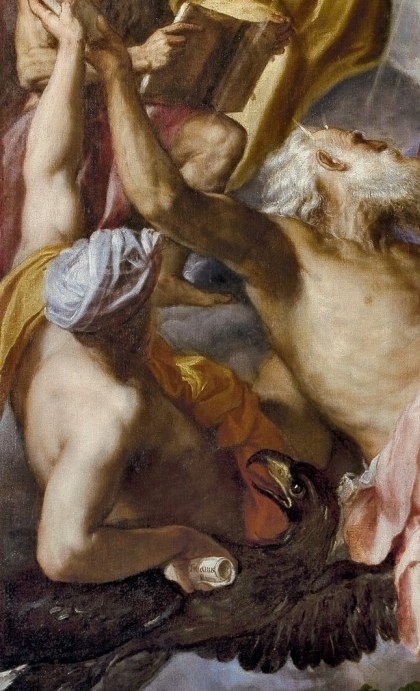
Look at how the composition climbs. At the bottom, Charles and his family kneel as petitioners. Above them, a turbulent mass of ascending souls surges upward. At the very top, the Virgin Mary and Saint John the Baptist flank the Holy Trinity in a traditional deësis arrangement, with the dove of the Holy Spirit visible at the apex. Every figure in the painting is positioned along a single vertical argument: intercession leads to salvation.
The deësis was an ancient Byzantine convention, but Titian gave it imperial scale. The emperor who conquered continents is stripped of armor and crown, appearing as nothing more than a dying man asking to be remembered. The painting was his theological insurance policy, a visual petition he could offer to God.
Charles V died in 1558, four years after this painting was completed. It now hangs in the Museo del Prado, a monument to the idea that power, in the end, kneels.
#arthistory #titian #renaissance
Details
Transcript
A man in a white burial shroud kneels before heaven. That man is Emperor Charles V, the most powerful ruler in Europe. He commissioned this painting as a coded plea for salvation. Above him, the Virgin Mary and Saint John the Baptist intercede. This arrangement is called a deësis. They plead on your behalf. The Holy Spirit appears as a dove, completing the Trinity. The entire composition funnels upward: earth pleads, heaven listens. Charles V died four years later. He had already rehearsed it here.