Artwork
La Gloria
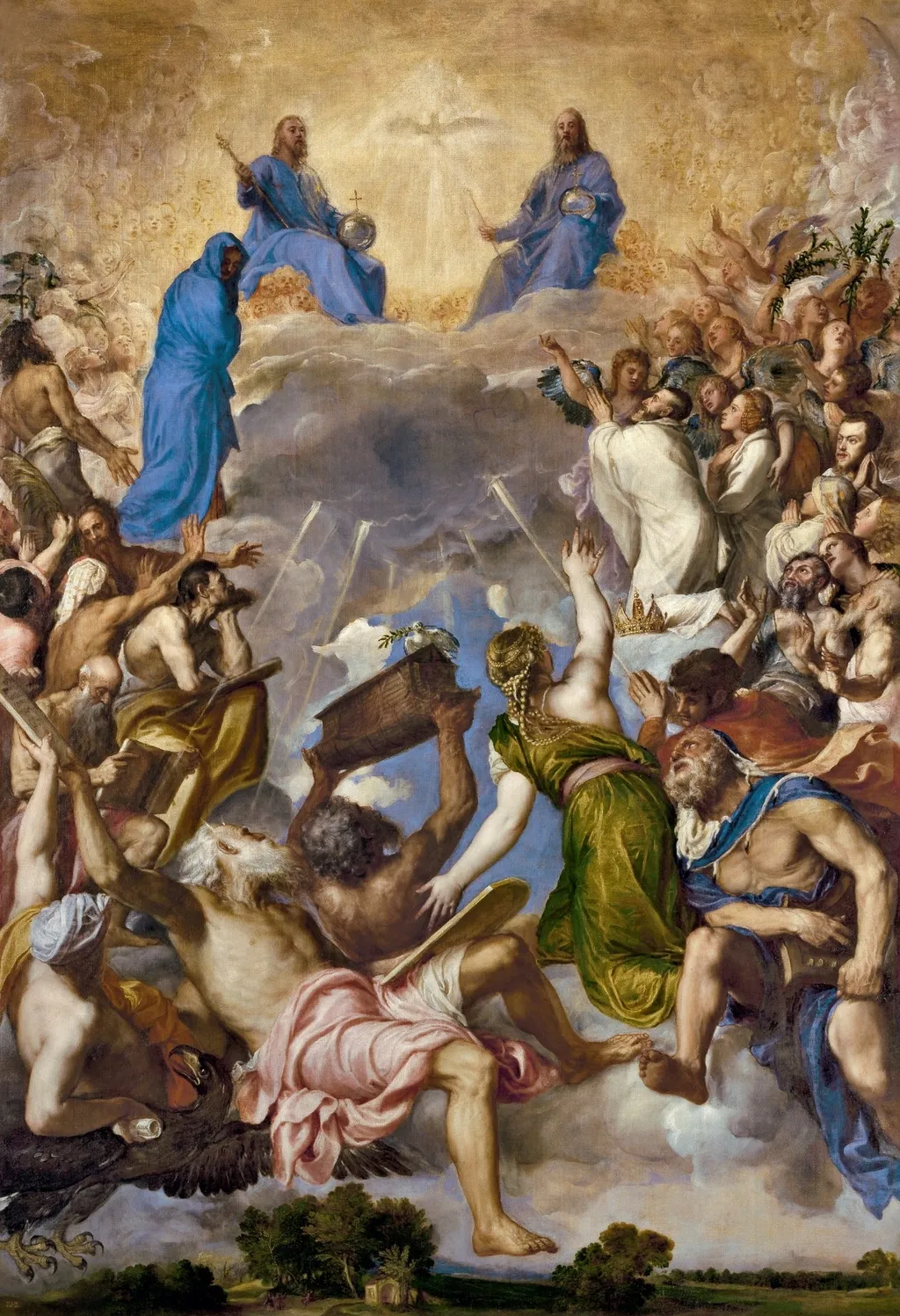
La Gloria is an oil painting by the High Renaissance artist Titian. It dates from 1552 and is held in the collection of the Museo del Prado.
About this work
Titian painted this massive canvas between 1551 and 1554 after meeting the emperor in Augsburg.
In a burst of heavenly light, the Holy Trinity hovers above the Virgin Mary and Saint John the Baptist as Emperor Charles V kneels in a white burial shroud alongside his family. Titian painted this massive canvas between 1551 and 1554 after meeting the emperor in Augsburg. At 346 by 240 centimetres, the oil painting gathers prophets, kings, and the Habsburg court into a single, turbulent vision of salvation designed according to the emperor's own instructions.
Subject & Meaning
The painting depicts the Holy Trinity at the apex, with God the Father, Christ, and the Holy Spirit as a dove. Below, the Virgin Mary and John the Baptist serve as intercessors. Surrounding them are figures from the Old and New Testaments, including Moses holding the tablets, Noah with the ark, King David playing a harp, and John the Evangelist holding Titian's signed scroll.
On the right, the Habsburg imperial family, Charles V, his wife Isabella of Portugal, his son Philip II, his daughter Joanna of Austria, and his sisters Mary of Hungary and Eleanor of Austria, appear in shrouds in a supplicant attitude. The composition is based on Augustine of Hippo's City of God, portraying the glory attained by the blessed. The work symbolizes the imperial family's orthodox devotion to the Trinity and their hope for salvation; Charles V took the painting to his retirement at Yuste and requested to see it before his death.
Technique & Style
Titian executed La Gloria in oil on canvas, a large support measuring 346 × 240 cm. Belonging to the Venetian school, the painting's formal composition is organized as an oval: the Holy Trinity occupies the apex, with God the Father and Christ on either side and the terrestrial realm below. Figures appear to descend from golden clouds, creating an atmosphere of celestial glory. The work is densely populated (abigarrado) with saints, biblical figures, and members of the imperial family, all in adoring poses.
The artist's signature appears on a scroll held by John the Evangelist. No specific condition notes are provided in the sources.
History & Provenance
Emperor Charles V commissioned La Gloria from Titian around 1550–1551, with the work largely realized by 1552 and delivered in 1554. Charles V took it to his retirement at the Monastery of Yuste, and after his death it was transferred to the Monastery of El Escorial, where it was placed in the Aula de Moral. By 1837 it was documented among the works of the Museo del Prado in Madrid, where it remains and is displayed in Hall 024.
The title La Gloria was assigned by the historian José de Sigüenza in 1601; the painting is also known as The Trinity, The Last Judgement, Paradise, and Adoration of the Trinity.
Legacy
La Gloria's legacy is tied to its intimate role for Charles V, who kept it at the Monastery of Yuste and asked to see it before his death. After his retirement the painting was moved to the Escorial and later entered the Museo del Prado by 1837, where it remains. Its composition was reproduced in 1566 by the engraver Cornelis Cort, based on a drawing Titian supplied, spreading the image beyond the original.
The title La Gloria was first assigned by José de Sigüenza in 1601, and the work has also been known as The Trinity or Paradise. These details, together with its large scale and inclusion of the imperial family, underscore its significance as a personal and doctrinal statement of Habsburg piety.
Overview
Titian's La Gloria, an oil painting completed in 1554, resides in the Museo del Prado, Madrid. Commissioned by Emperor Charles V, this monumental work depicts a celestial assembly of saints and imperial figures. While known by various names such as The Trinity or Paradise, its current title, La Gloria, was first recorded in 1601. The artwork encapsulates a complex vision of divine salvation and earthly power.
Own this work as a print
Artist & collection
Artist
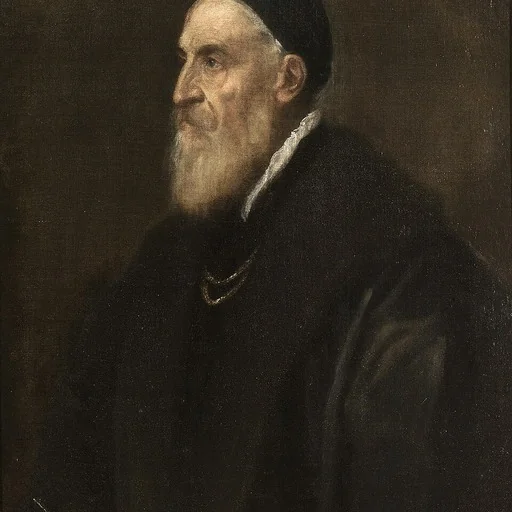
Tiziano Vecellio (Italian:; c. 1488/1490 – 27 August 1576), Latinized as Titianus, hence known in English as Titian ( TISH-ən), was an Italian Renaissance painter. The most important artist of Renaissance Venetian…

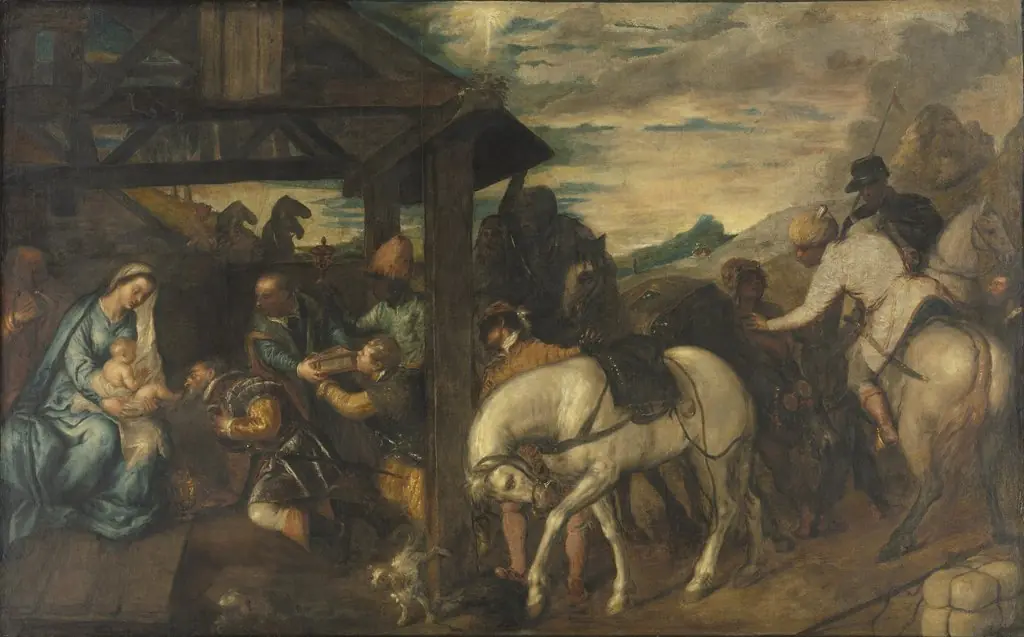
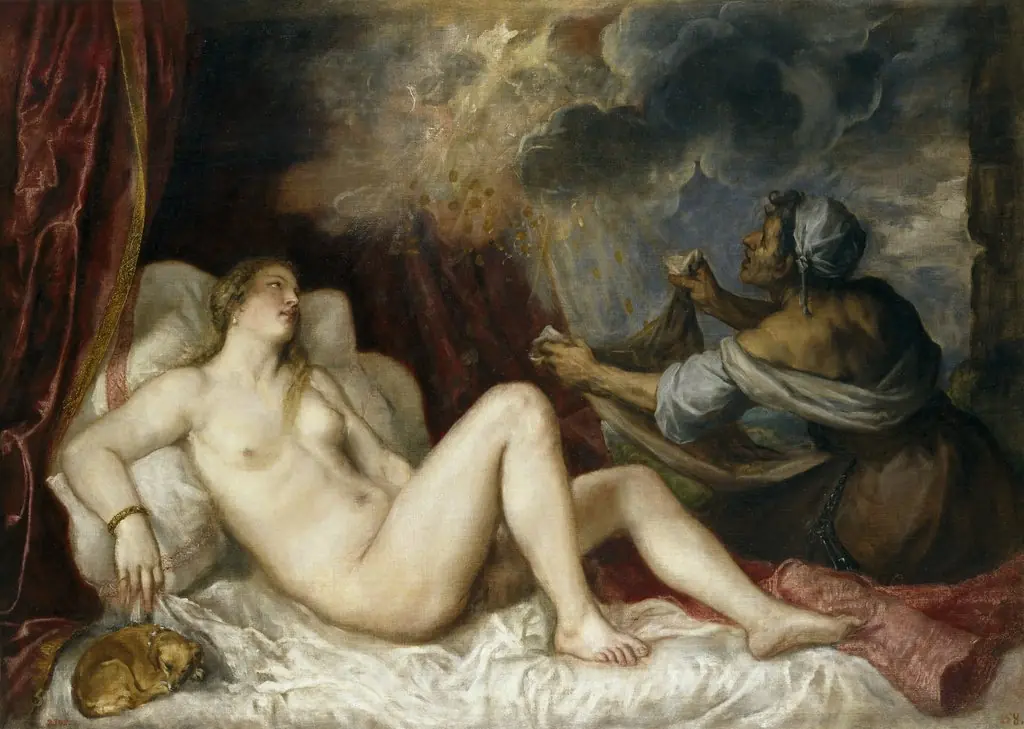
- The Great Last Judgement
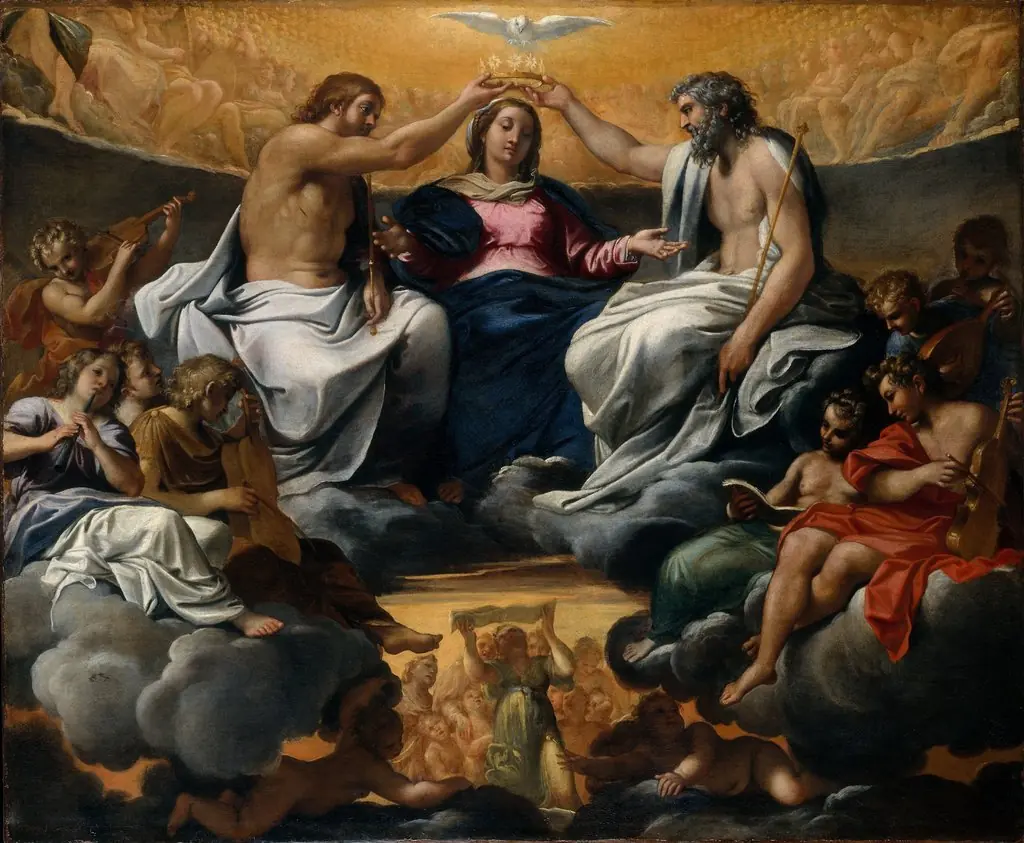 The Coronation of the Virgin
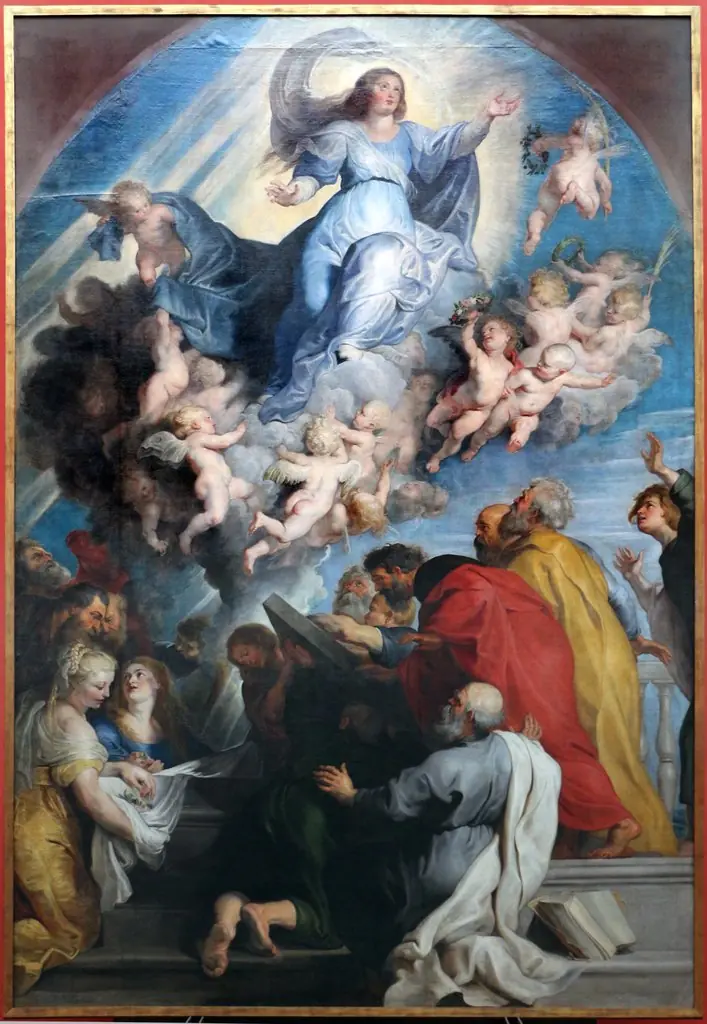 The assumption of the Virgin
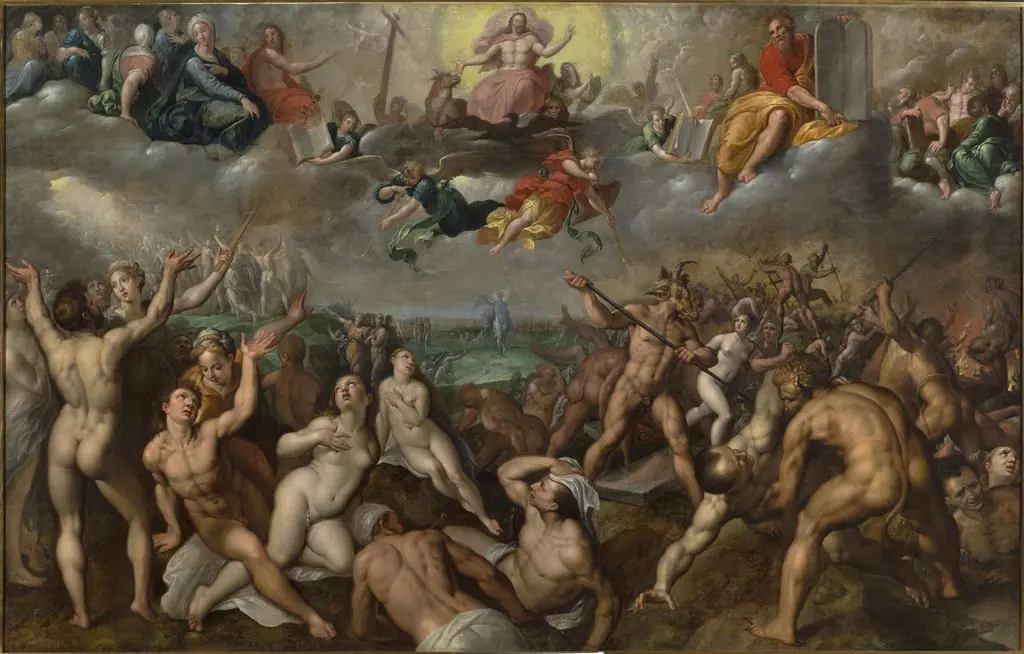 Last Judgement (Matthew 25:31-33)
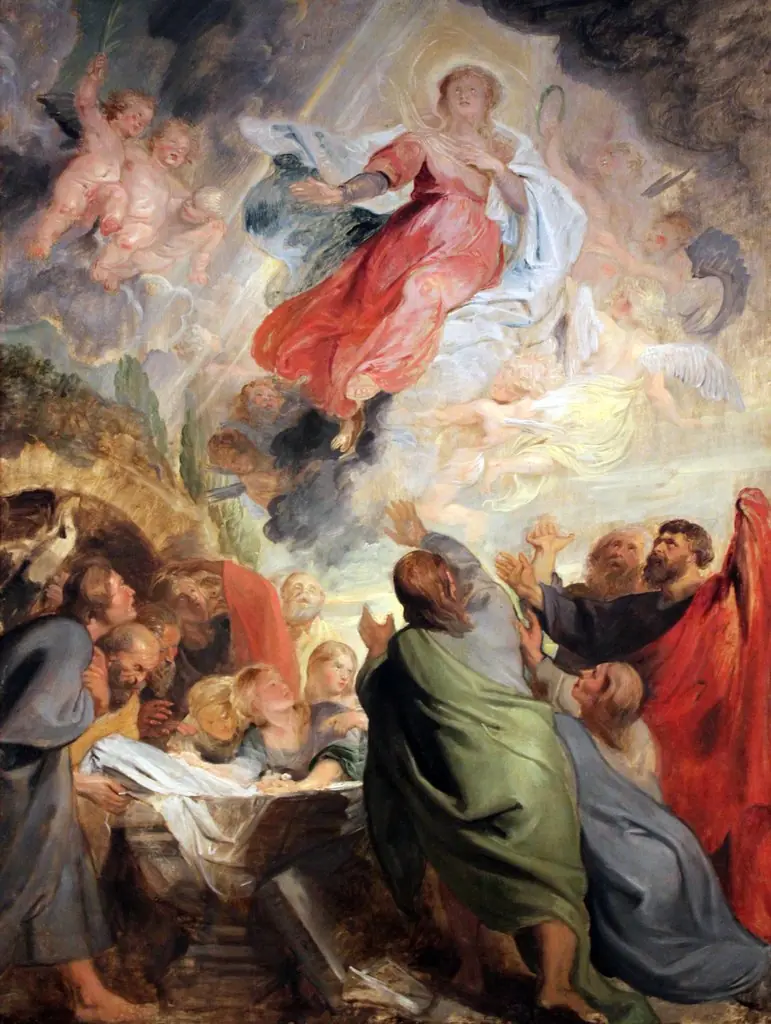 The Assumption of the Virgin
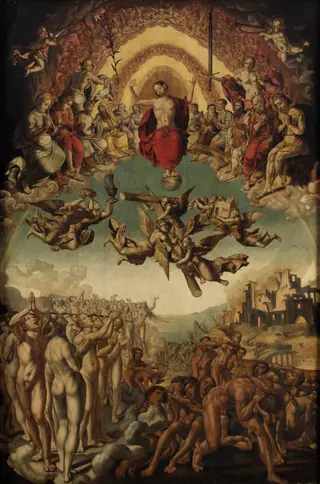 Last Judgment
 The Last Judgement
 Christ in Glory with Saints
 Saint Constantia's Vision before the Tomb of Saints Agnes and Emerentiana
 The Dreams of Men
 Assumption of Mary
 Allerheiligenbild