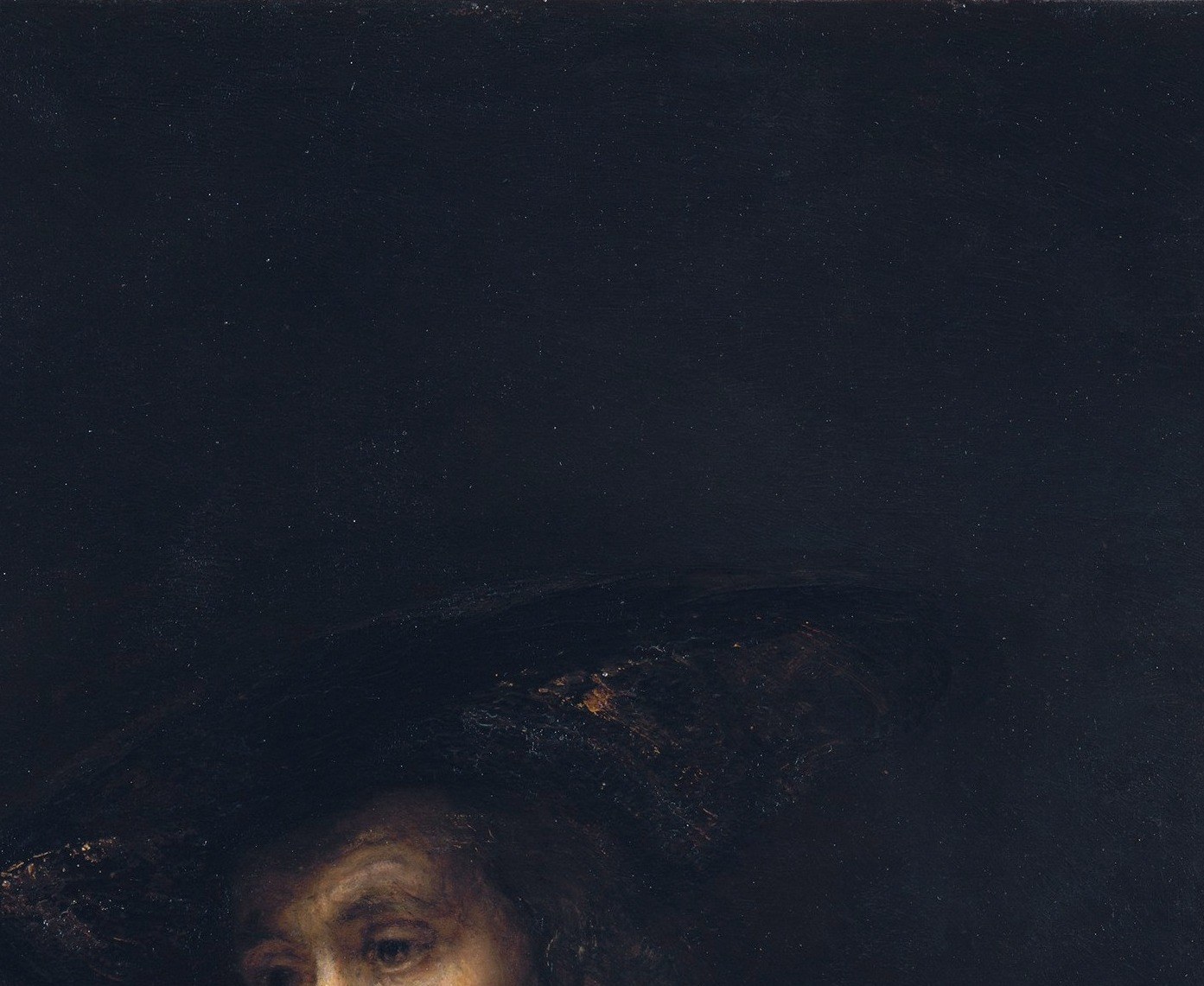
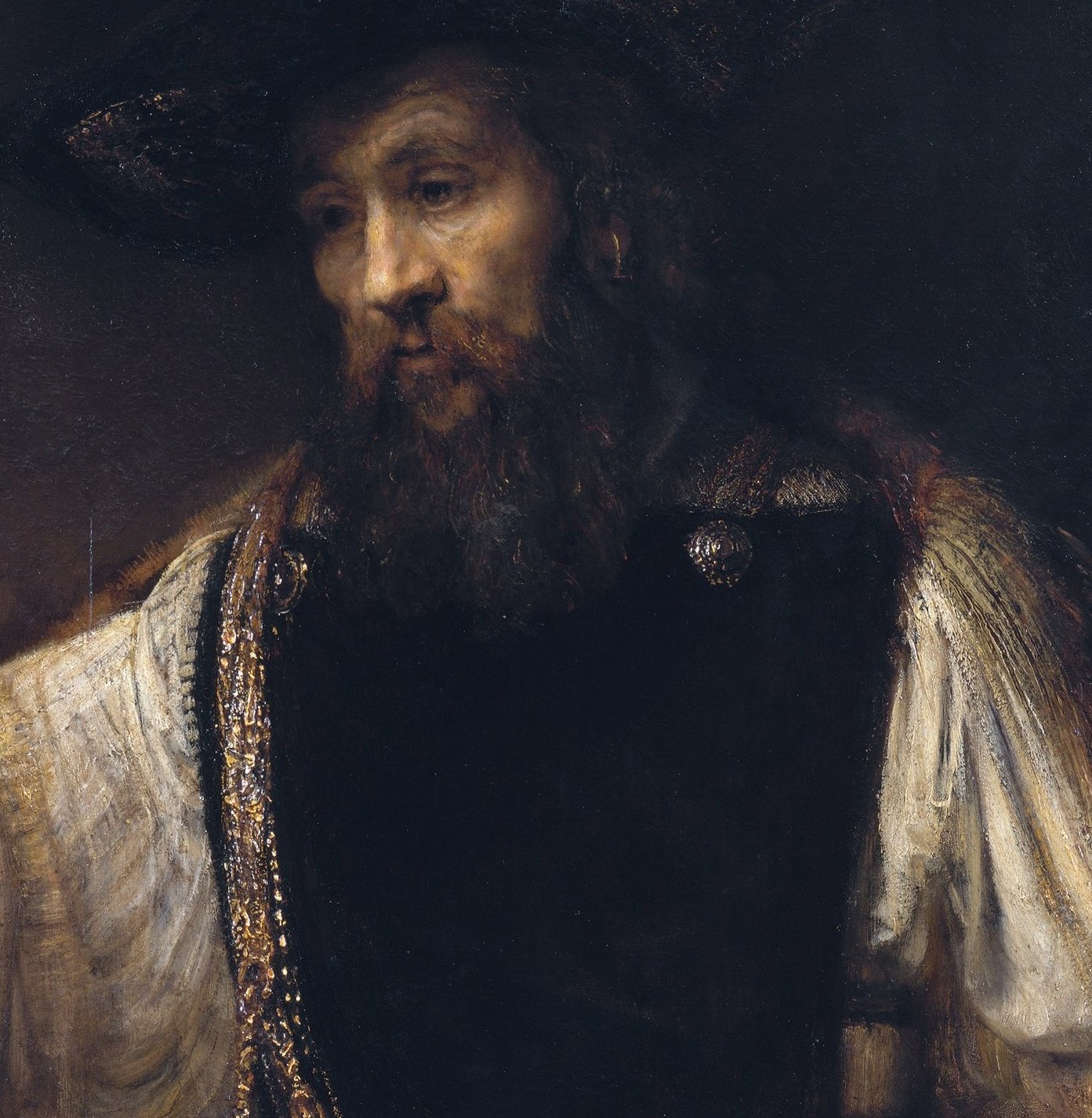
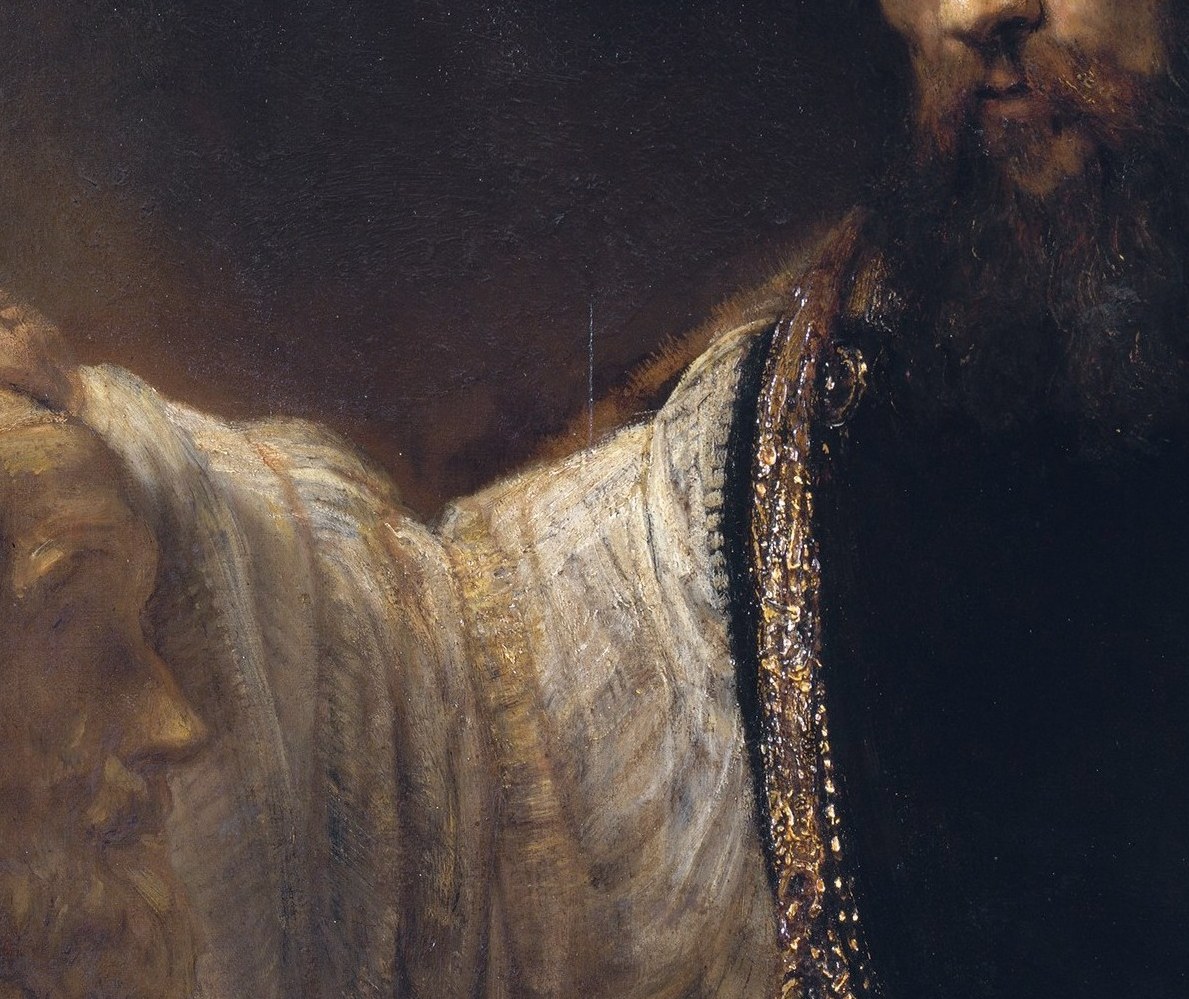
Aristotle with a Bust of Homer by Rembrandt

Rembrandt's Aristotle with a Bust of Homer, painted in 1653, hangs at the Metropolitan Museum of Art. It is a portrait of thought itself, not the triumphant, declamatory kind, but the heavy, silent kind that comes late at night, alone, in a dark room.

The philosopher wears a gold chain and a medallion bearing the image of Alexander the Great, the pupil whose career he shaped. That is worldly success. But his eyes refuse to rise. His right hand rests on the blind marble head of Homer, a poet dead four centuries before Aristotle was born. The hand is tender, almost fatherly. The philosopher, for all his reason, touches the poet as if asking for something he cannot name.

The painting was commissioned by Don Antonio Ruffo, a collector in Messina, Sicily, who left the subject entirely up to Rembrandt. The artist, then 47 and entering the most financially strained decade of his life, chose to show the moment philosophy acknowledges it is not enough. In 1961 the Met acquired it for $2.3 million, a record at the time.

What do you think Aristotle needed from Homer that Alexander could not give him?

#arthistory #rembrandt #dutchgoldenage

Details
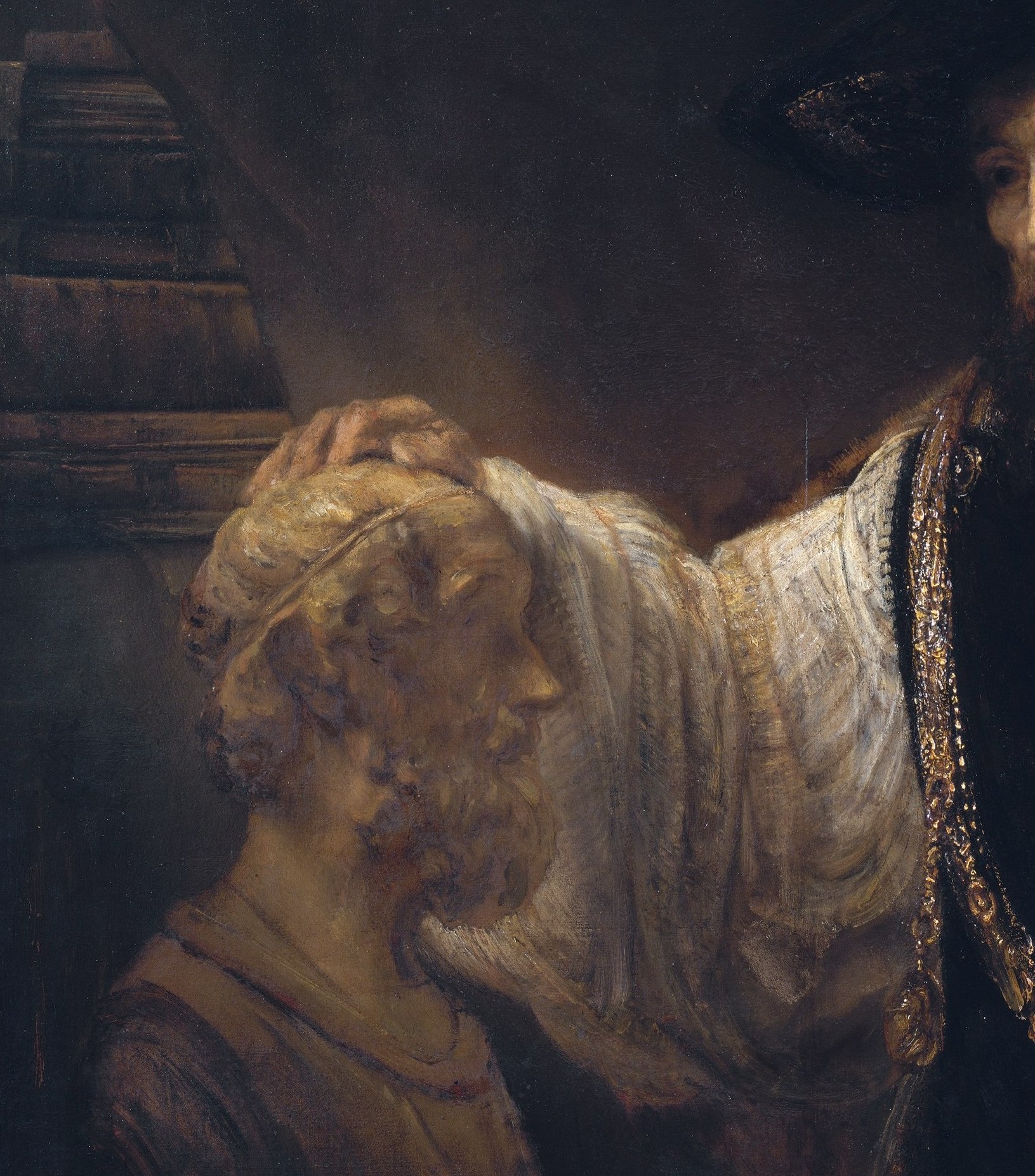
The bust's blind eyes contrast with Aristotle's sighted gaze , Homer, the blind poet, 'sees' more truly than the worldly philosopher, inverting the expected hierarchy of reason over inspiration.
The primary emotional anchor , his downcast gaze and slightly parted lips convey melancholic contemplation, not triumph, suggesting a philosopher humbled by his predecessor.
Symbol of worldly honor and royal patronage , Rembrandt reportedly depicted Alexander the Great's chain, linking Aristotle's tutoring of the conqueror to material reward and moral compromise.
The point of physical contact between the living intellect and the dead poet , a tender, almost reverent gesture that collapses 400 years of time into a single touch.
Anachronistic 17th-century Dutch dress on an ancient Greek philosopher , Rembrandt makes no attempt at historical costume, inviting viewers to see Aristotle as a contemporary Amsterdam intellectual.
Transcript

He wears the chain of a king's tutor. The medallion is Alexander the Great. Worldly honor worn over the heart. But his hand is somewhere else entirely. Homer. The blind poet. Aristotle will not meet our eyes. Rembrandt painted this for a Sicilian nobleman who never specified the subject. He chose this: reason bowing to vision.