Interior with a company celebrating Twelfth Night, the Feast of Epiphany by Richard Brakenburgh
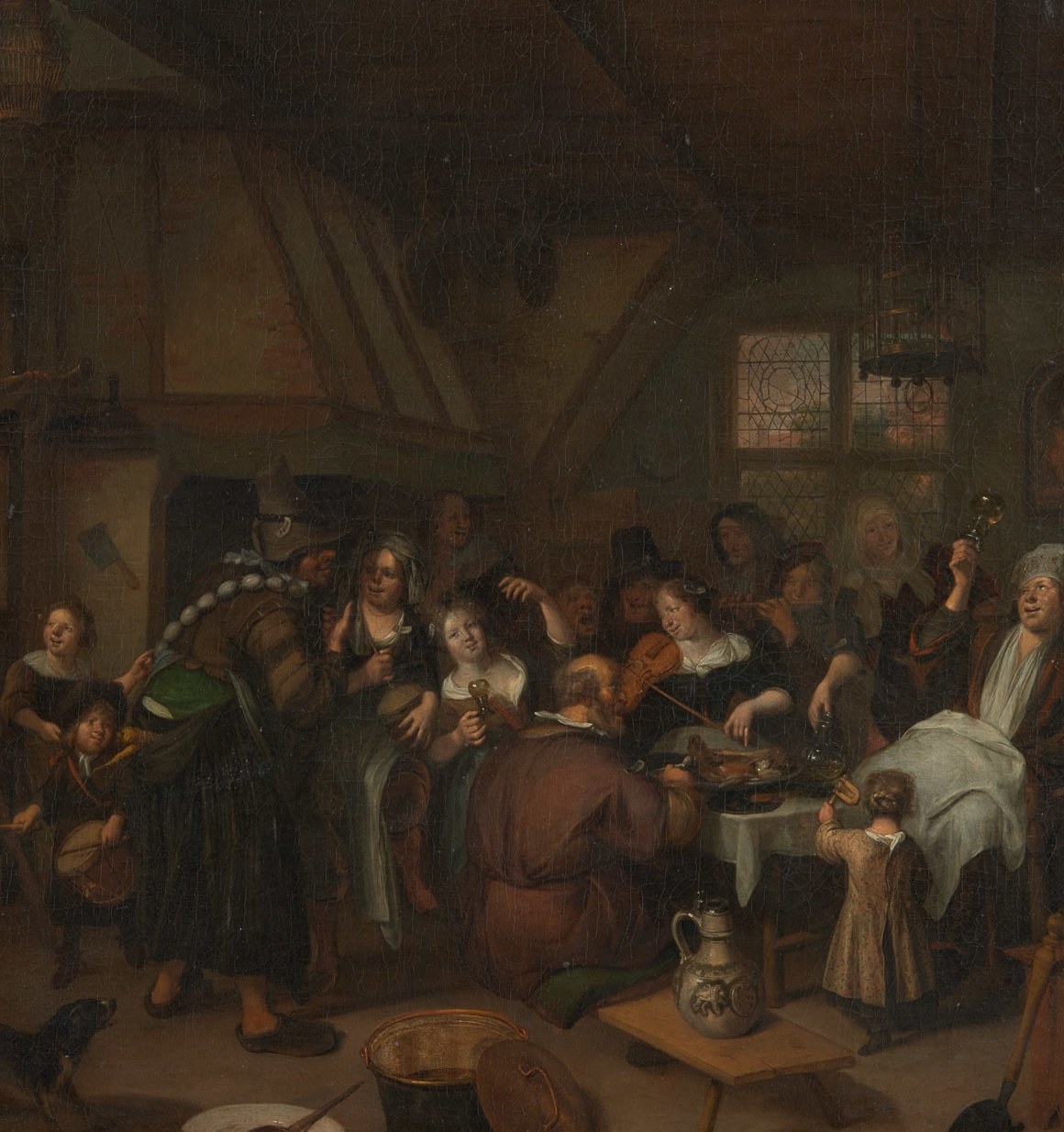
Richard Brakenburgh's 'Interior with a company celebrating Twelfth Night, the Feast of Epiphany' (1690) captures not just a party, but a very specific day in the Dutch calendar. The clue is the noise, literally, hiding in plain sight at the center of the crowd.
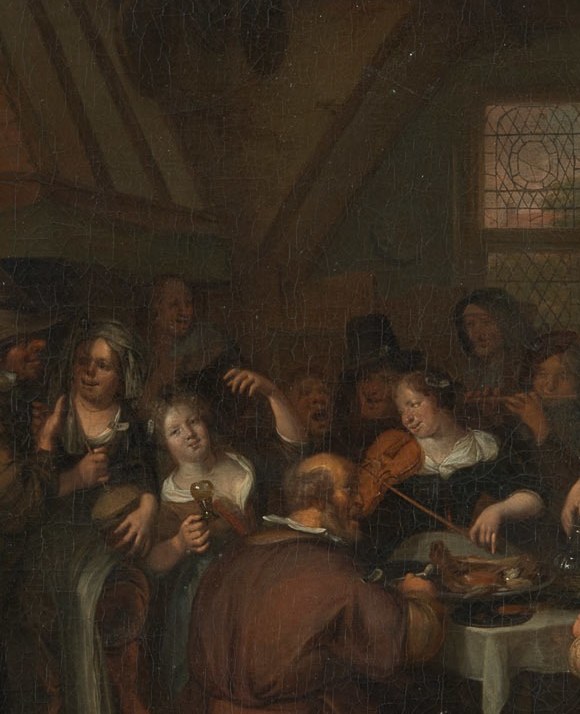
Let your eye settle on the boy with the small, round object pressed between his hands. That is a rommelpot, a friction drum made from a pig's bladder stretched over a clay pot. Rubbing the stick makes it squeal and grunt. On Twelfth Night, children roamed the streets with these, knocking on doors and making a racket until they got candy or coins.
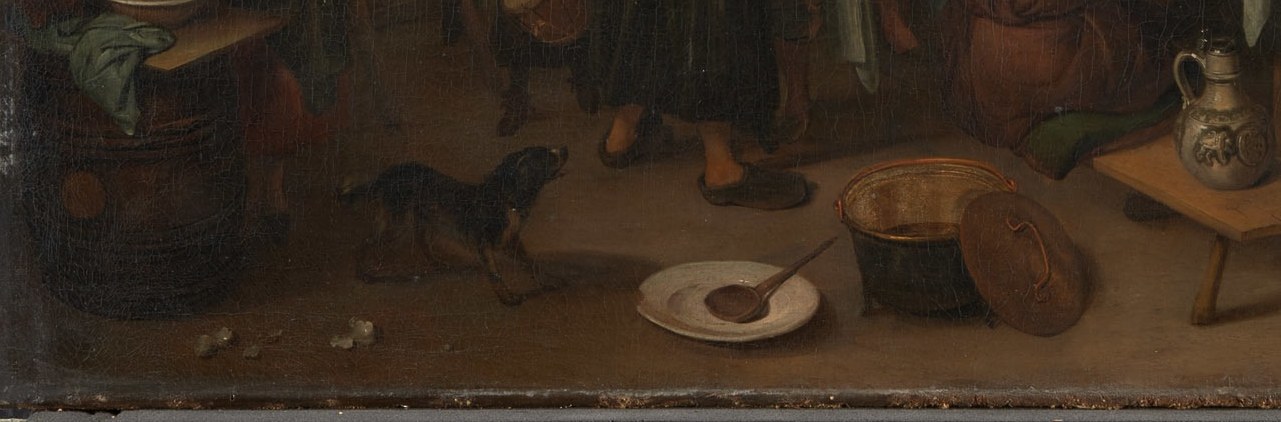
Brakenburgh was a Haarlem painter who specialized in these crowded, warm-toned holiday interiors. This work is a perfect social document: the barred window confirms a modest urban home, the violin and raised cups signal licensed revelry, and the overturned hat on the floor hints at the moralizing 'disorder' Dutch collectors would have read into the scene.
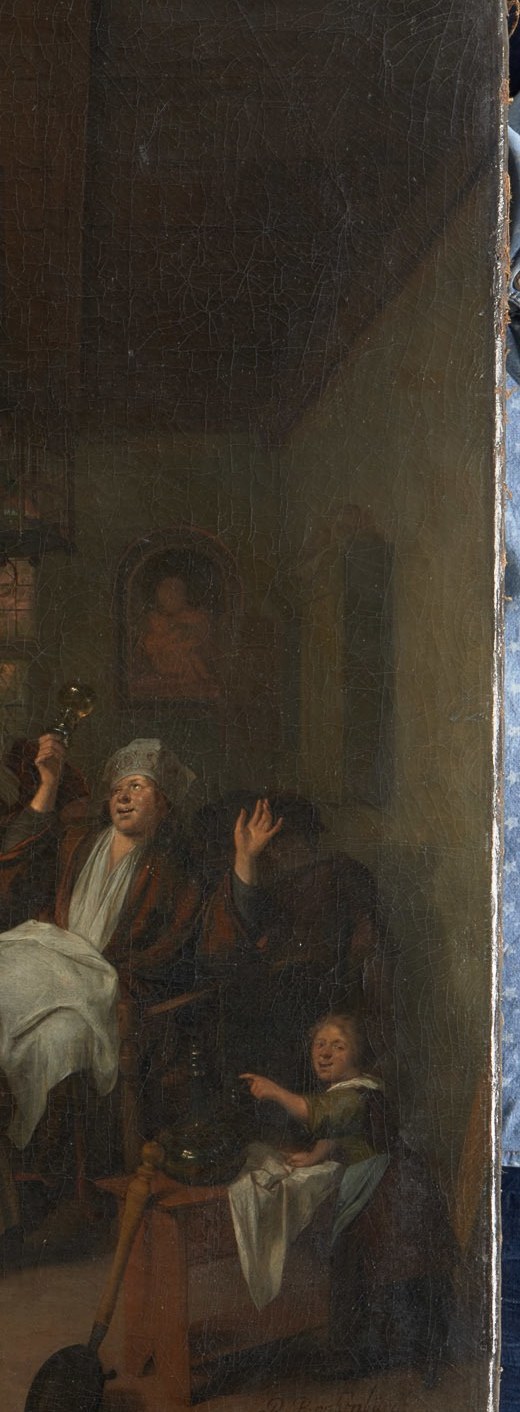
The woman in bright white at right anchors the composition; she likely holds the child who paid for the rommelpot player to perform. The holiday itself marked the arrival of the Magi, and for a few hours, the social order turned upside down. What other noise do you think is filling this room?
Details
Transcript
A 1690 tavern, full of food and noise. But look past the chaos at the right side. This woman holds a child, anchoring the whole scene. Now find the noise. Center frame, in the crowd. A boy plays a rommelpot: a pig-bladder drum rubbed to squeal. Children used it on Twelfth Night to beg for treats. This isn't just a party. It's a single documented holiday, preserved in sound.