The Combat of the Giaour and Hassan by Eugène Delacroix
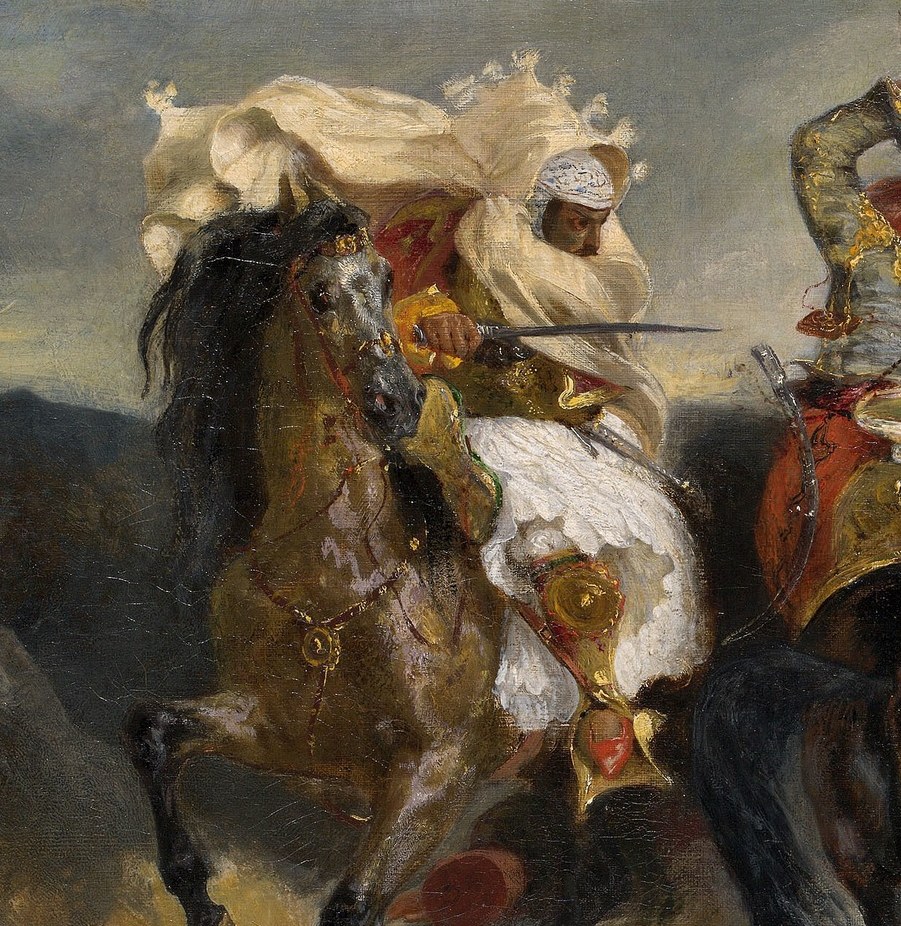
Eugène Delacroix's "The Combat of the Giaour and Hassan," painted in 1826, is a vibrant example of French Romanticism, now held at the Art Institute of Chicago.
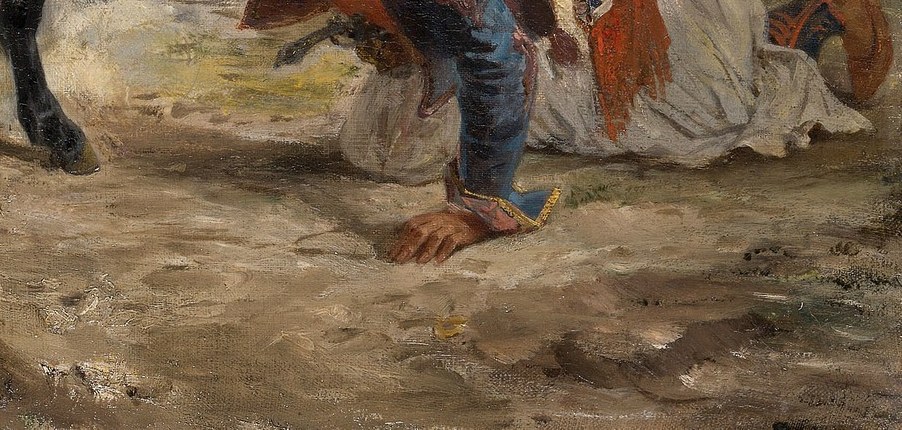
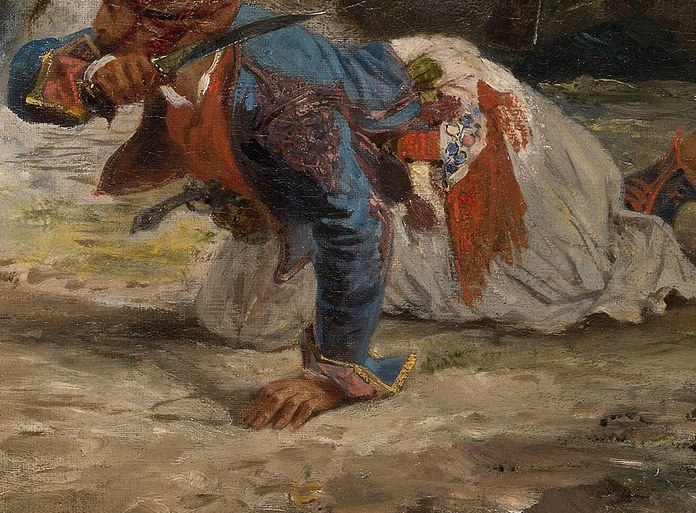
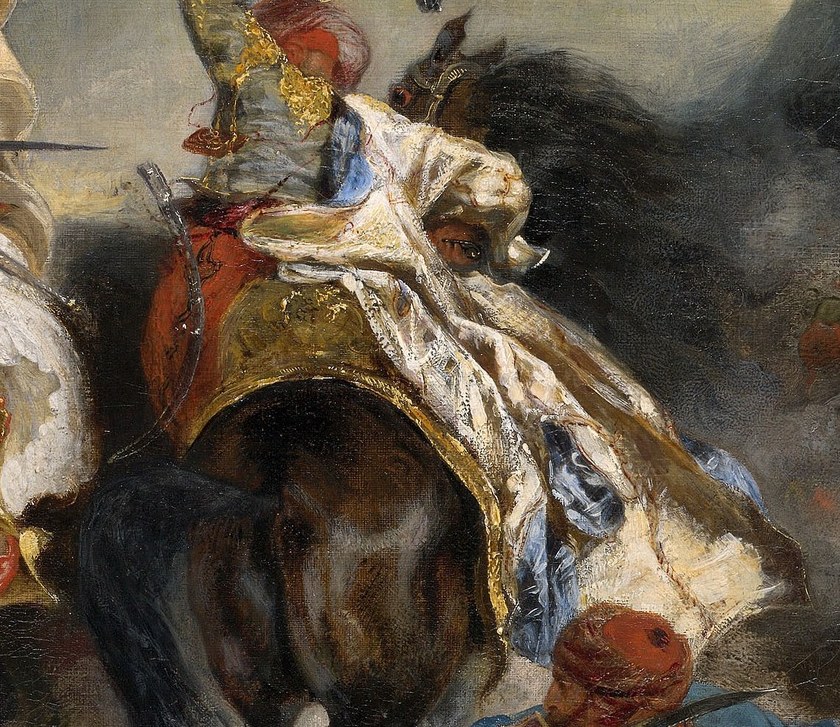
At first glance, it's a whirlwind of dramatic action. But if you look closely at the rocky terrain, you'll find a small, fallen figure. This detail provides a deeper emotional resonance to the scene.
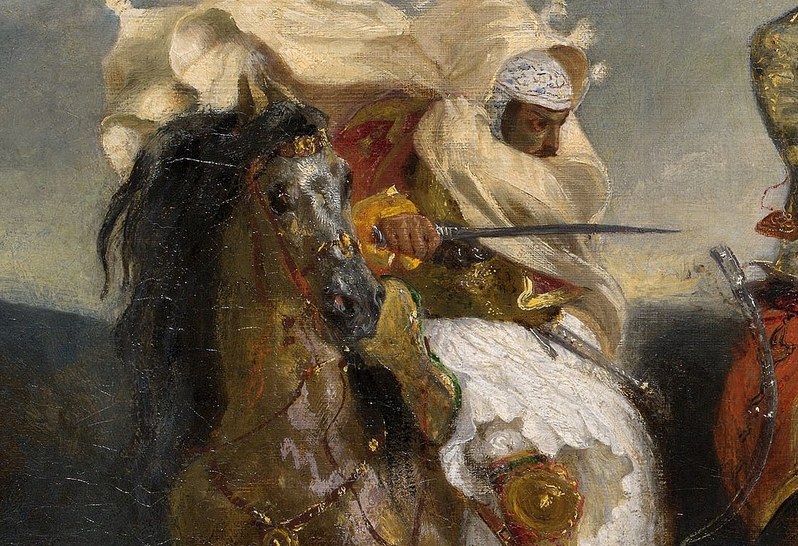
Delacroix drew inspiration from Lord Byron's poem "The Giaour," which tells a tale of passion, revenge, and loss. The fallen figure represents Hassan, ambushed and fatally wounded, his fate sealed by the Giaour's furious pursuit. Delacroix's work captures this intense moment, prioritizing expressive color and vigorous movement over classical precision, a hallmark of his Romantic style.
It makes you wonder, how many stories are hidden in the details of the paintings we quickly scroll past?
Details
Transcript
This battle painting is inspired by a dramatic poem. It's a chaotic scene, full of movement and fury. The painter was known for his vibrant color and emotional style. Now, look closely at the rough ground beneath the horses. There, a fallen man seems to watch the action. The poem describes him as having just been fatally wounded.