Piazza San Marco, Venice by Luca Carlevarijs
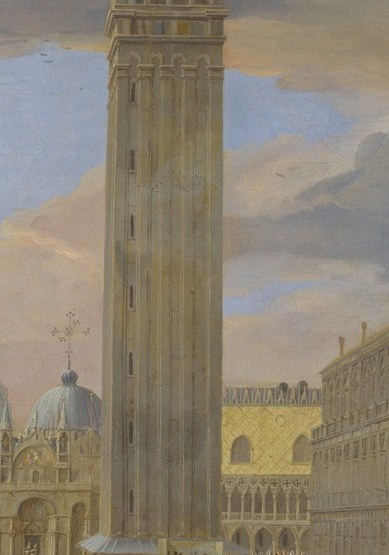
Luca Carlevarijs's *Piazza San Marco, Venice*, painted around 1709, captures the bustling heart of Venice. This work pioneers the *vedute* genre, showcasing detailed cityscapes. The painting invites us to look closer, as common objects within the scene carry symbolic weight.
Notice the figures in the crowd. The man in the striking red cloak historically represented power and authority in Venetian society. Nearby, a woman in a vibrant pink dress signifies her social standing and affluence.
Even the small dog in the foreground has meaning. Dogs were often symbols of fidelity, a quality important to the city's reputation. Together, these elements paint a picture not just of a busy square, but of Venice's perceived virtues.
Carlevarijs masterfully combines architectural detail with subtle social commentary.
Details

Transcript
This scene depicts Venice's heart, Piazza San Marco. Look at the man in the bright red cloak. Red symbolized power and authority in Venice. Now see the woman in her pink dress. Pink indicated her wealth and status. A small dog sits in the foreground. Dogs meant fidelity, a virtue for the city. Together, these figures show Venice's ideal.